
Welcome to ResusNation #150


Lead Paint: The Original 'Clean Girl' Aesthetic
In the anime world of The Apothecary Diaries, the "death by glamour" trope is treated with the clinical gravitas it deserves, specifically regarding the high-stakes toxicity of traditional white lead face powder (2PbCO3⋅Pb(OH)2). Maomao is essentially the OG forensic toxicologist, navigating a royal court where the concubines were literally painting themselves into an early grave for that pale, ethereal glow. Historically, this checks out—East Asian royalty and the European elite alike spent centuries rubbing ceruse onto their skin, leading to a delightful cocktail of symptoms ranging from abdominal "colic" and wrist drop to full-blown encephalopathy. While the anime frames it as a mystery, it’s really just a cautionary tale about why you shouldn't use heavy metals as a setting powder unless you want your nervous system to undergo a permanent hard reset.
Treatment in the 15th-century context was less about chelation therapy and more about "stop doing the thing that's killing you," which is exactly where Maomao’s herbal intervention shines. Since they didn't have succimer or EDTA lying around, she leans into the botanical apothecary's toolkit to manage the acute fallout of lead and mercury poisoning. The show nails the physiological reality: once those cations start mimicking calcium and messing with your neurotransmitters, no amount of palace intrigue can save you if you keep reapplying the poison. It’s a refreshing take on historical medicine that reminds us modern clinicians of one simple truth—compared to the lead-slathered Ming Dynasty, our patients' obsession with "non-toxic" skincare is actually pretty well-founded.

The Conference That Forgot It Was A Conference
Imagine this: You're at a medical conference, but you're not in a hotel ballroom. There's no hum of the AC drowning out the speaker. No one's sneaking out to check email in the hallway.
You're at the Punch Line Comedy Club in Philadelphia — and the person on stage just changed how you think about resuscitation.
ResusX 2026. May 18–20.
This isn't a tweak to the usual format. It's a full rebuild. The comedy club isn't a gimmick — it's the whole point. Intimate seating means you're in the room, not watching a livestream of someone else's experience. The stage is close enough that when they're running a procedural demo, you see every move. The energy doesn't dip at 2pm.
Here's what's waiting for you inside:
- Sessions that earn your attention — tight, punchy, built around momentum
- Live demos you can actually learn from — not a video clip, not a diagram
- Real disagreements between real experts — the kind of debates that actually sharpen your thinking
- Audience-in-the-action formats — games, challenges, decisions that land because you made them
Heavy topics. Unforgettable delivery. A room that was literally designed to hold attention.
If you've been waiting for a sign to sharpen your resuscitation skills— this is it. Lock in your spot now
→ Not an attending physician? You're still invited. Fill out this form to unlock a discount code built for non-attending clinicians.

You Just Got ROSC.
Don’t Get the Next Step Wrong!
Let’s talk about post-ROSC vasopressor data. You're right that this is evidence-based, not just opinion. The key physiologic reasoning makes sense: after cardiac arrest, the dominant problem is vasoplegia/distributive shock — massively dilated vasculature that needs to be squeezed down. Norepinephrine is primarily an alpha-1 agonist, which is exactly what you want for that purpose. Epinephrine, by contrast, has significant beta-1 and beta-2 activity. After ROSC, that extra beta stimulation causes problems — increased myocardial oxygen demand on a stunned heart, arrhythmogenicity (explaining the rearrest and ventricular abnormalities), and the beta-2-mediated metabolic effects driving lactic acidosis through increased aerobic glycolysis rather than true tissue hypoperfusion.
The irony is worth noting: we use epinephrine during arrest because we need any perfusion pressure we can get and the heart isn't beating anyway, so the arrhythmia risk is less relevant. The moment you get ROSC, the calculus completely flips. Now you have a working heart you're trying to protect, and a vascular bed you're trying to tone up — norepinephrine is the right tool for that job. The data from trials like PARAMEDIC2 and subsequent post-ROSC analyses reinforced this. It's one of those areas where the transition from arrest to post-arrest management requires an immediate mental shift in your approach.
Watch the full video here and leave a comment.
Don't forget to like and follow my IG, TikTok, YT, Facebook or Linkedin accounts.

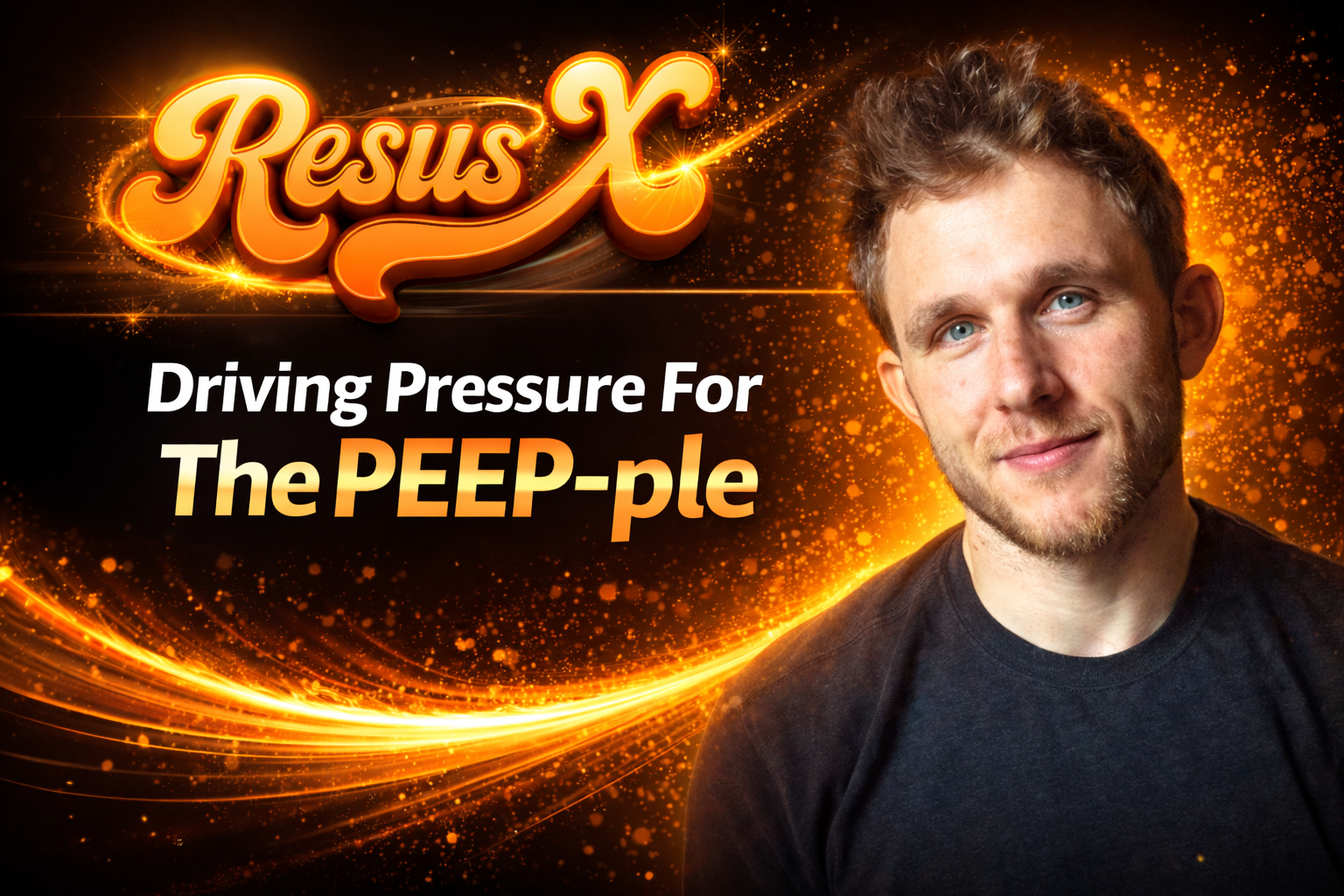
Forget the rigid ARDSnet formulas and tape measures; lung volume isn't just about height—it’s about the "baby lung" left behind by disease. This lecture deconstructs driving pressure into a simple "size vs. volume" framework, proving that calculating plateau pressure - PEEP is the most reliable way to tell if your tidal volume is actually safe for the specific lung in front of you. By shifting your perspective from "stiff lungs" to "small lungs," you can stop guesstimating and start using real-time data to prevent ventilator-induced lung injury (VILI)
The clinical magic happens when you use driving pressure to find the "sweet spot" for PEEP. By monitoring how your driving pressure responds to PEEP increases, you can visually confirm when you are recruiting functional lung tissue and, more importantly, exactly when you begin over-distending healthy tissue. Aiming for a driving pressure of less than 15 cmH2O provides a clear, actionable goal that outperforms traditional plateau pressure monitoring, ensuring your ventilation strategy scales perfectly to your patient's shifting pathology.
Check out this video of Dr. Rory Spiegel from ResusX:2025 now!


Is Chest Suction Actually Delaying Recovery?
Persistent air leak (PAL) — defined as pleural air leak failing to resolve within 5 days — complicates 6.9–15% of thoracic surgeries and carries significant morbidity from both underlying disease and prolonged hospitalisation. This 2026 BJA Education review from Australian intensivists and cardiothoracic surgeons provides a stepwise management framework built around a clinical scenario of influenza-associated necrotizing pneumonia complicated by bronchopleural fistula (BPF), covering classification, physiology, ventilatory strategy, bronchoscopic options, extracorporeal support, and surgical rescue.
The central physiological principle is that mean airway pressure (Pmaw) drives transfistula airflow, meaning common instincts — increasing PEEP for hypoxemia, applying suction to encourage lung re-expansion — can actively worsen the leak. Ventilatory strategy should prioritize the lowest tolerable PEEP, tidal volumes of 4–6 ml/kg, short inspiratory times, and permissive hypercapnia, with early transition to spontaneous breathing where feasible. When conventional ventilation fails, VV-ECMO enabling ultra-lung-protective or apneic ventilation has emerged as a viable rescue strategy. For patients failing conservative management, endobronchial valves (EBVs) offer a less morbid alternative to surgery, small fistulae can be occluded bronchoscopically, and surgery remains essential for post-resection BPF with empyema. The key message: involve thoracic surgery early, even when conservative management seems likely to succeed.
My Takeaway Points:
-
Finding - PAL complicates 6.9–15% of pulmonary resections, and a 40% tidal volume discrepancy between inspiratory and expiratory limbs on the ventilator is a reliable bedside indicator of significant ongoing leak.
-
Patient Population - Critically ill mechanically ventilated patients with PAL, particularly post-thoracic surgery patients, and those with necrotizing pulmonary infections (including Staphylococcus aureus PVL-positive strains); also relevant to trauma patients and those with interstitial lung disease.
-
Practice Impact - Reduce mean airway pressure aggressively — avoid routine chest drain suction, minimize PEEP and tidal volume, and transition to spontaneous ventilation as early as possible; endobronchial valves are emerging as a definitive bronchoscopic option that avoids surgical morbidity.
-
Limitations - The evidence base underpinning most interventions — EBVs, extracorporeal carbon dioxide removal (ECCO₂R), occlusive agents — remains largely case series and expert consensus; individualized multidisciplinary decision-making is essential given the absence of large RCTs in this population.
Want to learn more? Read the full article "Persistent Air Leack in the Critically Ill" by D. Mackintosh et al. in British Journal of Anaesthesia (BJA) Education.
Stop Prescribing Cefdinir for UTIs (Please)
Let’s be clear: cefdinir is not a good UTI drug, and recent stewardship recommendations continue to steer us away from it.
Why Cefdinir Misses the Mark
-
Poor urinary concentrations
Cefdinir is an oral third-generation cephalosporin with low bioavailability (~20–25%) and high protein binding. Only a small fraction of the drug ends up unchanged in the urine. Translation: it doesn’t achieve the reliable urinary concentrations we want for cystitis, especially compared to other options.
-
It’s not guideline-preferred
The most recent Infectious Diseases Society of America (IDSA) UTI guidance and multiple antimicrobial stewardship programs do not include it in their recommendations.
-
Stewardship matters
Cefdinir is broader than necessary for uncomplicated cystitis. Using it contributes to collateral damage - think ESBL pressure, C. diff risk, and unnecessary third-generation cephalosporin exposure when a narrow agent would work better.
In the ED, we love “one and done” thinking, but this isn’t the place for convenience prescribing.
What About Pediatrics?
This is where things get nuanced.
Cefdinir is commonly prescribed in children for otitis media and respiratory infections. For pediatric UTIs, however:
-
It still has the same pharmacokinetic limitations.
-
Many pediatric antimicrobial stewardship programs prefer cephalexin for uncomplicated cystitis.
-
If pyelonephritis is suspected, you generally want something more reliable, think oral cephalexin or an initial IV dose (e.g., ceftriaxone) before stepping down.
So, is cefdinir ever used in pediatrics for UTI?
Yes, you’ll see it. But is it preferred? Increasingly, no.
Many children’s hospitals now recommend:
-
Cephalexin (great urinary penetration)
-
Cefixime (better PK profile for urinary infections than cefdinir)
-
Preferably, culture-directed therapy
Practical ED Pearls
-
If it’s simple cystitis → Reach for nitrofurantoin or cephalexin.
-
If it’s pyelo → Think beyond cefdinir. Consider initial IV therapy and step-down.
-
If someone says, “But I always use cefdinir and it works…” → It may work sometimes, but pharmacokinetics and stewardship principles still matter.
-
Always check your local antibiogram.
Bottom Line
Cefdinir isn’t first-line for adult UTIs.
It’s not preferred in pediatrics either.
And we have better, narrower, more reliable options.
Let’s stop reflexively clicking cefdinir for every UTI discharge.
Your antibiogram (and future self) will thank you.
— Lil’ Pharma
Review this week's dose on IG or TikTok.
----------
Dr. Abbi Briscoe is an emergency department clinical pharmacist, pharmacy residency program coordinator, and affiliate professor in Montana. She is passionate about Emergency Medicine and Critical Care education, and is an avid mountain biker and skier in her free time.
Connect with Dr. Briscoe: @lilpharm2026 (IG) or @lil_pharma (Tiktok)
Watch the March Videos Now!

If you're an All-Access member, you're in for some great content this month. We have FIVE videos hand-picked by our staff that are high-yield and our most highly watched. We're featuring:
- Hedayati on "Resuscitate Before You Intubate"
- Zanotti on "The Fearless ICU"
- Gutierez on "Which Drip & When...(Part II)"
- Willis on "Refractory Hyperkalemia"
- Winters on "Serious Slip-Ups In Sepsis"
Each month we bring you fresh new content from the best of the best in resuscitation. If you're an All-Access member, go watch these videos NOW!


Responses