
Welcome to ResusNation #160
Moon or Bust (But Mostly Puke):
The Artemis II Medical Brief
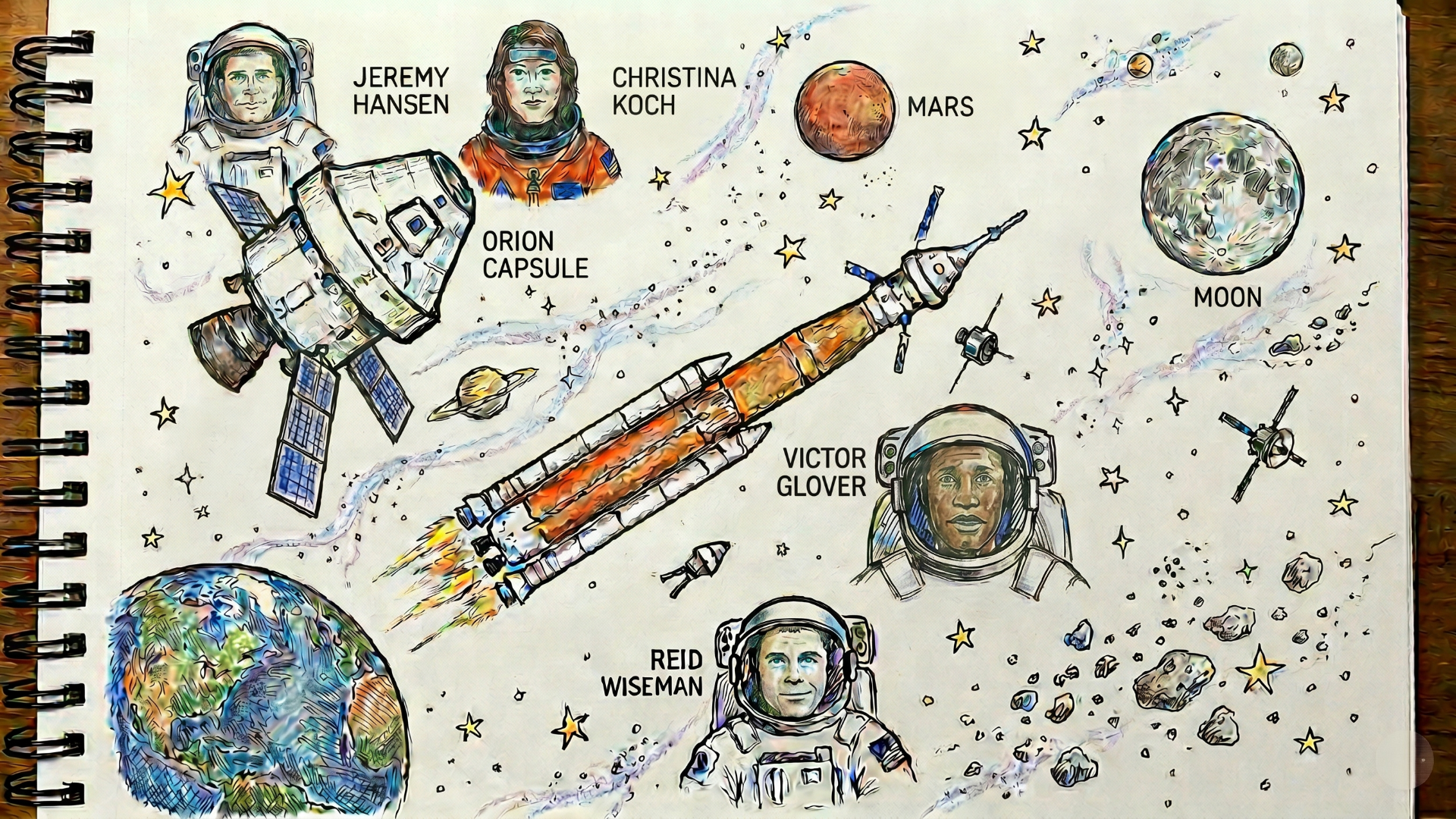
NASA sent four people around the Moon, and while the PR department posts high-resolution Earthrise photos, the medical team is effectively running a high-stakes ICU in a tin can. Artemis II isn't just a flight; it's a crash course in Space Adaptation Syndrome (SAS), which is the polite way of saying the crew's vestibular systems are signaling in ways the brain struggles to interpret. Within hours of launch, fluid shifts redistribute throughout the body—legs thin out while faces swell, because gravity is no longer holding blood in the lower extremities. It's a cardiovascular identity crisis in which the body abruptly decides it needs less blood volume, producing a "space anemia" that can make simply standing up back on Earth feel like finishing a marathon while dehydrated.
Then there's radiation, which is the real challenge. Once the crew leaves Earth's magnetic shield, they're exposed to galactic cosmic rays and solar particles that deliver roughly 1,700 times the background dose of a typical day in New York. Solar Particle Events (SPEs), or solar radiation storms, can transform the Orion capsule (spacecraft) into a far more hostile environment if the Sun has a bad day. The crew has been trained to rearrange the cabin under pressure—physically stacking cargo and water bags against the walls to improvise a radiation storm shelter. Add in the fact that lunar dust is essentially microscopic, jagged glass capable of damaging lung tissue, and it becomes clear the Moon isn't just a scenic destination—it's a high-vacuum hazard zone that has been trying to kill us since our first visit in 1969.

ResusX:2026 Is 4 Days Away!!
Only 12 LIVE tickets left!
ResusX:2026 starts May 18 in Philadelphia — and unlike a hotel ballroom, the Punch Line doesn't keep increasing in size. When the room fills, it fills.
What you'll be in the room for:
→ Live procedural demos. Not clips.
→ Expert debates that actually move the needle.
→ Cases where you're the one making the call.
→ Heavy content. Unforgettable room.
If you've been telling yourself you'll level up your resus skills "soon", there is no later this year. There's just this and time is running out.
→ Not an attending physician? You're invited too. Get your discount code here.
Shout Out to Our Sponsors!
ALL-ACCESS PARTNERS


LEVEL-UP PARTNERS


STRATEGIC PARTNERS


Stop Saving the Bougie for When Things Go Bad
When it comes to airway management, I've stopped treating the bougie as a rescue tool — it's my first-line move, every time. The data backs it up, and years at the bedside have made it viscerally clear: waiting until you're in trouble to reach for the bougie is backwards thinking. The tactile feedback — that classic "click-click" over the tracheal rings and the hold-up at the carina — gives you confirmation that no amount of visualization alone can replicate. If you can feel your way in, you're not guessing. You're winning.
The airway community has been slow to shake the old habit of bougie-as-backup, but I'm here to tell you that framing is costing patients. Difficult or easy, Mac or Miller, teaching hospital or rural ED — bougie-first is the move that standardizes success and eliminates the panic spiral of a failed first pass. First pass success isn't just a metric; it's the difference between a controlled procedure and a crisis. Be better. Be bougie.
Watch the full video here and leave a comment.
Don't forget to like and follow my IG, TikTok, YT, Facebook or LinkedIn accounts.


This week, Dr. Mark Ramzy from the ResusX:ReUnion conference, provides a clinical deep dive into the "Fantastic Four" causes of thrombocytopenia: ITP, TTP, HIT, and DIC. Using a case-based approach, he breaks down the pathophysiology and diagnostic markers for each condition, starting with the definition of thrombocytopenia as a platelet count below 150,000. Key takeaways include the "Brain Fart" mnemonic for identifying the classic pentad of TTP symptoms (Altered Mental Status, Fever, Anemia, Renal Failure, and Thrombocytopenia), and the 4Ts scoring system used to clinically diagnose HIT.
Beyond diagnosis, Dr. Ramzy emphasizes critical management strategies and common pitfalls in the emergency and ICU settings. He clarifies when to use supportive therapies like steroids and IVIG for ITP, versus life-saving interventions like plasma exchange for TTP. Crucially, he warns against "fueling the fire" with inappropriate platelet transfusions in cases of HIT or DIC, where such actions can paradoxically worsen thrombosis. By comparing these four conditions side-by-side, Dr. Ramzy equips clinicians with a structured framework to quickly differentiate and treat complex platelet disorders.
Check out this video of Dr. Mark Ramzy from ResusX:ReUnion now!


25 Years of ILCOR Resus Guidelines: What’s Changed?
Cardiac arrest remains one of medicine's most time-sensitive emergencies, with survival from out-of-hospital cardiac arrest (OHCA) declining 7–10% for every minute of delayed defibrillation. Yet the evidence base guiding how we actually resuscitate these patients is far weaker than most clinicians appreciate. This narrative review traces the evolution of the International Liaison Committee on Resuscitation’s (ILCOR) resuscitation guidelines from 2000–2025 across seven domains: chain of survival, compression interruptions, high-quality CPR parameters, early defibrillation, dispatcher-assisted CPR, extracorporeal CPR (ECPR), and post-arrest temperature management. The most clinically striking evolution is in temperature management — two 2002 RCTs entrenched mild therapeutic hypothermia (32–34°C) as standard care, but the 2013 TTM and 2021 TTM2 trials dismantled that consensus, with TTM2 showing no mortality benefit over normothermia and more hemodynamic arrhythmias in the cooling arm. By 2022, ILCOR had pivoted to simple fever prevention (≤37.5°C). On ECPR, four RCTs between 2020–2023 produced conflicting signals — ARREST showed a dramatic survival benefit in refractory VF (43% vs. 7%), while the larger INCEPTION trial found no significant difference in 30-day neurologically favorable survival — leaving ILCOR with only a weak recommendation for selected patients.
The bottom line for practicing clinicians is uncomfortable but important: only 1% of AHA CPR guideline recommendations carry Level A evidence, 50% rely on limited data, and 12% are based entirely on expert opinion. Core practices like the 30:2 compression-to-ventilation ratio, chest compression fraction (CCF) targets, and the C-A-B sequence rest on animal studies, manikin experiments, and low-quality observational data. The 2025 ILCOR unified the four separate chains of survival back into a single 6-link framework. AI-driven feedback systems, drone AED delivery, and biosignal-guided compression optimization are emerging — but remain in proof-of-concept stages. What this review makes clear is that CPR evidence is not settled science: it is a living, frequently reversing body of knowledge that demands ongoing critical engagement from every resuscitationist.
My Takeaway Points:
-
Finding - Post-arrest temperature management guidelines have undergone three major reversals since 2002 — from aggressive hypothermia (32–34°C) to flexible TTM (32–36°C) to the current standard of fever prevention only (≤37.5°C), driven primarily by the TTM (2013) and TTM2 (2021) trials showing no mortality benefit from active cooling.
-
Practice Impact - Clinicians should no longer default to active cooling protocols for post-ROSC comatose patients; rigorous fever prevention is the current evidence-based standard. ECPR remains an option only for highly selected patients at capable centers, with the caveat that only one of four recent RCTs (ARREST) showed meaningful survival benefit.
-
Population - Adult cardiac arrest patients across OHCA and IHCA settings; ECPR data apply specifically to witnessed, refractory VF/shockable rhythm arrests at centers with established ECMO infrastructure and rapid cannulation capability.
-
Limitation - The overwhelming majority of CPR evidence — including foundational practices like chest compression depth, rate, and the C-A-B sequence — derives from animal experiments, manikin studies, and low-certainty observational data. IHCA is profoundly underrepresented in the RCT literature (only 4.3% of cardiac arrest trials), and guideline recommendations for in-hospital arrests are largely extrapolated from OHCA data.
Want to learn more? Read the full review Advances in Adult Cardiopulmonary Resuscitation: A Narrative Review by W. Zheng, et al. in Emergency and Critical Care Medicine.
BiPAP For COPD: The One Thing That Clears CO₂
A patient with a COPD exacerbation is placed on BiPAP. The default settings are entered: IPAP 10, EPAP 5. An hour later, the blood gas shows the PaCO₂ is climbing, and the patient is no better.
The temptation is to say "BiPAP failed" and prepare to intubate. But before you do, ask yourself if the BiPAP was actually dosed correctly.
To clear CO₂ on BiPAP, you must increase the tidal volume. And there is only one lever that accomplishes this: Pressure Support (PS).
PS is the difference between your inspiratory and expiratory pressures (IPAP − EPAP). It is the actual "push" the ventilator gives the patient during inspiration.
If you set an IPAP of 10 and an EPAP of 5, your PS is only 5 cmH₂O. For a patient with severe bronchospasm and hyperinflation, that is barely enough to overcome the resistance of the circuit, let alone provide meaningful ventilatory assistance.
Here is how to approach it systematically:
-
Understand the Lever
If the PaCO₂ is high, you need more PS. You achieve this by increasing the IPAP while leaving the EPAP alone.
-
Set the EPAP Intentionally
In COPD, keep the EPAP low (typically 4-5 cmH₂O). These patients are already hyperinflated and struggling to exhale. High EPAP creates more resistance to exhalation and paradoxically reduces your Pressure Support.
-
Titrate For Clinical Response
Start with an IPAP of 12-15 cmH₂O and an EPAP of 4-5 cmH₂O. Assess the patient's work of breathing, respiratory rate, and comfort. If they are still struggling, increase the IPAP by 2 cmH₂O at a time.
-
Know When to Stop
The goal is not to reach a specific pressure number. The goal is clinical improvement. If the patient's respiratory rate settles and they look more comfortable at 15/5, stop titrating. Pushing pressures higher when the patient is already improving risks gastric distension, mask intolerance, and pneumothorax.
The Bottom Line
IPAP 10 and EPAP 5 is a starting point, not a destination. If your COPD patient is failing BiPAP, check your PS. You likely need to increase the IPAP.
----------
Dr. Shawn Segeren is a Canada-based Emergency Medicine physician and founder of Dynamic Simulation, a CME-accredited clinical simulation program delivering interprofessional, critical care simulations in emergency departments across Ontario.
Connect with Dr. Segeren: @drsegeren (IG) or @dynamicsimeducation (IG)
Watch the May Videos Now!
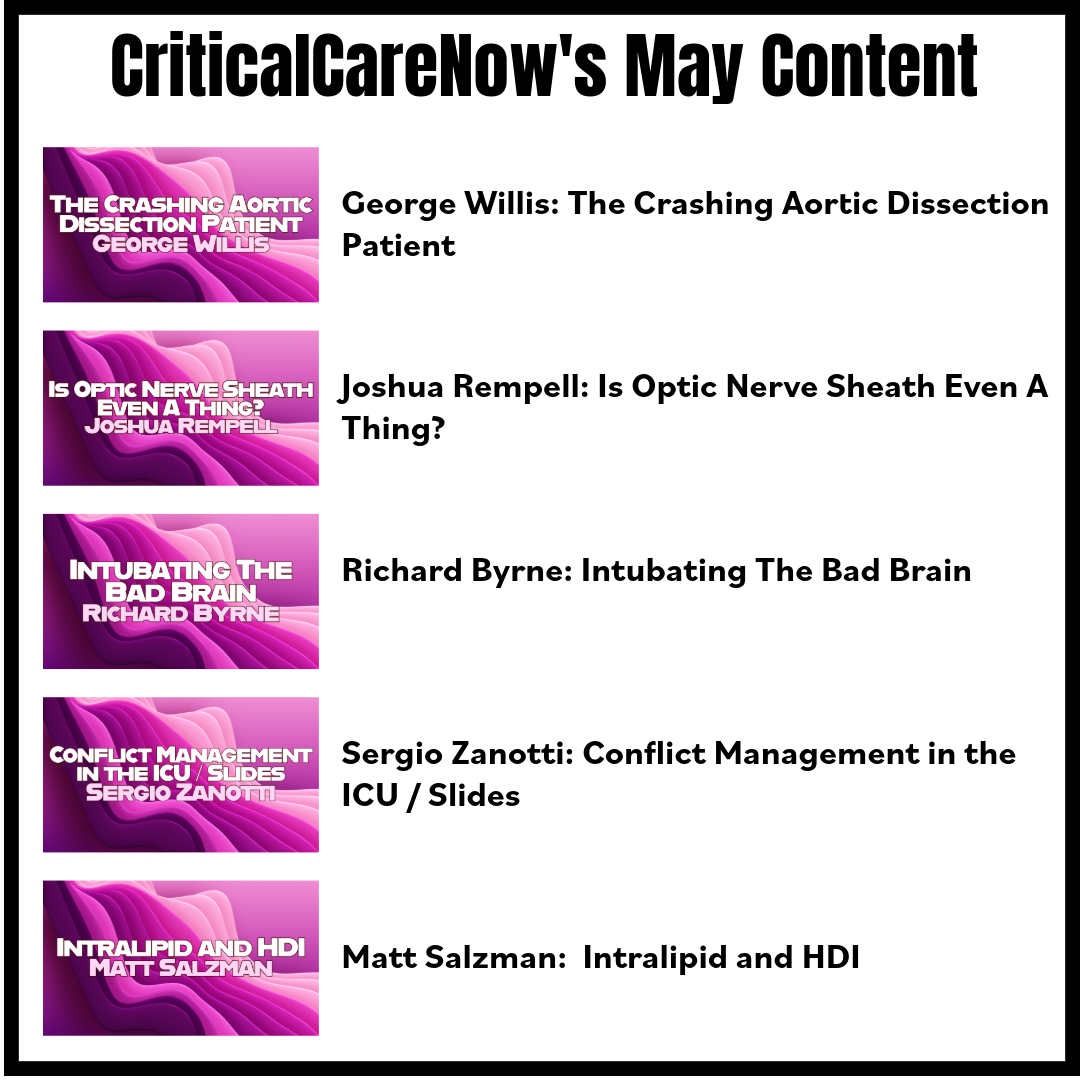
If you're an All-Access member, you're in for some great content this month. We have FIVE videos hand-picked by our staff that are high-yield and our most highly watched. We're featuring:
- Willis on "The Crashing Aortic Dissection Patient"
- Rempell on "Is Optic Nerve Sheath Even A Thing?"
- Byrne on "Intubating The Bad Brain"
- Zanotti on "Conflict Management in the ICU/Slides"
- Salzman on "Intralipid and HDI"
Each month we bring you fresh new content from the best of the best in resuscitation. If you're an All-Access member, go watch these videos NOW!


Responses