
A Message From Haney


Why George Clooney Yelled This Word at Everyone in the 90s
We’ve all watched enough Grey’s Anatomy to know that "STAT" is the magic word that makes nurses sprint and dramatic music swell. But contrary to that rumor your aunt forwarded you, it isn’t a fancy acronym for "Sooner Than Already There." It’s actually the great-grandchild of the Latin word statim, which translates to "immediately" or "while standing." Basically, ancient doctors were saying, "Do this before you even move your feet to walk away, or so help me Jupiter, I will lose it."
Why do we still use it? Because back in the 19th century, Latin was the universal language of medicine, ensuring a doctor in London and a doctor in Berlin could both agree on exactly how much to panic. Today, it remains the ultimate trump card for urgency. So, the next time your coffee order is taking too long, try telling the barista you need that double-shot espresso statim. We can’t promise it will speed things up, but it will definitely make you feel like a TV surgeon for a solid three seconds.
Welcome to the 140th edition of ResusNation!
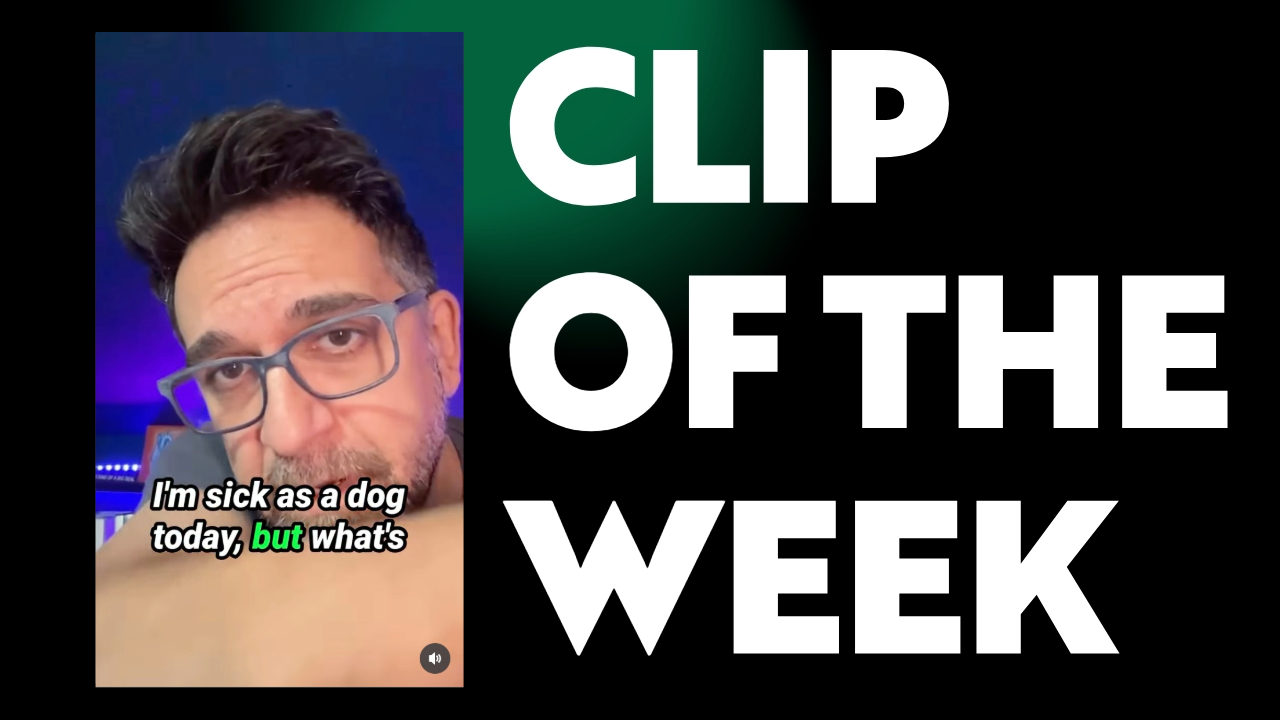
Watch the full video here and leave a comment.
Don't forget to like and follow my IG, TikTok, YT, Facebook or Linkedin accounts.

Black Friday Sale: Extended!
(72 Hours Only)
We know the reality of this job: Shifts run late, emergencies happen, and sometimes, you just miss the email. Over the last 48 hours, our inbox has been flooded with requests from clinicians who wanted in on the ResusX:2025 action but missed the deadline.
Because our mission is to get this life-saving education into as many hands as possible, we are pulling the lever one last time.
We are officially extending the sale on the ResusX:2025 Replay and the All-Access Pass.
CHOOSE YOUR BLACK FRIDAY DEAL

Get Access to EVERYTHING We Have Ever Done.
ResusX:2025 Replay (Lifetime Access) Every keynote, debate, and procedure from this year. The Complete Conference Vault Instant access to all 16 past conferences. 168+ Hours of CME/CEU Credit More credits than you will likely ever need. BONUS: 3 Months of ResusNation DeluXe. Original Price $2,497, YOU PAY$997. (SAVE $1500!)
CHOOSE YOUR RESUSX:2025 REPLAY ACCESS

Own the 2025 conference forever.
Lifetime Access to every ResusX:2025 video. 14.25 CME/CEU Credits. Downloadable PDF Summaries & Handouts. BONUS: Free ResusX T-Shirt (First 50 orders only!). Original Price $447, YOU PAY$247.

Just the content, straight up.
7-Day Unlimited Access to all 2025 videos. High-definition video & remastered audio. Original Price $299, YOU PAY$197
THIS SALE EXTENSION IS EXTREMELY LIMITED.
You have exactly 72 hours before the vault closes on these prices.
Visit our website for more information


Is Ketamine Actually Safe for Traumatic Brain Injury?
For decades, a persistent medical dogma has warned clinicians against using ketamine for patients with traumatic brain injury (TBI), fearing it would dangerously spike the pressure inside the skull (intracranial pressure or ICP). In emergency situations where every second counts, this belief has often limited sedation options for patients requiring immediate breathing support. However, a comprehensive new systematic review and meta-analysis of 15 studies—covering over 6,000 patients—is challenging this "old myth". The researchers found that, contrary to historical concerns, ketamine does not appear to increase hospital death rates or worsen brain pressure in TBI patients.
The results of this analysis have significant real-world implications for emergency care. The data showed that ketamine use was not associated with elevated intracranial pressure; in fact, some evidence even hinted it might help reduce it. This gives healthcare providers a green light to utilize ketamine's beneficial properties—such as maintaining respiratory reflexes—without the fear of causing secondary brain damage. However, the study did identify one critical limitation: patients receiving ketamine had a higher risk of hypotension (low blood pressure). While the fear of raising brain pressure may be unfounded, this new evidence suggests that clinicians should feel confident using ketamine for TBI, provided they remain vigilant in monitoring and managing the patient's blood pressure.
Here's my Takeaways:
-
Finding: Ketamine administration did not statistically increase hospital mortality (RR=1.18) or intracranial pressure (RR=0.67) in patients with traumatic brain injury.
-
Practice Impact: Clinicians can consider ketamine a safe option for TBI sedation and intubation, moving away from historical avoidance due to ICP concerns.
-
Population: A diverse group of over 6,000 adult and pediatric patients with mild to severe traumatic brain injury analyzed across 15 studies.
-
Limitation: The study identified a significant association between ketamine use and hypotension episodes (RR=1.47), requiring careful hemodynamic monitoring during administration.

 |
Want to learn more? Read the full study: Is ketamine safe for traumatic brain injury? A systematic review and meta-analysis by Sciorilli et al. in Journal of Critical Care.
Watch the December's
Videos Now!
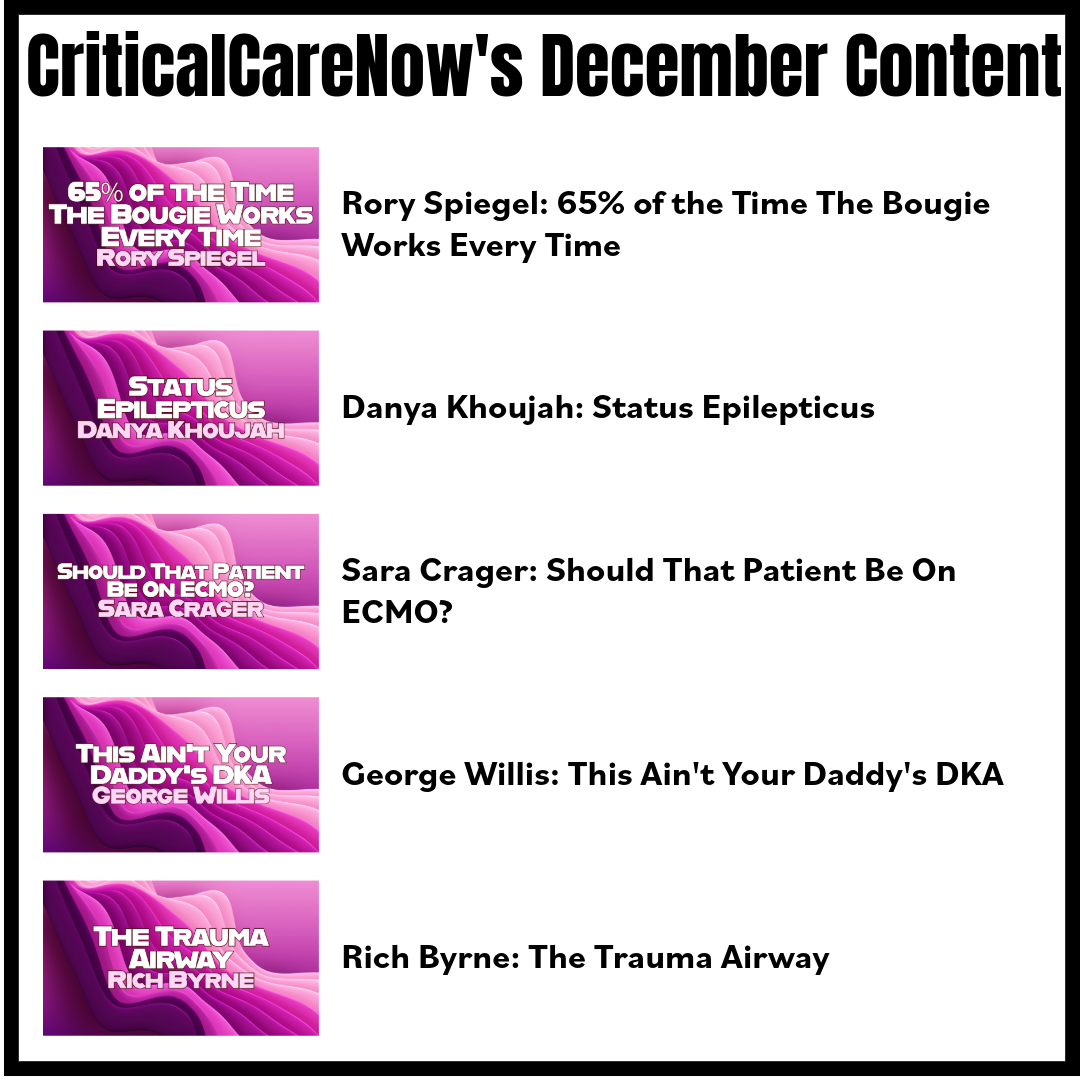
If you're an All-Access Member, you're in for some great content this month. We have FIVE videos hand-picked by our staff that are high-yield and our most highly watched. We're featuring
- Wright on "The Super Sick SAH"
- Reilly on "CT Head for the Resuscitationist - What is the Approach?"
- Haywood on "NIV Mask Seal"
- Rezaie on "DSI v. RSI"
- Qasim on "Getting to the Heart of the Matter: Breaking Down the Resuscitative Thoracotomy"
Each month we bring you fresh new content from the best of the best in resuscitation. If you're an All-Access member, go watch these videos NOW! If you're not, then sign up here.


Are you a member of ResusNation? For less than a cup of coffee, you can get even more content from CriticalCareNow. Digital teaching sessions, podcasts, free video lectures, grand rounds, and so much more can be your today. Come watch on replay all the content that CriticalCareNow does live. Check out the membership options below and decide the right one for you.
Do you want even more resus content anytime you want? For less than a cup of coffee, you can get even more content from @CriticalCareNow. Digital teaching sessions, free video lectures, grand rounds, and so much more can be your today. Come watch on replay all the content that @CriticalCareNow does live.
Check out the membership options below and decide the right one for you.


Get Access To The ResusNation Today!


Responses