
Welcome to ResusNation #154

Please take this 1 minute survey to help shape the future of the newsletter (click below):
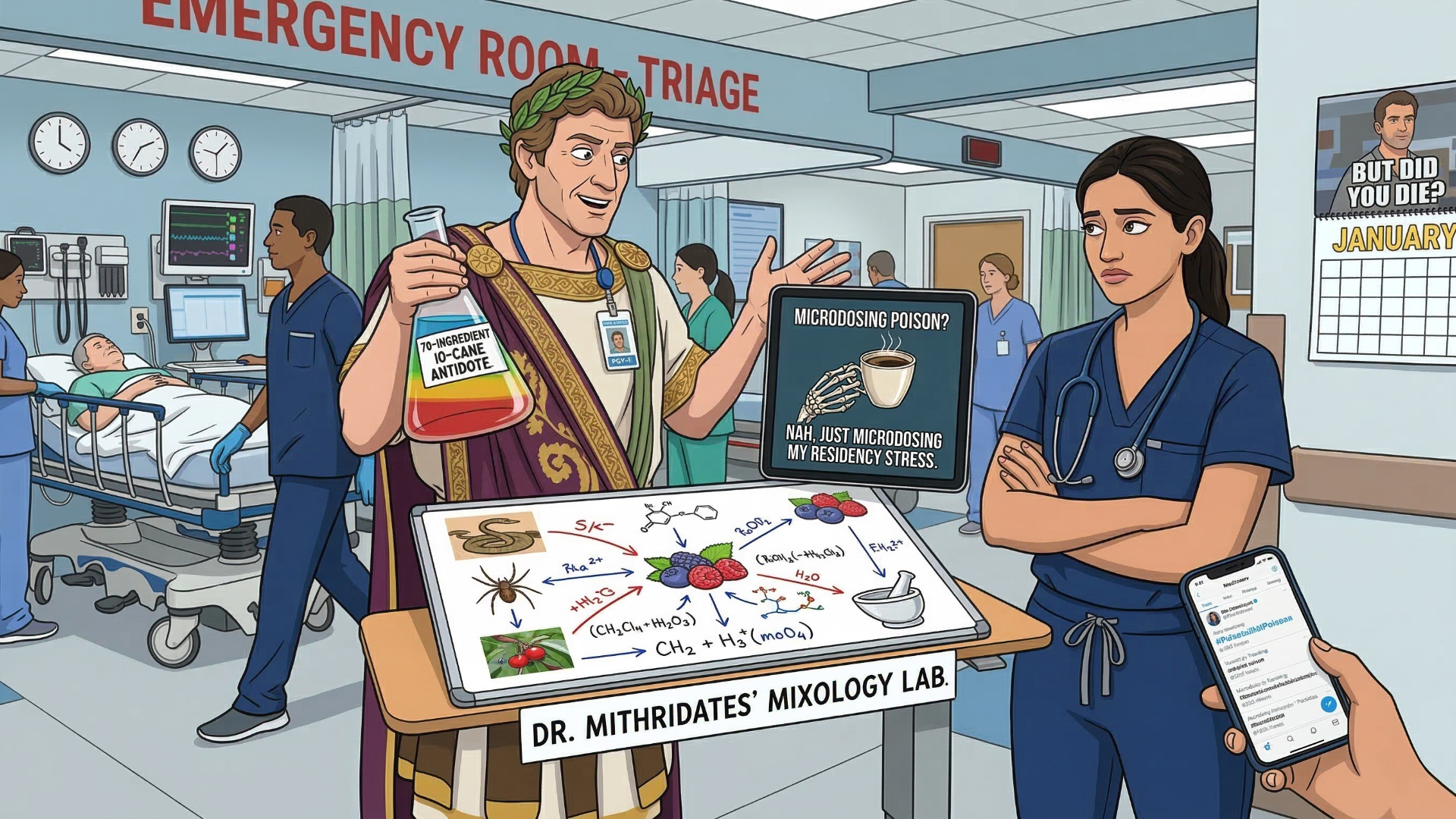
The Princess Bride Protocol: Better Living Through Microdosing Poisons
If you’ve ever sat through a toxicology lecture wondering if you could actually pull off Westley’s "battle of wits" maneuver, the answer is a very cautious maybe, but don't go chugging your chemistry set just yet. The real-world equivalent to Iocane, a fictional, odorless, tasteless, Australian powder, is essentially arsenic or cyanide, mixed with a heavy dose of a practice called Mithridatism. Named after King Mithridates VI, who was so paranoid about his inner circle being "sus" that he spent years micro-dosing himself with floral and faunal toxins, this is the ultimate OG biohack. Your liver and kidneys are basically the overworked interns of your body, and by drip-feeding them sub-lethal doses of certain poisons, you’re essentially "grinding for XP," forcing your metabolic pathways to upregulate enzymes like cytochrome P450. It’s like strength training for your cells, except instead of a PR on bench press, your prize is not dying when your rival tries to spice up your celebratory wine.
The plot twist, however, is that biology isn’t a scripted 80s cult classic, and the Iocane strategy has some serious hardware limitations. While you can technically build a tolerance to complex organic toxins (like snake venom) or certain heavy metals through a brutal cycle of induced horizontal gene transfer and metabolic adaptation, trying this with something like strychnine or belladonna is a one-way ticket to a very permanent nap. Most modern poisons work via irreversible inhibition or by absolutely nuking your cellular respiration, and your body doesn’t really "learn" how to survive a complete system shutdown—it just hits the Blue Screen of Death. So, unless you’re planning on fighting a Sicilian in a duel of the minds, maybe stick to building a tolerance for hospital cafeteria coffee and the smell of a C. diff ward. It's significantly less lethal and arguably more useful in your current day-to-day life.

Enjoy ResusX, From Anywhere
Can't make it to Philly? No problem.
ResusX:2026 goes live May 18–20 — and you don't need a plane ticket to be in the room. The Virtual Package puts every session on your screen, in real time, the moment it happens.
Same speakers. Same debates. Same procedural demos. You're just watching from a better chair.
Here's what you get:
→ Full livestream of every session — all three days, as it happens. Not highlights. Not a recap blog. The whole thing.
→ On-demand replays so you can pause, rewind, and rewatch the parts that rewire your thinking. At 2am. On your next shift break. Whenever it clicks.
→ Live Q&A — submit questions directly to faculty during sessions.
→ CME and CEU credits — same credits as the in-person attendees. No difference.
→ Expert debates, live procedural demos, real cases, audience polling — the full ResusX experience, streamed to wherever you are.
We're talking resuscitative thoracotomy. Impella placement. Perimortem C-section. Bougie-assisted cric. Proning demos. POCUS for dissection. Three days of the sharpest resuscitation education anywhere — and you won't miss a second of it.
You Got 2 Choices:
→ Conference Pass — $197 (50% off): Livestream access to every session. → All-Access Pass — $397 (50% off): Livestream + on-demand replays so you can revisit everything after the conference ends.
Look — nothing replaces being in that comedy club where the energy is dialed to eleven. We know that. But this is the next closest thing: every minute of content, on your terms, with a replay button.
If you've been telling yourself you'll level up your resuscitation skills "soon" — this is what soon looks like. No flights. No hotel. No asking someone to cover your shifts for three days.
Why Your Intubation View Isn't as Good as It Could Be
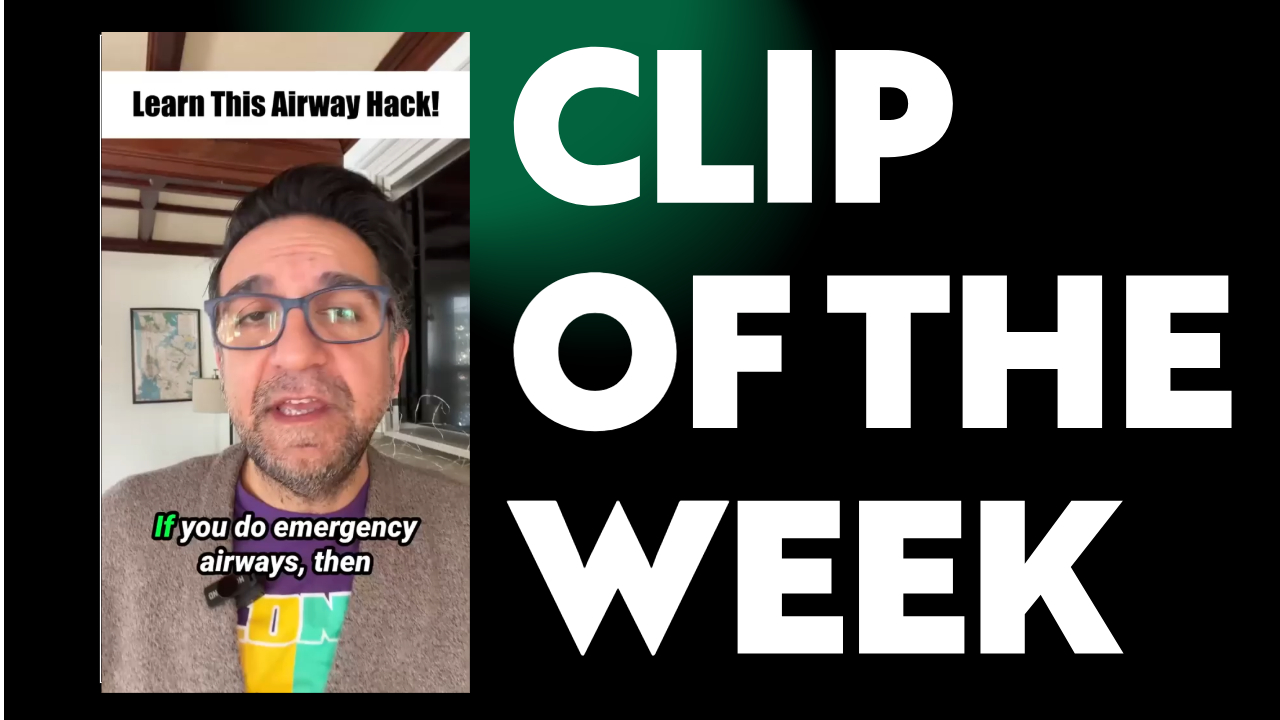
When using a Macintosh (curved) blade for intubation — whether direct or video laryngoscopy — there is an anatomical trick that many clinicians either overlook or never learned in the first place. The key lies in the hyoepiglottic ligament, a structure connecting the hyoid bone to the epiglottis. When the tip of the curved blade is properly advanced into the vallecula and pressed against this ligament, it indirectly lifts the epiglottis out of the way, revealing a clear view of the vocal cords. Many clinicians, upon seeing the cords, stop advancing and settle for a suboptimal view — not realizing that a little more deliberate engagement of that ligament could give them a significantly better glottic view.
The practical takeaway is simple: seeing the cords is not the finish line. If the view is anything less than optimal, continue advancing the blade tip deeper into the vallecula to fully engage the hyoepiglottic ligament. This single adjustment can transform a partial view into a clean, unobstructed look at the cords — what some might call the "chef's kiss" view. Given how much is riding on a successful emergency airway, this small anatomical nuance is well worth ingraining into every intubation attempt, and it is a reminder that even experienced clinicians can refine their technique with a deeper understanding of the underlying anatomy.
Watch the full video here and leave a comment.
Don't forget to like and follow my IG, TikTok, YT, Facebook or LinkedIn accounts.


Abdominal compartment syndrome (ACS) is a critical condition characterized by sustained intra-abdominal hypertension that leads to multi-organ dysfunction. It often stems from primary causes like retroperitoneal hemorrhage or ruptured aneurysms, but it is frequently triggered by secondary factors such as aggressive fluid resuscitation in burn or sepsis patients. This fluid overload, combined with a cytokine storm and increased capillary permeability, creates a vicious cycle of swelling. Clinically, ACS manifests as a triad of symptoms: elevated peak inspiratory pressures on the ventilator due to diaphragmatic compression, cardiovascular instability requiring increasing doses of vasopressors, and sudden onset oliguria or anuria.
Management of ACS revolves around treating the abdomen as a distinct compartment, similar to the brain or limbs, where the "6th vital sign" is the bladder pressure. The primary goal is to maintain an abdominal perfusion pressure (APP) of at least 60 mmHg, calculated as the mean arterial pressure (MAP) minus the intra-abdominal pressure (IAP). Initial interventions include optimizing sedation, administering neuromuscular blockade, and decompressing the GI tract via nasogastric or rectal tubes. In cases of tense ascites, a bedside paracentesis may be life-saving. However, if medical management fails to relieve the pressure, a decompressive laparotomy is required to prevent irreversible organ failure and exsanguination.
Check out this video of Dr. Dennis Kim from ResusX:2025 now!


Chasing Sodium: Fixing Numbers Won't Fix The Patient
Hyponatremia affects up to 30% of hospitalized patients and has long been linked to falls, neurocognitive impairment, and increased mortality — but whether it directly causes these outcomes or merely reflects underlying disease severity has remained unanswered. A multicenter RCT published in NEJM Evidence, addressed this directly: 2,173 hospitalized patients with chronic hypotonic hyponatremia (sodium <130 mmol/L) across nine European centers were randomized to a structured, guideline-driven correction protocol versus standard care, with a primary outcome of death or rehospitalization within 30 days. The intervention successfully corrected sodium levels in 60.4% of patients versus 46.2% in controls, yet outcomes were virtually identical — 20.5% vs. 21.8% for the primary composite endpoint (P=0.45), with 30-day mortality at 8.0% in both groups. No differences emerged in rehospitalization, length of stay, cognition, quality of life, or fall rates, and no cases of osmotic demyelination were observed.
These findings do not argue for abandoning hyponatremia treatment, but they do suggest that intensifying correction beyond standard practice offers no added mortality or readmission benefit during the hospitalization window. A post-hoc analysis found that patients in either group who achieved normonatremia at discharge had lower odds of the primary outcome (OR 0.74), reinforcing that normalization matters — just not that pushing harder in the short term changes outcomes. This echoes a recurring pattern in hospital medicine, where treating numbers more aggressively (as with tight glucose control or inpatient hypertension management) fails to translate into better patient results. A potential benefit signal in patients 70 and older (OR 0.76) remains hypothesis-generating and warrants a dedicated trial.
My Takeaway Points:
-
Finding - Despite achieving normonatremia in 14.3% more patients than standard care, targeted hyponatremia correction produced no reduction in the 30-day composite of death or rehospitalization (20.5% vs. 21.8%; P=0.45), with identical 30-day mortality of 8.0% in both groups.
-
Practice Impact - Intensifying hyponatremia correction beyond current standard of care during hospitalization should not be pursued for the purpose of reducing short-term mortality or readmission; clinical focus should remain on treating the underlying cause, with correction guided by symptom burden and individual risk — not sodium targets alone.
-
Population - Hospitalized adults (median age 73) across nine European centers with chronic hypotonic hyponatremia below 130 mmol/l, predominantly moderate severity (93.8%), including euvolemic (53.8%), hypovolemic (30.8%), and hypervolemic (15.4%) subtypes, with significant comorbidity burden (median Charlson Comorbidity Index 4).
-
Limitation - The trial was conducted entirely during hospitalization and cannot address outpatient hyponatremia correction; blinding of the intervention was not possible; and the predominantly moderate-severity cohort limits generalizability to patients with severe hyponatremia (sodium below 120 mmol/l), who represented only 6.2% of participants.
Want to learn more? Read the full study A Randomized Trial of Targeted Hypotremia Correction in Hospitalized Patients by J. Refardt, et al. in NEJM Evidence.
Olanzapine vs Haloperidol: The ED Agitation Showdown
When your patient is fighting the IV pole, security, and maybe you…you need something that works. So what are you reaching for: good old haloperidol or olanzapine?
The Sedation Question
Both get the job done.
In a 2025 RCT (n=94), IM olanzapine 10 mg trended toward better early sedation compared to IM haloperidol 5 mg:
-
15 min: 32% vs 26%
-
30 min: 62% vs 49%
Not statistically significant — but consistently favoring olanzapine.
The EPS Problem
Here’s where things were significant.
Acute dystonia occurred in:
-
8% with haloperidol
-
0% with olanzapine
Number needed to harm for haloperidol? About 12.
So, if you’re treating a young male or someone with prior EPS, olanzapine meaningfully lowers your odds of pushing diphenhydramine at 3 a.m.
The QTc Anxiety
Large meta-analyses suggest haloperidol’s torsades risk is likely lower than we once feared. But let’s be honest, haloperidol still carries QTc baggage in our brains.
Olanzapine doesn’t come with that same narrative.
The Catch
Olanzapine isn’t a free lunch.
Prospective ED data (n=784) showed:
-
~2% respiratory depression (higher with IV use)
-
Orthostatic hypotension
-
Bradycardia
Maybe don’t give it to the frail, volume-depleted 82-year-old and stand them up five minutes later.
Bottom Line
-
Choose olanzapine when avoiding EPS and QTc prolongation matters most.
-
Choose haloperidol when hemodynamics, fall risk, or rapid ambulation are bigger priorities.
Both sedate. The real decision is what complication you’re more prepared to manage afterward.
— Lil’ Pharma
Review this week's Dose on IG or TikTok.
----------
Dr. Abbi Briscoe is an emergency department clinical pharmacist, pharmacy residency program coordinator, and affiliate professor in Montana. She is passionate about Emergency Medicine and Critical Care education, and is an avid mountain biker and skier in her free time.
Connect with Dr. Briscoe: @lilpharm2026 (IG) or @lilpharm2026 (Tiktok)
Watch the March Videos Now!
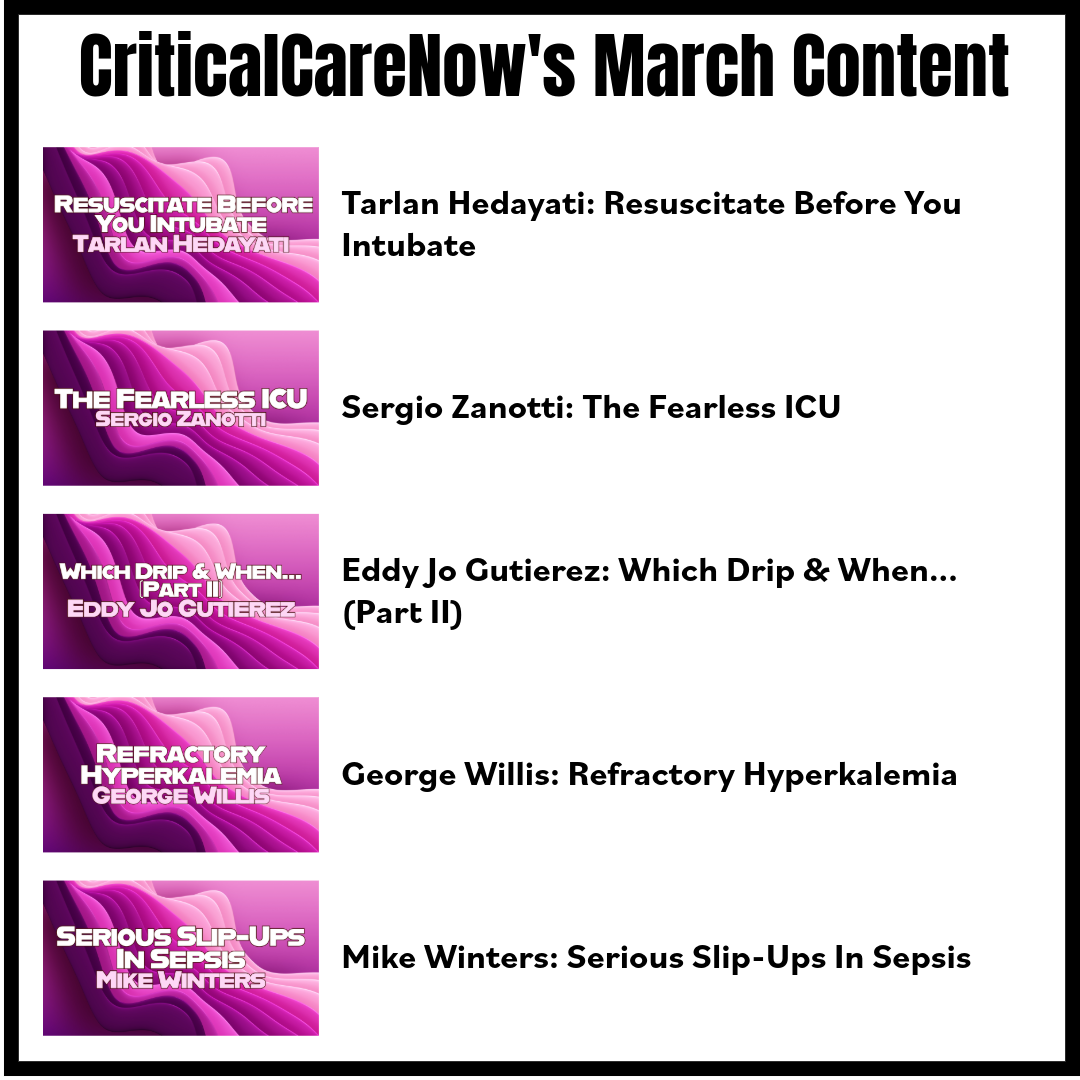
If you're an All-Access member, you're in for some great content this month. We have FIVE videos hand-picked by our staff that are high-yield and our most highly watched. We're featuring:
- Hedayati on "Resuscitate Before You Intubate"
- Zanotti on "The Fearless ICU"
- Gutierez on "Which Drip & When...(Part II)"
- Willis on "Refractory Hyperkalemia"
- Winters on "Serious Slip-Ups In Sepsis"
Each month we bring you fresh new content from the best of the best in resuscitation. If you're an All-Access member, go watch these videos NOW!


Responses