

STEMI • Pre-Ox • Pacers • DKA
Four talks from the ResusX:2025 stage are now free. Steven Haywood takes apart pre-oxygenation, which feels routine right up until the patient crashes on induction. Amal Mattu walks through STEMI mimics, the ones that don't announce themselves and that the machine happily reads as normal. Shaila Quazi makes pacemaker rhythms readable in real time, so you're not calling cardiology at 3am to ask what you're looking at. And George Willis covers modern DKA management, including the parts that quietly moved on after your residency.
No charge, no credit card. Go to the link below and get access to your videos; they arrive instantly! That's it, nothing else gets sent to you. Watch them in any order, at your own pace, whenever or wherever you like! These are yours for life!
How Hippocrates Gaslit the Entire Planet
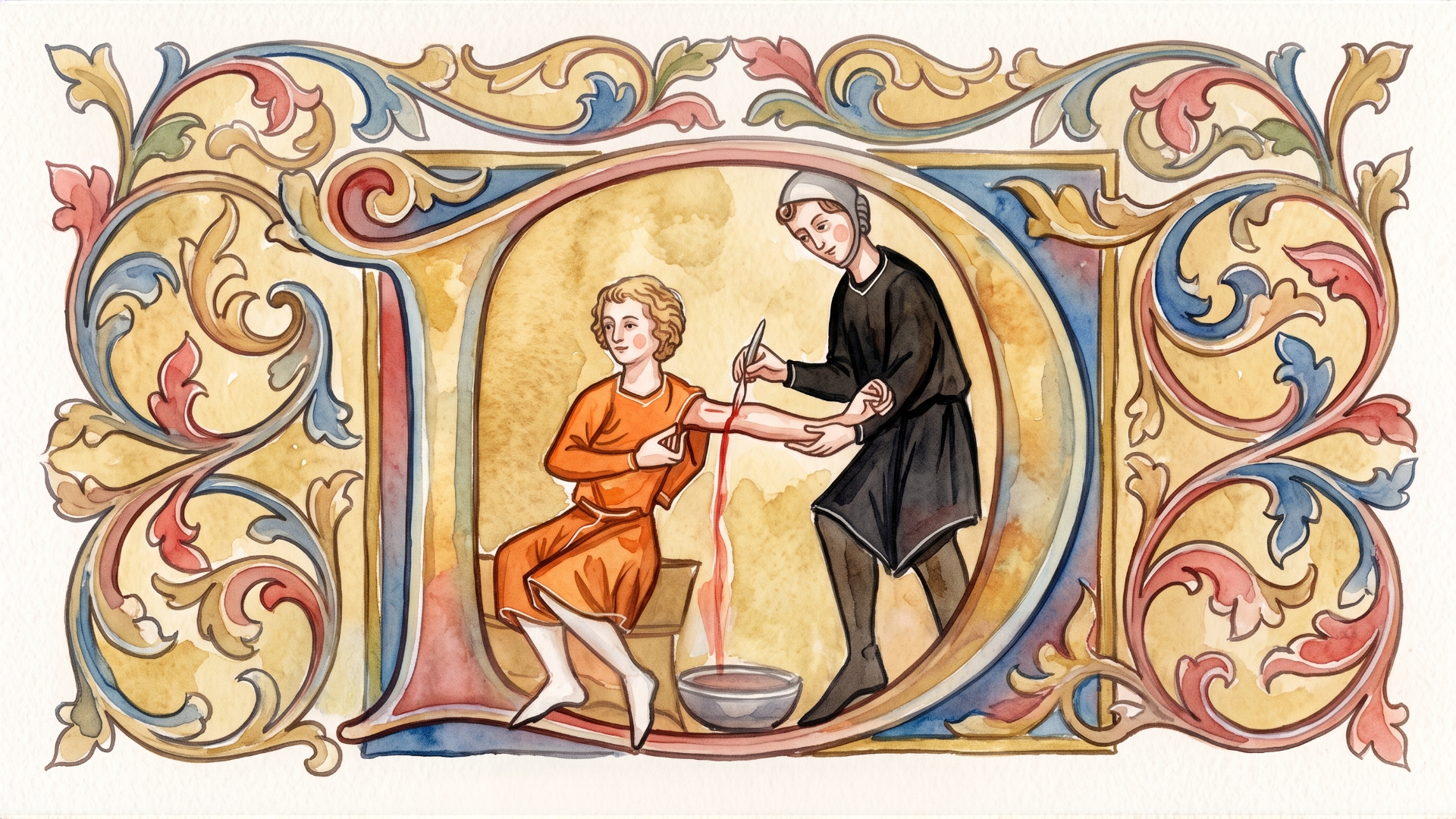
Imagine surviving the plague only to have your doctor tell you your vibes are off because you have too much phlegm. For roughly two thousand years, Western medicine was completely gripped by humoral theory, the ultimate bro-science framework pioneered by Hippocrates and aggressively marketed by Galen. The premise was simple enough: your body was a meat-suit managed by four vital fluids: blood, phlegm, yellow bile, and black bile. Depressed? Clearly an overproduction of black bile, making you "melancholic." Hot-headed? Your yellow bile was spiking, making you "choleric." Instead of examining cellular pathology, our medical ancestors treated the human body like a poorly maintained aquarium and concluded that every symptom from epilepsy to a mild fever was just a plumbing issue requiring aggressive fluid rebalancing.
This logic produced some genuinely unhinged treatment decisions. A patient with a raging fever? The answer wasn't to fight the infection. It was to drain the "excess" blood, because they were looking a little too sanguine. Doctors spent centuries slapping leeches onto people, prescribing violently toxic emetics, and running bloodletting sessions that frequently killed the patient faster than the pathogen did. George Washington famously died after his medical team drained roughly 40% of his blood to treat a throat infection. We didn't fully abandon this biochemical fan-fiction until the mid-1800s, when germ theory and cellular pathology arrived and suggested that microscopic organisms were a better explanation for disease than an angry liver
Get Ready For a New EM Conference in Fall 2026
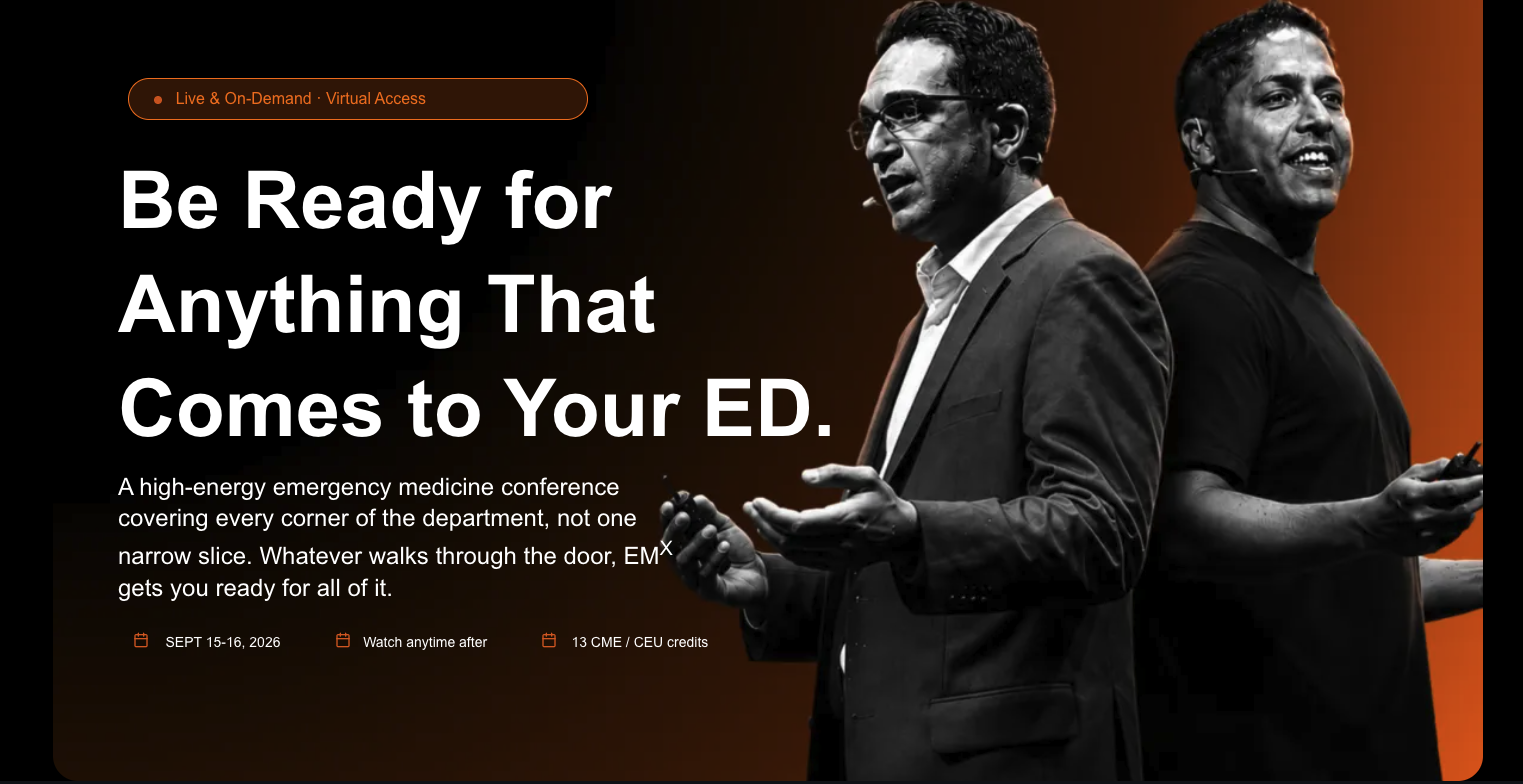
EMX is a brand-new emergency medicine conference I'm co-hosting with Dr. Anand Swaminathan — built for clinicians who want the whole emergency department sharpened, not just one narrow slice. Cardiology, stroke, peds, tox, endocrine, OB, MSK, airway — whatever walks through your door, EMX gets you ready for all of it.
For our inaugural meeting, EMX will be held virtually — so no matter where you practice, you can be there. Everything else you'd expect from a world-class conference? Still here.
And this isn't your standard lecture marathon. We're talking talk-show interviews, live media reads, real expert debates, audience polling — and our signature 🔥 Hot Ones segment. You'll be locked in from the first slot to the last.
The faculty lineup includes Amal Mattu, Reuben Strayer, Evie Marcolini, Tarlan Hedayati, Jenny Beck-Esmay, and more of the clinicians who actually shape how emergency medicine is practiced.
📅 September 15–16, 2026 | Virtual / Online
📍 ✅ 9.5 CME/CEU Credits
Want to add a full afternoon with Amal Mattu + 3.5 CME/CEU credits? Grab a virtual seat at the ECG Pre-Conference Workshop on September 14 — limited to 50 people.
REGISTER FOR VIRTUAL EMX HERE!

The Central Line Hack No One Teaches
If you place central lines, I've got a hack for you that I've used for years — and I was reminded of it recently while working with a fellow. We were mid-procedure and needed the wire again after already cannulating the vessel and removing it from the field. Here's the trick: don't toss that wire deployment sheath off the field once you've used it. Keep it close, because you might need it again. When the wire needs to go back in, feed it right back into that same plastic sheath — just reverse the motion you used to deploy it.
This does two things for you. First, it keeps your wire clean and protected if you need to redeploy it mid-procedure. Second, and just as important, it solves the classic post-procedure headache we've all dealt with — a loose wire flopping around, smacking you in the face while you're trying to wrangle it into the sharps container. With the sheath, you get a clean, controlled, disposable package instead. It's a small habit that saves you a mess and a minor safety risk. I love collecting central line tips like this — drop yours in the comments.
Watch the full video here and leave a comment.
Don't forget to like and follow my IG, TikTok, YT, Facebook or LinkedIn accounts.


Abbi Briscoe, PharmD focuses on pharmacologic management of agitated patients in emergency settings, emphasizing the importance of matching medications to specific receptor targets rather than defaulting to familiar drugs. Dr. Briscoe advocates for droperidol as the first-line agent for undifferentiated agitation due to its rapid onset, predictable duration of action, and safety profile, noting that concerns about QT prolongation are overblown at emergency department doses. For violently agitated patients requiring immediate control, ketamine at 4mg/kg IM is recommended despite a low risk of intubation. In elderly delirious patients, lower doses of droperidol (2.5-5mg) are preferred over olanzapine, which has significant anticholinergic effects that can worsen delirium.
For alcohol withdrawal management, phenobarbital is strongly recommended over benzodiazepines like Ativan due to its more predictable pharmacokinetics, linear dosing relationship, and mechanistic advantages, including both GABA stimulation and glutamate inhibition through AMPA receptor blockade. The recommended loading dose is 10-15mg/kg, with its long half-life (3-4 days) providing sustained receptor activity. While dexmedetomidine may help with agitation symptoms, it should not be used alone for alcohol withdrawal since it works on alpha receptors rather than GABA receptors and doesn't prevent seizures. Dr. Briscoe’s key takeaway is to take time to identify the underlying cause of agitation and select appropriate receptor-targeted medications rather than reflexively using familiar drugs.
Check out this video of Dr. Abbi Briscoe from ResusX:2026 now!


4 CNS Infections, 1 Critical Difference
Severe CNS infections — bacterial meningitis, viral encephalitis, healthcare-associated ventriculitis, and brain abscess — often present with overlapping, nonspecific symptoms (headache, fever, altered mentation), yet a new, practical ICU-focused review makes clear that the first-hour management pathway diverges sharply depending on which is suspected. For meningitis and encephalitis, the message is unambiguous: treat before you know. Empiric third-generation cephalosporin plus vancomycin (adding ampicillin if Listeria is a concern) should begin within the first hour for suspected bacterial meningitis, even before imaging or LP, since every hour of delay worsens outcomes. Viral encephalitis follows the same logic, with empiric IV acyclovir started immediately to cover HSV/VZV pending CSF results.
Brain abscess is the outlier most likely to trip up clinicians because the leading differentials for a ring-enhancing lesion are non-infectious (tumor), and antimicrobials given before tissue acquisition measurably lower diagnostic yield. Guidelines conditionally recommend withholding antibiotics until a specimen is obtained (if the patient is stable), with early gadolinium-enhanced MRI (DWI/ADC) and neurosurgical sampling within 24 hours when feasible. Healthcare-associated ventriculitis adds further complexity as CSF findings and biomarkers are unreliable in this setting, so empiric broad-spectrum Gram-negative coverage (vancomycin plus an anti-pseudomonal agent) is guided mainly by clinical suspicion. Bottom line: default to immediate empiric treatment for meningitis/encephalitis, but pause and prioritize imaging/tissue diagnosis first when brain abscess is on the differential. This distinction is easy to blur under time pressure but has real diagnostic and antimicrobial-stewardship consequences.
My Takeaway Points:
- Finding - For suspected brain abscess, neurosurgical sampling and MRI should occur within 24 hours, ideally before antimicrobials, since antibiotics given ahead of tissue acquisition reduce diagnostic yield; the opposite of the "treat-first" approach used for meningitis/encephalitis.
- Practice Impact - Empiric antibiotics/acyclovir should start within the first hour for suspected bacterial meningitis or viral encephalitis (even pre-imaging), but withholding antimicrobials is conditionally appropriate for suspected brain abscess when the patient is stable and surgical diagnosis won't be delayed.
- Population - Applies broadly to ICU-admitted adults with de novo or hospital-acquired CNS infection presentations; roughly half of community-acquired meningitis and up to half of encephalitis cases require ICU-level care, often for airway/ventilatory support.
- Limitation - Diagnostic tools are imperfect across the board — CSF culture sensitivity for healthcare-associated ventriculitis is under 60%, DWI/ADC misclassifies abscess vs. tumor in ~8% of cases, and no validated CSF biomarker reliably confirms device-related infection, so clinical judgment remains central to timing decisions.
Want to learn more? Read the full review Meningitis, Encephalitis, and Beyond: A Practical Intensive Care Unit Guide to Severe Central Nervous System Infections by K. Busl, et al. in Journal of Intensive Medicine.
The Pleural Fluid G.O.A.T.
Light's criteria have been the cornerstone of pleural fluid analysis for decades. They're incredibly sensitive for identifying exudative pleural effusions, but anyone who takes care of hospitalized patients knows they aren't perfect. Patients with heart failure who have been aggressively diuresed, cirrhosis, or chronic kidney disease can have transudative effusions that suddenly meet exudative criteria after fluid removal. Now you're left wondering: Is this really an exudate, or did I just concentrate the pleural fluid?
One test that deserves more attention is pleural fluid cholesterol.
Why Cholesterol?
When the pleura becomes inflamed, vascular permeability increases, allowing cholesterol-rich lipoproteins to enter the pleural space. At the same time, inflammatory cells and red blood cells break down over time, releasing additional cholesterol into the fluid. The longer an inflammatory process persists, the more cholesterol tends to accumulate.
Transudative effusions generally lack this inflammatory process, so cholesterol levels remain low.
The Cutoff to Remember
A pleural fluid cholesterol >45 mg/dL (approximately 1.16 mmol/L) strongly supports an exudative pleural effusion.
Several studies have demonstrated that pleural cholesterol performs similarly to Light's criteria and, in some situations, may better classify patients whose effusions have been altered by diuresis.
Where it Can Be Most Helpful
I don't think pleural cholesterol should replace Light's criteria. Instead, I think of it as another piece of the puzzle when the clinical picture doesn't fit.
Examples include:
-
A patient with known heart failure who has received several days of IV diuresis but now meets Light's criteria for an exudate.
-
Borderline pleural protein or LDH values.
-
Situations where you want another data point before pursuing more invasive testing.
The Bigger Lesson
No single pleural fluid test makes the diagnosis.
Pleural fluid analysis should always be interpreted alongside the patient's history, imaging, laboratory findings, and overall clinical picture. Cholesterol is simply another physiologic marker that can improve diagnostic confidence when the answer isn't obvious.
Sometimes the most valuable test isn't the newest one—it's the one we forgot to order.
Key Takeaways
- Light's criteria remain the first-line method for classifying pleural effusions.
- Pleural fluid cholesterol >45 mg/dL strongly suggests an exudate.
- Cholesterol may be particularly useful when diuresis causes transudates to meet Light's criteria.
- Always interpret pleural fluid studies within the clinical context rather than relying on a single laboratory value.
Review this week's pearls on IG.
----------
Dr. Ghionni is also the creator of @pulmtoilet on Instagram and hosts The Peak Inspiration Podcast — a free resource available on YouTube, Spotify, and Apple Podcasts.
Connect with Dr. Ghionni: @pulmtoilet IG / YT / Spotify / Apple
Watch the August Videos Now!
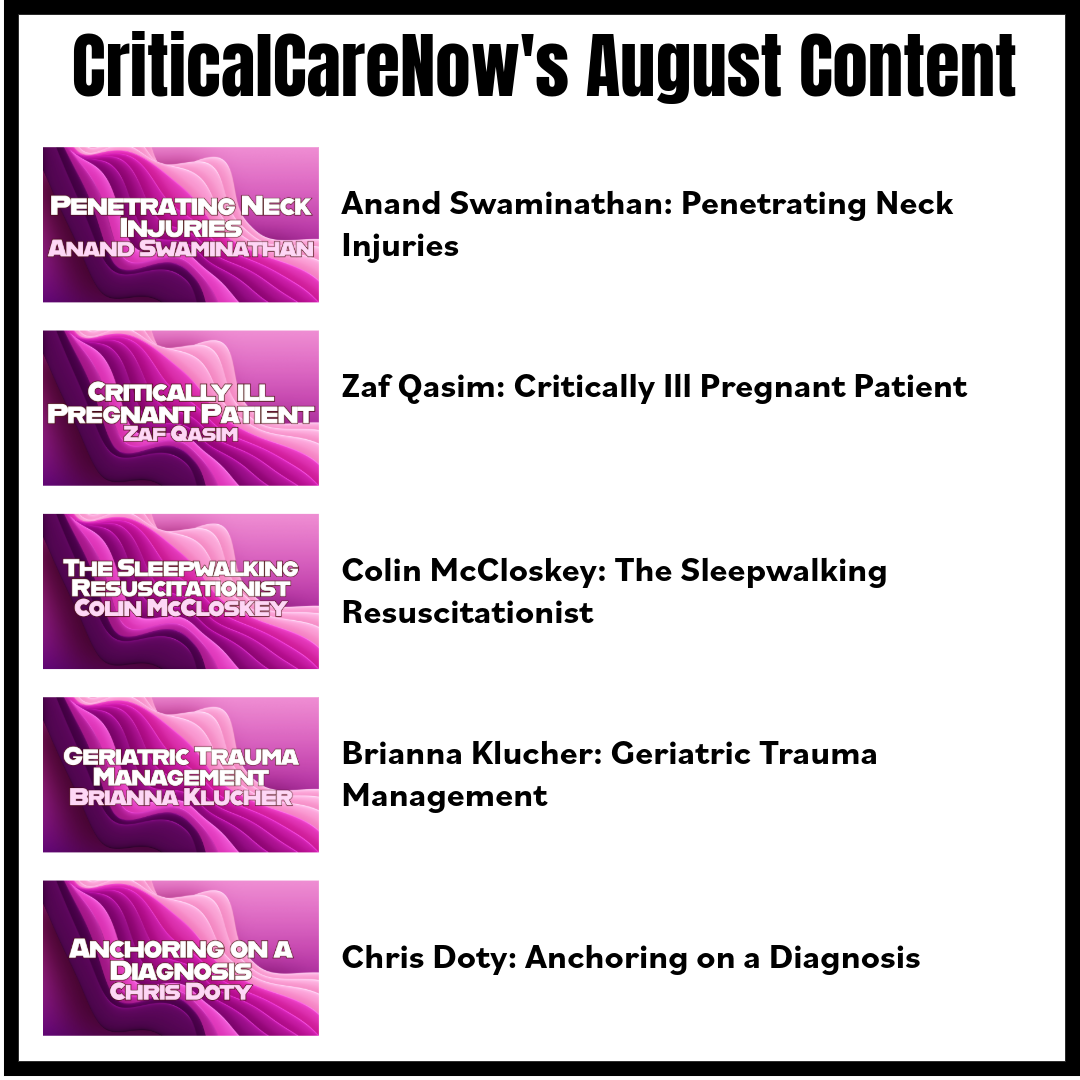
If you're an All-Access member, you're in for some great content this month. We have FIVE videos hand-picked by our staff that are high-yield and our most highly watched. We're featuring:
- Swaminathan on "Penetrating Neck Injuries"
- Qasim on "Critically Ill Pregnant Patient"
- McCloskey on "The Sleepwalking Resuscitationist"
- Klucher on "Geriatric Trauma Management"
- Doty on "Anchoring on a Diagnosis"
Each month we bring you fresh new content from the best of the best in resuscitation. If you're an All-Access member, go watch these videos NOW!


Responses