

ResusX Goes To Puerto Rico!
Condado Beach, Puerto Rico ~ Feb 1-3, 2027
A BIG thanks to those of you who already expressed interest in the conference and secured your spot at the early bird price. X on the Beach is now fully greenlit and tickets sales will go live this week. Keep an eye on your inbox for an email from us with the link to register. In the meantime, secure your spot using the link below. Once ticket sales go live, early bird pricing will end.
So, grab your spot now for a CME getaway that is like no other conference that you've ever attended. X on the Beach takes the best parts of ResusX but makes it more intimate and interactive. On February 1-3 we are taking a group of only 50 people to Puerto Rico for three days of conference, socializing and fun in the sun. Join Haney Mallemat, Jailyn Avila, Tarlan Hedayati, George Willis, Sara Crager and more for this unique vacation getaway. CME and CEUs will be offered. There's only 50 tickets available and it's first come, first served so if you are interested in attending, click below NOW!
Booking link for rooms at the San Juan Marriott Resort & Stellaris Casino to be sent separately, after registration.

EMx is LIVE TODAY
Last Chance to Grab a Spot!
EMX is a new emergency medicine conference I'm co-hosting with Dr. Anand Swaminathan — built for clinicians who want the whole emergency department sharpened, not just one narrow slice. Cardiology, stroke, peds, tox, endocrine, OB, MSK, airway — whatever walks through your door, EMX gets you ready for all of it.
For our inaugural meeting, EMX will be held virtually — so no matter where you practice, you can be there. Everything else you'd expect from a world-class conference? Still here.
And this isn't your standard lecture marathon. We're talking talk-show interviews, live media reads, real expert debates, audience polling — and our signature 🔥 Hot Ones segment. You'll be locked in from the first slot to the last.
The faculty lineup includes Amal Mattu, Reuben Strayer, Evie Marcolini, Tarlan Hedayati, Jenny Beck-Esmay, and more of the clinicians who actually shape how emergency medicine is practiced.
📅 September 15–16, 2026 | Virtual / Online
📍 ✅ 9.5 CME/CEU Credits
Want to add a full afternoon with Amal Mattu + 3.5 CME/CEU credits? Grab a virtual seat at the ECG Pre-Conference Workshop TODAY @ 1pm ET — limited to 50 people.

We Built Artificial Life From Scratch and Named It After a Potato
Imagine brewing primordial soup, except instead of waiting a billion years for lightning to strike, you just toss in 36 genes and call it a day. That's essentially what researchers at the University of Minnesota just pulled off with "SpudCell," the world's first fully synthetic cell built entirely from non-living chemicals. It's called SpudCell because it's shaped like a potato and has serious Sputnik-era trailblazer energy. This little 90-kilobase Frankencell can feed itself, grow, and replicate its own DNA. It's entirely modular, running on seven separate DNA plasmids scraped together from E. coli and random viruses. So much for the magical spark of life; turns out it's basically a biochemical Lego set. And in the most relatable academic plot twist ever, the researchers originally submitted this landmark paper to the journal Cell, only to get rejected because a reviewer claimed it "wasn't real biology." Getting gaslit by Reviewer #2 while successfully playing God is peak STEM.
But the best part about SpudCell is how closely it mirrors the resident physician experience: it survives entirely on stress and has no internal support system. Since it lacks a eukaryotic cytoskeleton, it divides by just crowding proteins onto its membrane until the mechanical tension makes it split in half. The researchers even ran a Darwinian hunger games, introducing a genetically tweaked variant to see what would happen. Within five generations, the faster-growing mutant completely outcompeted the original strain for the limited nutrient supply. Even artificial life apparently defaults to grind culture. Right now this open-source potato blob is just a proof of concept, managed by a new non-profit called Biotic. But the endgame is wild: custom-built biological factories churning out targeted therapeutics using amino acids evolution never bothered to invent. So yeah, we're one step closer to programmable life, and you still have to manually page cardiology.

Not All Shock Is the Same
Today we're talking shock, and specifically why not all shock is the same. There are four classic types, and you have to identify which one you're dealing with before you can fix it. Hypovolemic shock can be hemorrhagic, but don't forget the non-hemorrhagic causes: excessive vomiting, diarrhea, or the cardiologist who was a little generous with the diuretics. I'm looking at you, Cardiology. Obstructive shock is a problem getting blood into or out of the heart: high-risk PE, severe pulmonary hypertension, tamponade, tension pneumothorax, SVC syndrome. Cardiogenic shock is a pump problem (RV or LV), and remember cardiac output is HR x SV, so bradycardia and tachydysrhythmias count too. Distributive shock is vasoplegia of the arteries and veins; sepsis leads the list, but anaphylaxis, adrenal insufficiency, and neurogenic shock are right behind it.
Here's the point. Before you reflexively hang 2 liters of crystalloid, know what type of shock you're treating. Every type is different. You're not just resuscitating, you're hunting the underlying cause so you can fix it. How do you figure that out while the patient is crashing in front of you? I've got you covered in the next video.
Watch the full video here and leave a comment.
Don't forget to like and follow my IG, TikTok, YT, Facebook or LinkedIn accounts.

A Video Gift From Haney
Four talks from the ResusX:2025 stage are now free. Steven Haywood takes apart pre-oxygenation, which feels routine right up until the patient crashes on induction. Amal Mattu walks through STEMI mimics, the ones that don't announce themselves and that the machine happily reads as normal. Shaila Quazi makes pacemaker rhythms readable in real time, so you're not calling cardiology at 3am to ask what you're looking at. And George Willis covers modern DKA management, including the parts that quietly moved on after your residency.
No charge, no credit card. Go to the link below and get access to your videos; they arrive instantly! That's it, nothing else gets sent to you. Watch them in any order, at your own pace, whenever or wherever you like! These are yours for life!

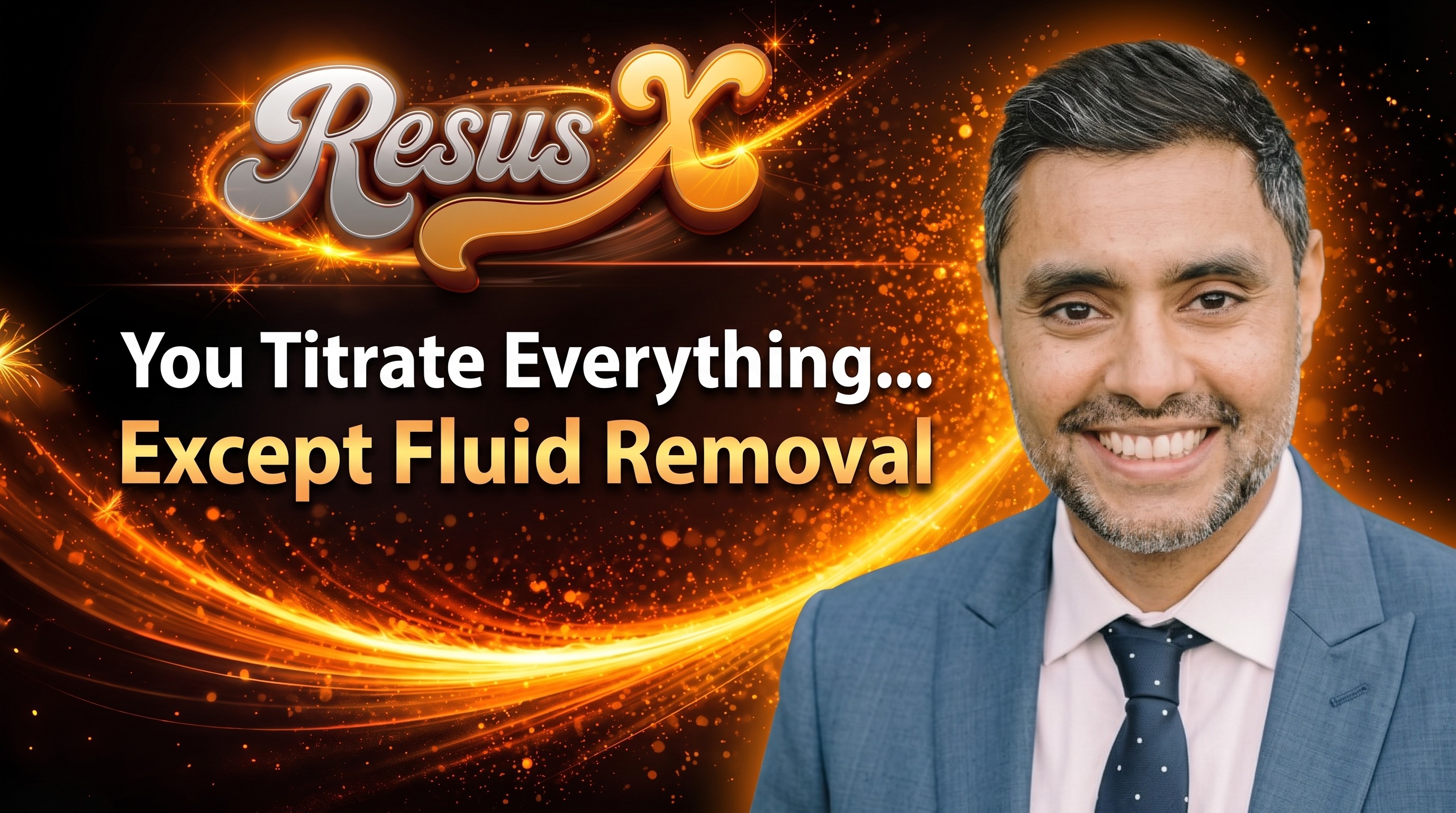
Sharad Patel, MD emphasizes the need for precision in fluid removal for critically ill ICU patients, arguing that while clinicians carefully titrate pressors and fluids, they often approach diuresis and ultrafiltration less precisely. Evidence shows that both excessive fluid accumulation (particularly when body weight exceeds 10% above admission weight) and overly aggressive fluid removal (above 13cc/kg/hour in dialysis patients) significantly increase mortality and complications. The key physiological constraint is the vascular refilling rate, which maxes out at 5-7cc/kg/hour; approximately 500cc/hour for a 70kg patient. Removing fluid faster than this rate causes the intravascular space to deplete faster than the interstitium can refill it, leading to cardiac and renal ischemia.
Dr. Patel proposes a structured framework using the Frank-Starling curve read "right to left" to guide safe fluid removal. Assessment involves two axes: measuring congestion (through IVC ultrasound, lung B-lines, portal vein pulsatility, fluid balance, and echo parameters like E/e') and determining preload responsiveness through passive leg raises with cardiac output monitoring. Patients with high congestion who are preload-independent can tolerate faster fluid removal, while those who are preload-responsive require slower, more cautious decongestive strategies. For diuretic management, he recommends starting with 2.5x the home oral dose when converting to IV, checking urine sodium within an hour (targeting 50-70 mmol/L for adequate natriuresis), and using combination diuretics targeting different nephron segments when monotherapy is insufficient. The overall message is to apply the same precision to fluid removal that clinicians use for fluid administration and pressor titration.
Check out this video of Dr. Sharad Patel from ResusX:2026 now!
Meningitis vs The Clock: Why Speed Saves Lives
What is the increase in the odds of mortality for each hour of delay in administering antibiotics in bacterial meningitis?
A. A 20% increase in odds per hour delay
B. A 5% increase in odds per hour delay
C. A 10% increase in odds per hour delay
D. A 15% increase in odds per hour delay
Scroll to the end of the newsletter for the answer.

Welcome To The ResusNation CME Pass Membership
Membership Includes:
✔️ Monthly ResusX:Rounds – Attend live and access the full replay library
✔️ The Debrief: Live – Twice monthly to discuss cases, questions, or whatever's on your mind
✔️ Exclusive Videos – 6 resuscitation-focused videos each month
✔️ Chawk Tawks Library – On-demand whiteboard teaching
✔️ QuickCrits – Daily resuscitation tips and tricks emailed to you
✔️ Weekly Article Review – Summaries of cutting-edge articles, broken down, reviewed, and delivered to your inbox
✔️ Case Simulator – Hand-picked weekly scenarios; guide real-time resuscitations by talking directly to your patient and care team
✔️ AI Journal Club MC – Discuss the article of the week with our interactive AI moderator; just like being in a live journal club
Already a ResusNation Basic or Plus Member? DO NOT use the link above, check your inbox for more details on how to upgrade your membership.
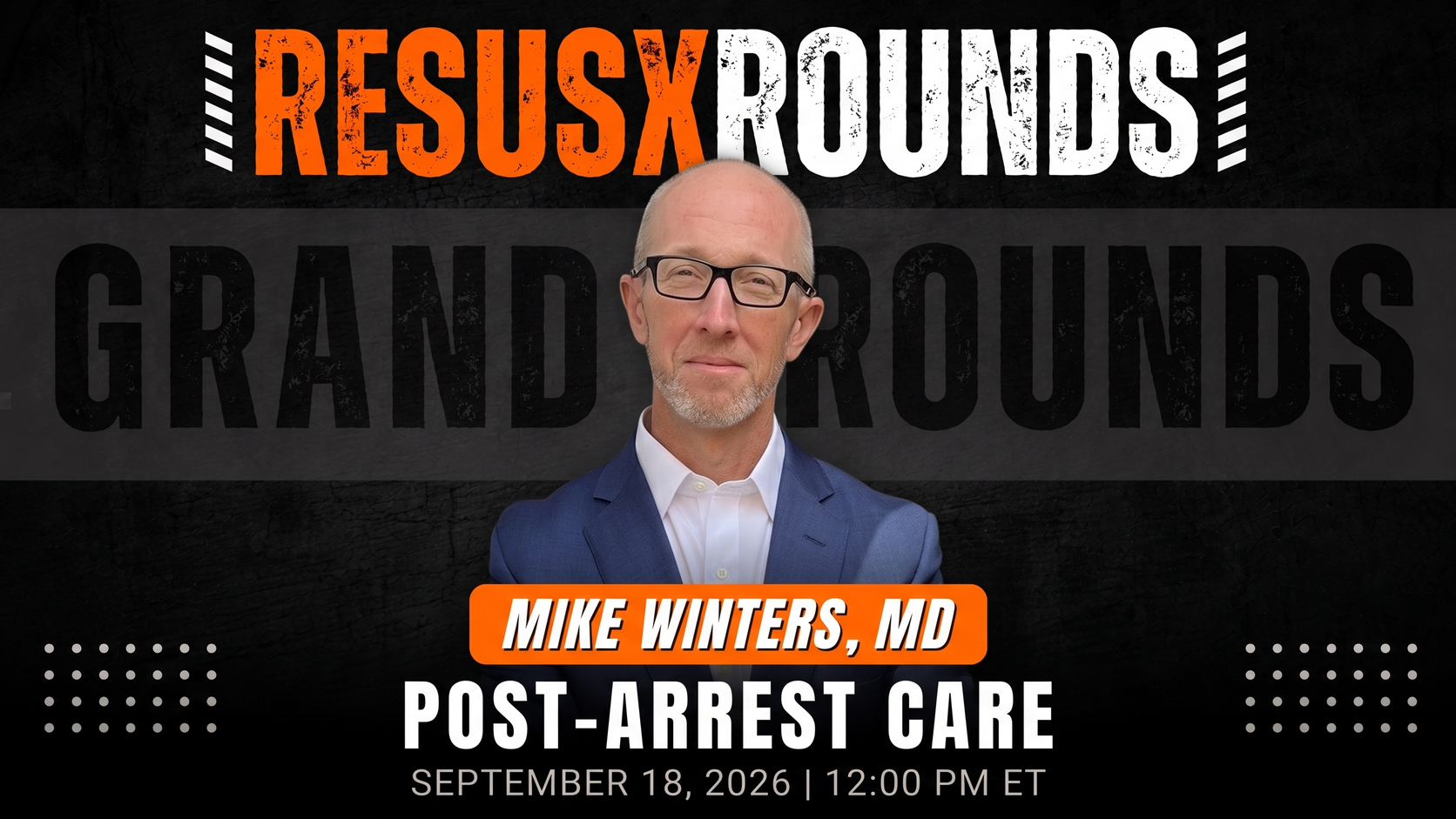
Want to Join Us for ResusX:Rounds?
The next session is scheduled on September 18, 2026 @ 12p ET. Rounds are now only open to CME Pass Members. Start your free trial above and navigate to the Events Calendar in the community to register.


Should You Reach for NIV or HFNC Post-Extubation?
ERS and ATS guidelines recommend noninvasive ventilation over high-flow nasal cannula for patients at high risk of extubation failure, but the trial data behind that preference are thinner than the phrasing suggests. Qin and colleagues pooled 11 randomized trials enrolling 2,765 post-extubation patients (1,368 HFNC, 1,397 NIV), defining "high risk" pragmatically as an observed reintubation rate of at least 10% in either arm rather than by counting risk factors. Every confidence interval crossed 1. Reintubation at 72 hours occurred in 18.41% of HFNC patients versus 15.31% with NIV (RR 1.22; 95%CI 0.83–1.80; moderate certainty), with a similar 7-day result (RR 1.23; 95%CI 0.90–1.69). Post-extubation respiratory failure trended toward HFNC (23.96% vs 30.57%; RR 0.82; 95%CI 0.66–1.02), though leave-one-out analysis destabilized that estimate once the Hernández 2022 trial (which enrolled patients with four or more risk factors) was removed. Mortality was flat at the ICU (RR 0.90; very low certainty, Egger's P = .007 for publication bias), in-hospital (RR 0.96), and 28-day (RR 0.99) levels, and VAP and crossover showed no separation. Trial sequential analysis never crossed a monitoring boundary for benefit, harm, or futility on any endpoint; this is underpowered evidence, not a demonstrated tie.
Practically, HFNC is a defensible choice in many high-risk patients today, particularly when NIV is poorly tolerated. But the authors are candid about the limits. No included trial separated hypercapnic from hypoxemic patients, so a real HFNC disadvantage in CO2 retainers could be washed out by equivalence in hypoxemic populations. The Hernández signal, plus the known benefit of NIV in patients hypercapnic at the end of the SBT, suggests some subgroups still belong on NIV. Expect movement toward combined HFNC-plus-NIV strategies and better risk stratification rather than a wholesale switch. Existing predictive models perform poorly (Youden index 0.08–0.16), which is why these trials keep enrolling heterogeneous populations and producing indeterminate answers.
My Takeaway Points:
- Finding - Across 11 RCTs and 2,765 patients, HFNC and NIV did not differ significantly on reintubation within 72 hours (18.41% vs 15.31%; RR 1.22; 95%CI 0.83–1.80), 7-day reintubation, post-extubation respiratory failure, ICU/in-hospital/28-day mortality, VAP, or treatment switching.
- Practice Impact - The ERS/ATS preference for NIV over HFNC in high-risk extubation is not supported by pooled randomized data, making HFNC a reasonable first-line option when NIV is poorly tolerated. But, trial sequential analysis crossed no boundary for benefit, harm, or futility, so this is inconclusive evidence, not proven equivalence.
- Population - Adult post-extubation patients from 11 RCTs (6 multicenter, sample sizes 40–830), defined as high-risk by an observed reintubation rate ≥10% in either arm; populations included obesity, AECOPD, sepsis, cardiothoracic surgery, and prolonged mechanical ventilation (≥14 days).
- Limitation - No trial separated hypercapnic from hypoxemic patients, so HFNC inferiority in CO2 retention may be diluted; the post-hoc ≥10% event-rate definition of "high risk" relies on post-randomization outcomes rather than baseline features; ICU mortality carried very low certainty with Egger's test suggesting publication bias (P = .007); and the respiratory-failure estimate flipped significance when the highest-risk trial was excluded.
Want to learn more? Read the full analysis High-Flow Nasal Therapy vs Noninvasive Ventilation for Post-Extubation Patients at High Risk of Reintubation: A Systematic Review and Meta-Analysis of Randomized Controlled Trials by J. Qin, et al. in Archivos de Bronconeumología.
Answer: C. A 10% increase in odds per hour delay
Explanation:
Each additional hour of delay in the administration of effective antibiotic therapy was associated with a 10% increase in the odds of mortality. This corresponds to an adjusted odds ratio of 1.1 per hour delay. Other options such as 5%, 20%, or 15% increases do not correspond with the recent study's findings. The analysis underscores how even relatively short delays incrementally worsen the overall outcome in meningitis. The effect size, although modest per hour, becomes significant over several hours. Early antibiotic intervention is therefore crucial.
DOI: https://doi.org/10.1038/s41598-021-04349-7
Review this week's minute on EMBLLM.
----------
Greg Weingart MD, FACEP, is the founder of Embllm, a microlearning medical education app that converts new literature into a multiple-choice question bank to earn CME from your phone. He is also an Assistant Professor in the Department of Emergency Medicine at EVMS/ODU, Partner at Emergency Physicians of Tidewater, and the Assistant Medical Director at Sentara Norfolk General Hospital.
Connect with Dr. Weingart: @Embllm_MedED (X) / LinkedIn / Facebook
Watch the September Videos Now!
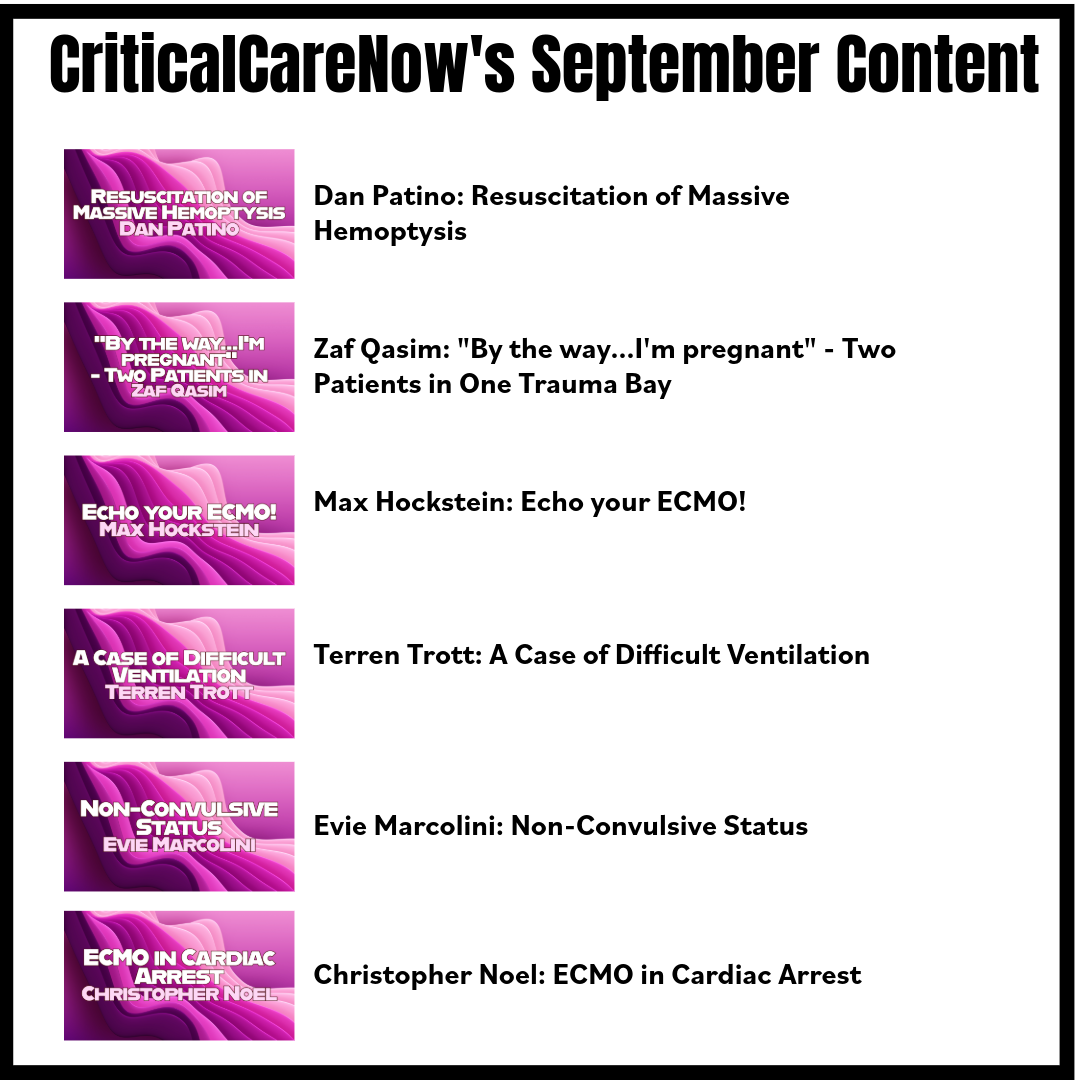
If you're a ResusNation paid member, you're in for some great content this month. We have SIX videos hand-picked by our staff that are high-yield and our most highly watched. We're featuring:
- Patino on "Resuscitation of Massive Hemoptysis"
- Qasim on "By the way...I'm pregnant" - Two Patients in One Trauma Bay"
- Hockstein on "Echo your ECMO!"
- Trott on "A Case of Difficult Ventilation"
- Marcolini on "Non-Convulsive Status"
- Noel on "ECMO in Cardiac Arrest"
Each month we bring you fresh new content from the best of the best in resuscitation. If you're a ResusNation paid member, go watch these videos NOW!


Responses