
URGENT: Early-Bird Pricing Ends Tomorrow!
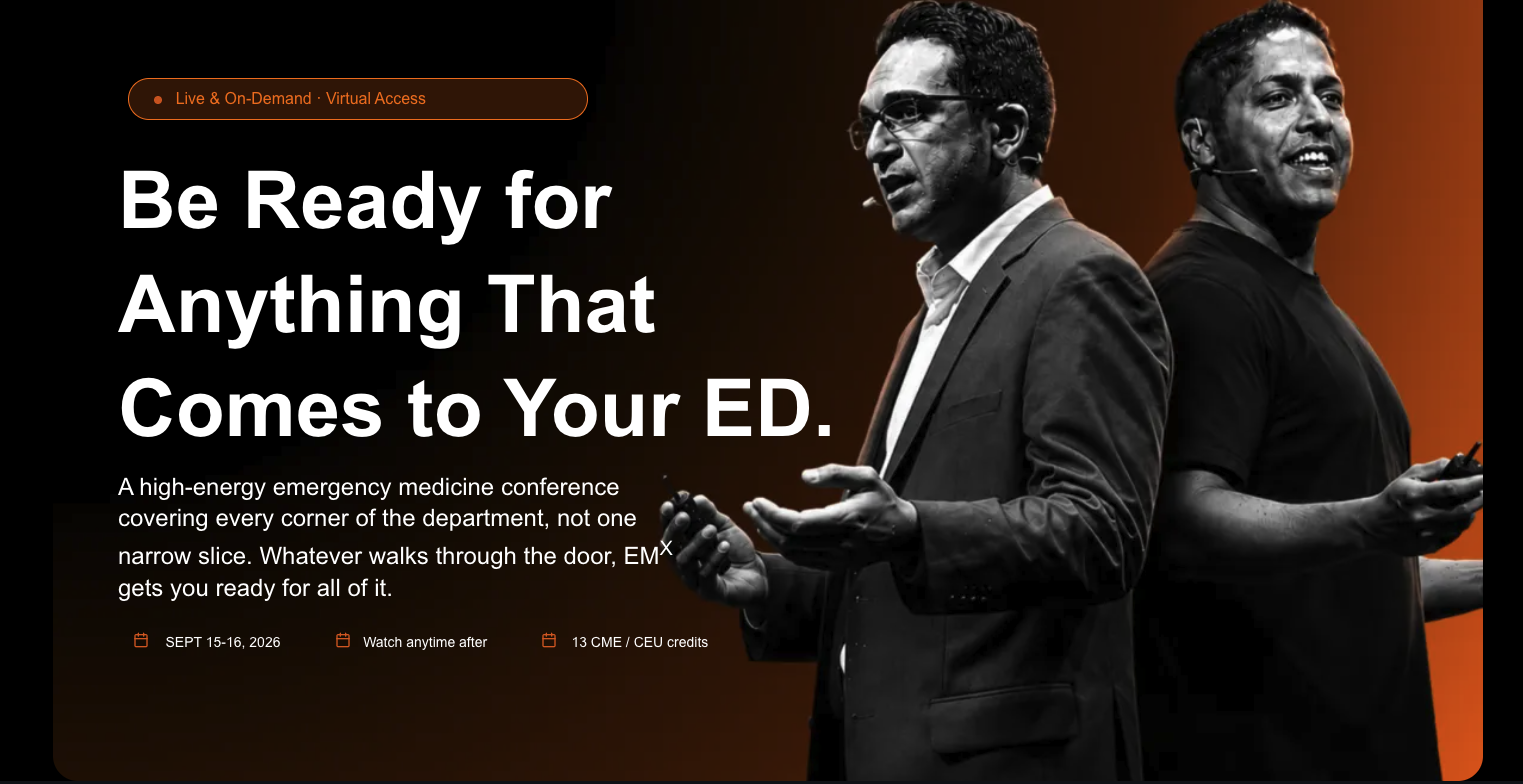
EMX is a brand-new emergency medicine conference I'm co-hosting with Dr. Anand Swaminathan — built for clinicians who want the whole emergency department sharpened, not just one narrow slice. Cardiology, stroke, peds, tox, endocrine, OB, MSK, airway — whatever walks through your door, EMX gets you ready for all of it.
For our inaugural meeting, EMX will be held virtually — so no matter where you practice, you can be there. Everything else you'd expect from a world-class conference? Still here.
And this isn't your standard lecture marathon. We're talking talk-show interviews, live media reads, real expert debates, audience polling — and our signature 🔥 Hot Ones segment. You'll be locked in from the first slot to the last.
The faculty lineup includes Amal Mattu, Reuben Strayer, Evie Marcolini, Tarlan Hedayati, Jenny Beck-Esmay, and more of the clinicians who actually shape how emergency medicine is practiced.
📅 September 15–16, 2026 | Virtual / Online
📍 ✅ 9.5 CME/CEU Credits
Want to add a full afternoon with Amal Mattu + 3.5 CME/CEU credits? Grab a virtual seat at the ECG Pre-Conference Workshop on September 14 — limited to 50 people.
Hustling Your Way Through a Failing Hospital System
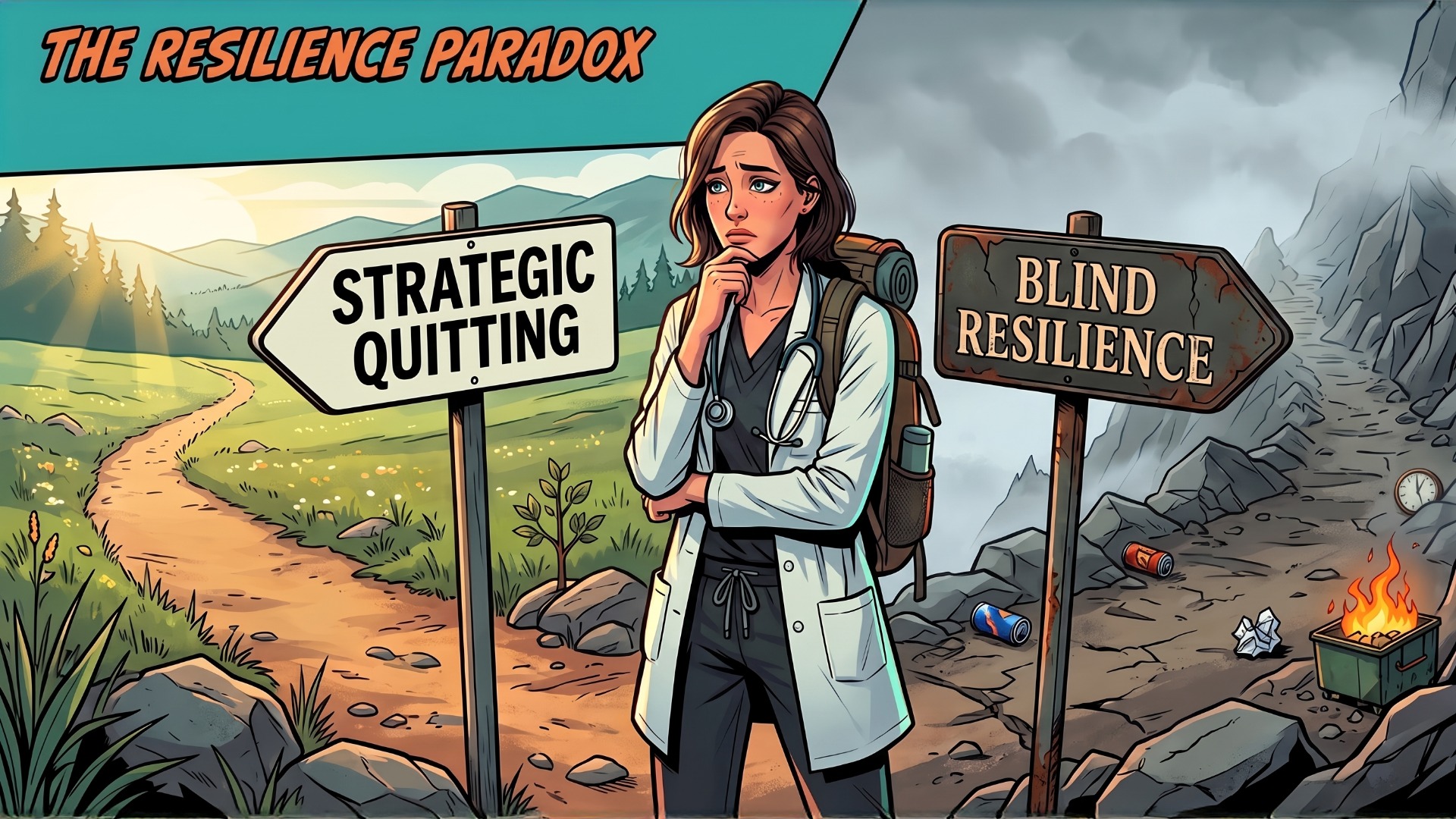
Medical training teaches that resilience is the whole ballgame: grind through a 28-hour shift on iced coffee and unearned confidence, come out the other side an indestructible clinical god. The work on the Resilience Paradox argues the opposite. Neuroscientist Anne-Laure Le Cunff calls it "blind resilience," the point where your ability to endure stops being distinguishable from a refusal to adapt. The grit that got you through Step 1 is also what sets you up to self-sabotage. Highly resilient people stay at unwinnable tasks, and at broken hospital systems, long after average people walk away. They bleed energy and take real losses because their brains have lost the ability to stop trying to out-endure a dumpster fire.
Adversity and growth don't run in a straight line. The curve is U-shaped. Some stress builds capacity; past the peak, the machinery starts failing under allostatic load. We repeat "what doesn't kill you makes you stronger" and quietly skip the stretch of curve where unchecked adversity just grinds you into a chronically fatigued husk. What actually works is “strategic quitting.” That means telling the difference between a temporary clinical problem you can push through and a systemic trap that needs fixing rather than tolerating. So the next time admin answers a staffing shortage with a mandatory online wellness module, remember that refusing to push through is sometimes the more resilient move.

ResusX Goes Tropical!
Puerto Rico, Late Jan/Early Feb 2027
Trade the conference-room fluorescents for ocean views. We're planning a 3-day destination CME event on a beachfront resort in Puerto Rico: small group, big learning, and lots of future memories!
✅ Full CME included
✅ Beachfront resort setting
✅ Limited spots — this won't be a big-arena crowd
We're gauging interest before we lock in the dates and venue. If you want in, tell us in 30 seconds by clicking below:
I'm interested - SAVE MY SPOT!
No commitment yet; just helping us plan the right size event. However, those who complete the form will get first dibs when registration goes live!

Shock is Not a Diagnosis
Here's a pearl that'll make you look sharp on rounds: shock is not a diagnosis. It's a physiologic state where the circulatory system can't meet the body's metabolic demands, and if you're only thinking about it as hypotension, you're going to miss the patients who need you most. The ones I want you hunting for are in compensated shock; normal blood pressure, but already showing early end-organ dysfunction. Those are the patients with the best mortality outcomes if you catch them early, and that's exactly why this skill matters.
So how do you find them? Go top to bottom. Brain: dizziness, lightheadedness, altered mental status. Heart and lungs: chest pain, tachypnea compensating for a metabolic acidosis. Gut and kidneys: abdominal pain, renal dysfunction, elevated lactate. Skin: delayed cap refill. Any of these signs of altered perfusion in a normal-pressure patient should put shock on your differential. And here's the part people forget, identifying shock isn't the finish line. It's a state, not a diagnosis, which means your real job is figuring out why they're in shock.
Watch the full video here and leave a comment.
Don't forget to like and follow my IG, TikTok, YT, Facebook or LinkedIn accounts.
A Video Gift From Haney
Four talks from the ResusX:2025 stage are now free. Steven Haywood takes apart pre-oxygenation, which feels routine right up until the patient crashes on induction. Amal Mattu walks through STEMI mimics, the ones that don't announce themselves and that the machine happily reads as normal. Shaila Quazi makes pacemaker rhythms readable in real time, so you're not calling cardiology at 3am to ask what you're looking at. And George Willis covers modern DKA management, including the parts that quietly moved on after your residency.
No charge, no credit card. Go to the link below and get access to your videos; they arrive instantly! That's it, nothing else gets sent to you. Watch them in any order, at your own pace, whenever or wherever you like! These are yours for life!

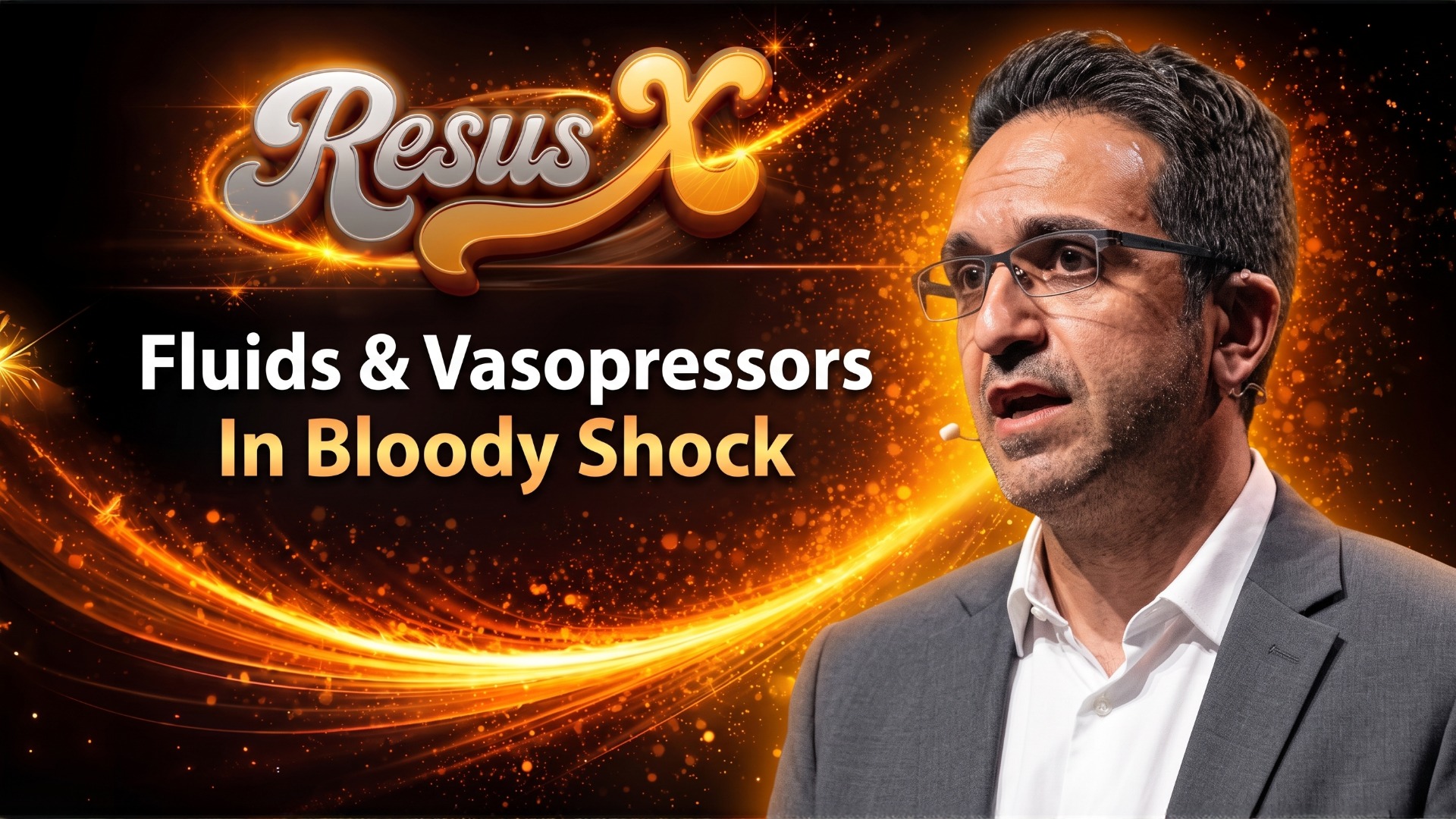
Haney Mallemat (@CriticalCareNow) gave a great lecture on whether crystalloids and vasopressors should ever be used in hemorrhagic shock, beginning with the theoretical answer of "no" but acknowledging real-world limitations. In ideal circumstances, blood products are the only appropriate treatment for hemorrhagic shock, as crystalloids worsen the lethal triad (hypothermia, coagulopathy, and acidosis) and cause end-organ dysfunction through cellular swelling. However, most medical centers lack infinite blood supplies, and prehospital settings have minimal blood product availability. When crystalloids must be used as a bridge to blood transfusion, the recommendation is to limit use to no more than 1 liter total, administered in small aliquots of 200-250cc with reassessment between doses. The choice of crystalloid generally doesn't matter except in cases of suspected intracranial injury, where normal saline is preferred.
Regarding vasopressors, Haney argues that not all hemorrhagic shock presents identically, introducing the concept of different shock phenotypes. While young trauma patients may tolerate massive transfusion well, elderly patients on cardiac medications, those with cirrhosis, or patients with heart failure represent different phenotypes that may develop secondary vasodilation from the inflammatory effects of massive transfusion or reperfusion injury. Physical examination findings like warm extremities, wide pulse pressure, or poor cardiac function on ultrasound should prompt consideration of vasopressor use. He recommends vasopressin (which has multiple beneficial effects including coagulation support that is lost during hemorrhage) or norepinephrine (10-16 micrograms/minute, which provides venoconstriction and cardiac output support) as the preferred agents, while explicitly rejecting dopamine and phenylephrine. The evidence base remains limited to small observational studies, but available data suggests potential benefit without increased harm.
Check out this video of Dr. Haney Mallemat from ResusX:2026 now!


Is Methylene Blue Actually Effective in Adult Shock?
Methylene blue (MB) has circulated for years as a rescue option in catecholamine-refractory vasoplegic shock, but until now the randomized evidence base has never been formally pooled with modern methodological rigor. This systematic review, meta-analysis, and trial sequential analysis (TSA) synthesized nine RCTs (535 patients, 2001–2025) comparing MB against standard therapy in adults with circulatory shock (predominantly septic shock), with one trial in post-cardiac surgery vasoplegia. Eight trials contributed to the primary mortality analysis. The pooled odds ratio for 28–30-day all-cause mortality was 0.73 (95% CI 0.40–1.36), a directionally favorable signal for MB that did not cross statistical significance.
Critically, this is not the same as a negative trial. TSA revealed that the heterogeneity-adjusted required information size for a reliable answer is 1,773 patients; the current evidence base represents roughly 30% of that threshold. The cumulative Z-curve never crossed the benefit, significance, or futility boundaries, meaning the data are simply insufficient to confirm or refute an effect, not that MB doesn't work. Secondary outcomes (renal replacement therapy, hospital and ICU length of stay) also showed no significant pooled differences, though several individual trials reported faster time to vasopressor discontinuation (69 vs. 94 hours in one trial) and reduced vasopressor dosing. Notably, the single post-cardiac surgery vasoplegia trial found a stark mortality difference (0% vs. 21.4%), though this remains a single small study.
My Takeaway Points:
- Finding - Pooled 28–30-day mortality OR was 0.73 (95% CI 0.40–1.36) across 8 RCTs (n=479), a favorable trend for MB that did not reach statistical significance; TSA shows only ~30% of the required 1,773-patient information size has been accrued.
- Practice Impact - MB should remain an individualized adjunctive/rescue option in refractory vasoplegic shock (particularly when vasopressor requirements are escalating) rather than a routine early intervention; current evidence doesn't support protocolizing its use.
- Population - Predominantly adult septic shock patients (8 of 9 trials) with NE requirements; one trial specifically enrolled post-cardiac surgery vasoplegic syndrome, a distinct phenotype with different baseline mortality risk.
- Limitation - Very low GRADE certainty driven by small sample sizes, inconsistent MB dosing (single bolus to 72-hour infusions), heterogeneous follow-up windows (24h to 28 days), and risk-of-bias concerns in randomization/selective reporting in 4 of 9 trials.
Want to learn more? Read the full article The Effectiveness of Methylene Blue in Adult Shock: A Systematic Review, Meta-Analysis, and Trial Sequential Analysis of Randomized Controlled Trials by D. Rodriguez-Lima, et al. in Journal of Clinical Medicine.
New Drug on the Block: Cipepofol (Cypsedo)
Propofol has a new competitor, and it got FDA approval in May 2026. Cipepofol, also known as ciprofol, is the first China-originated IV anesthetic to receive US marketing authorization. The US label is for induction of general anesthesia in adults.
Mechanistically it's familiar: a positive allosteric modulator of GABA-A receptors, the same primary target as propofol. The structure is slightly modified with the addition of a chiral cyclopropyl group, which in clinical trial data has shown reduced injection-site pain, more stable hemodynamics (less hypotension), and slightly less respiratory depression.
Some practical differences between ciprofol and propofol: it's roughly 4–6x as potent as propofol, so induction dosing is around 0.4 mg/kg rather than 2 mg/kg. Onset and offset are relatively similar, with ciprofol possibly having a slightly longer (minutes) time to emergence. The monitoring parameters are the same even with the lower risk of hemodynamic collapse. It has the same lipid emulsion, so egg and soy allergy screenings also apply.
It's not new outside the US. China approved it for induction in December 2020 and maintenance in March 2022, then for ICU sedation during mechanical ventilation in July 2022, where phase 2 and 3 trials showed comparable sedation outcomes to propofol with a favorable safety profile. As of May 2026, it had been used in over 40 million patient visits across more than 3,300 institutions, so there is legitimate data outside of the US population that we can draw from.
It may be a while before it makes it to your ED, but keep an eye out for it! If the claims hold true in our US population, we could have a propofol-like agent with less hypotension, less apnea, and less injection pain, which could compete with our RSI induction agents of choice and definitely be a contender for procedural sedation. This is especially the case in our already tenuous patients who would become hypotensive with propofol. But to be clear, we don't have any hard evidence in the ED space yet, so just something to keep on your radar.
----------
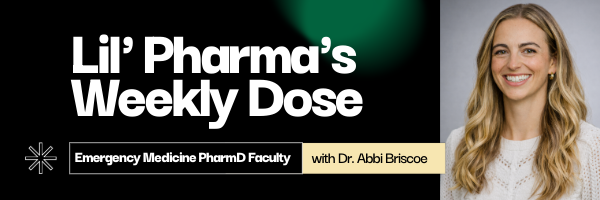
Dr. Abbi Briscoe is an emergency department clinical pharmacist, pharmacy residency program coordinator, and affiliate professor in Montana. She is passionate about Emergency Medicine and Critical Care education, and is an avid mountain biker and skier in her free time.
Connect with Dr. Briscoe: @lilpharma2026 (IG) and @lil_pharma (TikTok)
Watch the August Videos!
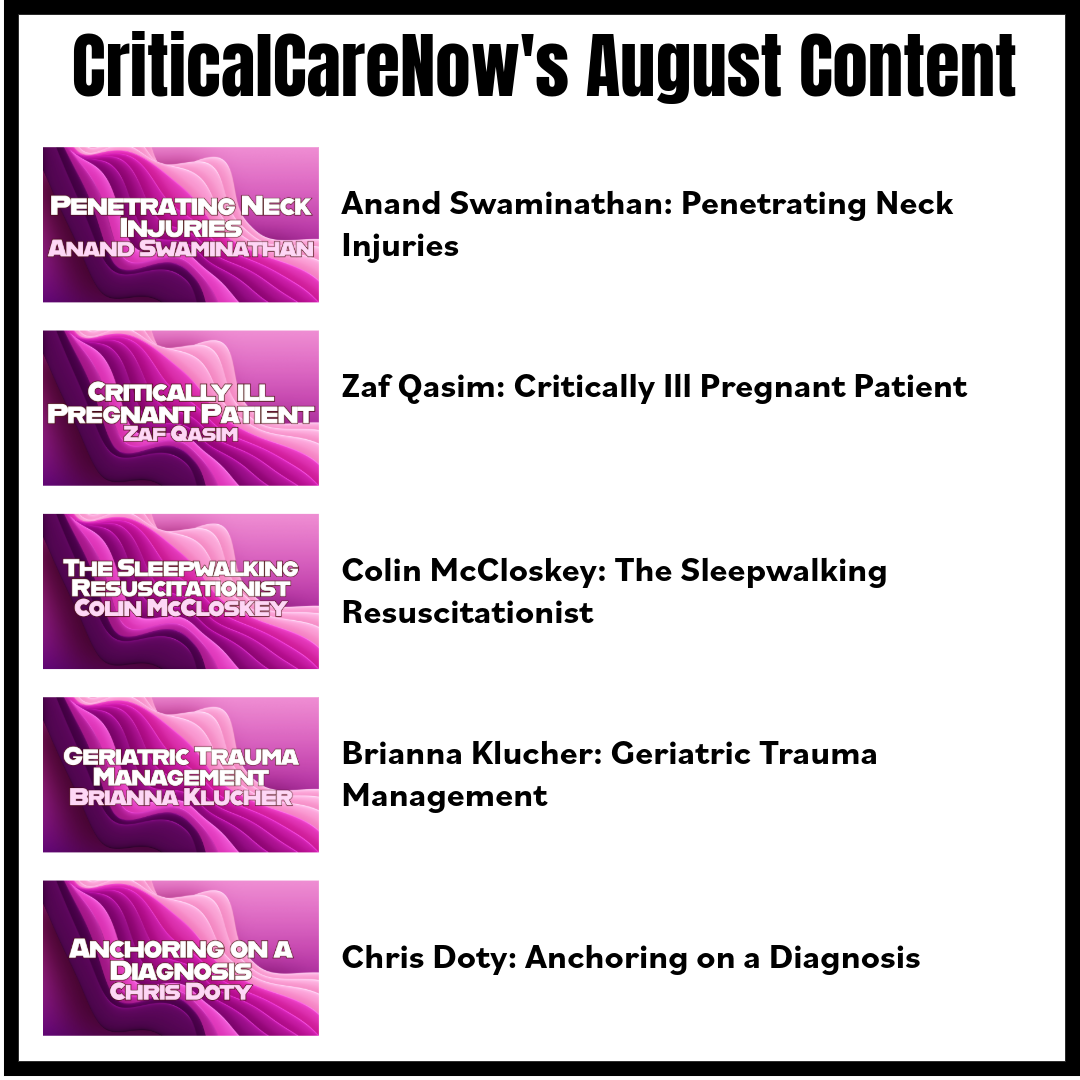
If you're an All-Access member, you're in for some great content this month. We have FIVE videos hand-picked by our staff that are high-yield and our most highly watched. We're featuring:
- Swaminathan on "Penetrating Neck Injuries"
- Qasim on "Critically Ill Pregnant Patient"
- McCloskey on "The Sleepwalking Resuscitationist"
- Klucher on "Geriatric Trauma Management"
- Doty on "Anchoring on a Diagnosis"
Each month we bring you fresh new content from the best of the best in resuscitation. If you're an All-Access member, go watch these videos NOW!


Responses