
Get Ready For a New EM
Conference in Fall 2026
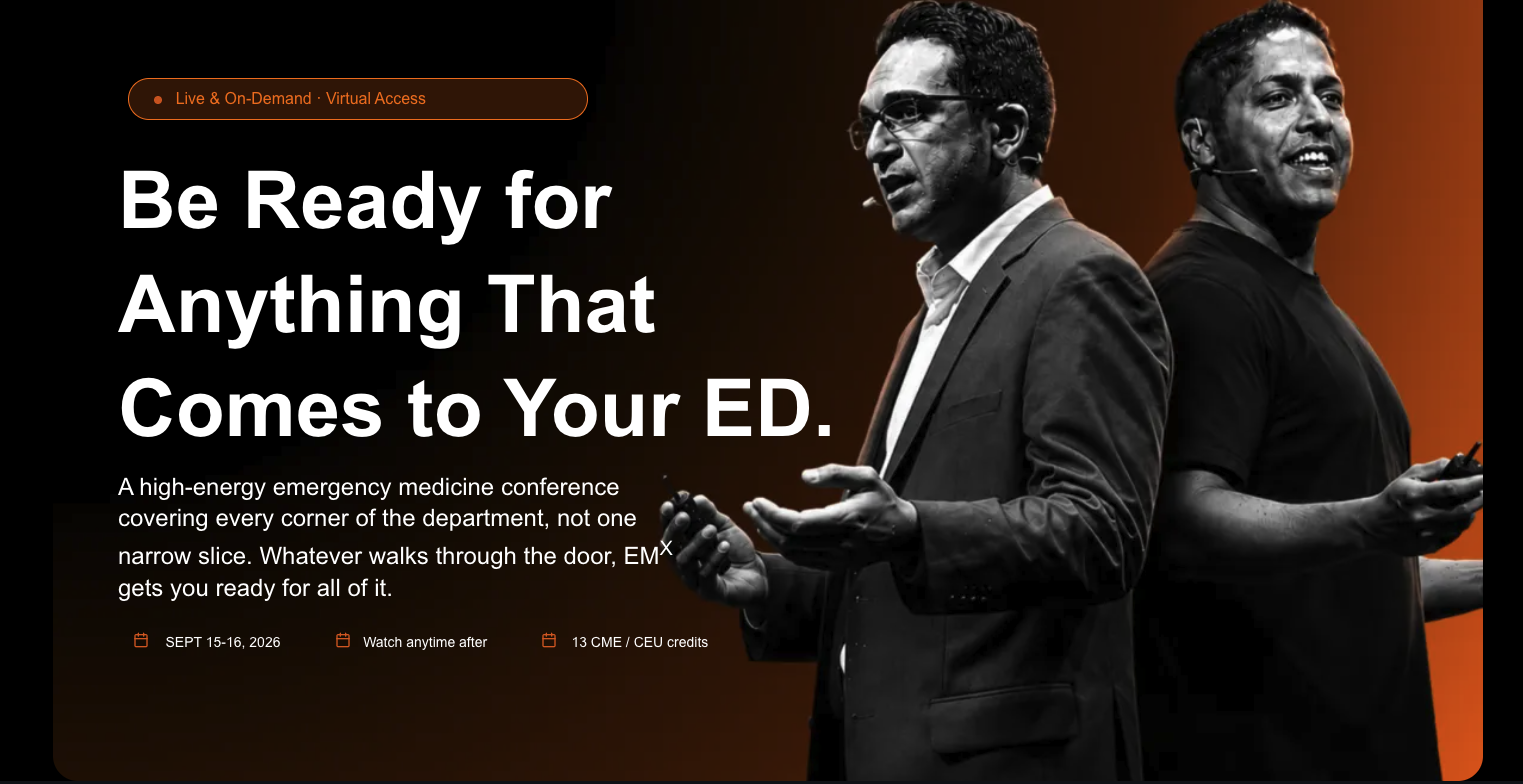
EMX is a brand-new emergency medicine conference I'm co-hosting with Dr. Anand Swaminathan — built for clinicians who want the whole emergency department sharpened, not just one narrow slice. Cardiology, stroke, peds, tox, endocrine, OB, MSK, airway — whatever walks through your door, EMX gets you ready for all of it.
For our inaugural meeting, EMX will be held virtually — so no matter where you practice, you can be there. Everything else you'd expect from a world-class conference? Still here.
And this isn't your standard lecture marathon. We're talking talk-show interviews, live media reads, real expert debates, audience polling — and our signature 🔥 Hot Ones segment. You'll be locked in from the first slot to the last.
The faculty lineup includes Amal Mattu, Reuben Strayer, Evie Marcolini, Tarlan Hedayati, Jenny Beck-Esmay, and more of the clinicians who actually shape how emergency medicine is practiced.
📅 September 15–16, 2026 | Virtual / Online
📍 ✅ 9.5 CME/CEU Credits
Want to add a full afternoon with Amal Mattu + 3.5 CME/CEU credits? Grab a virtual seat at the ECG Pre-Conference Workshop on September 14 — limited to 50 people.
How Ultra-Processed Foods
Hijack Your Will to Live
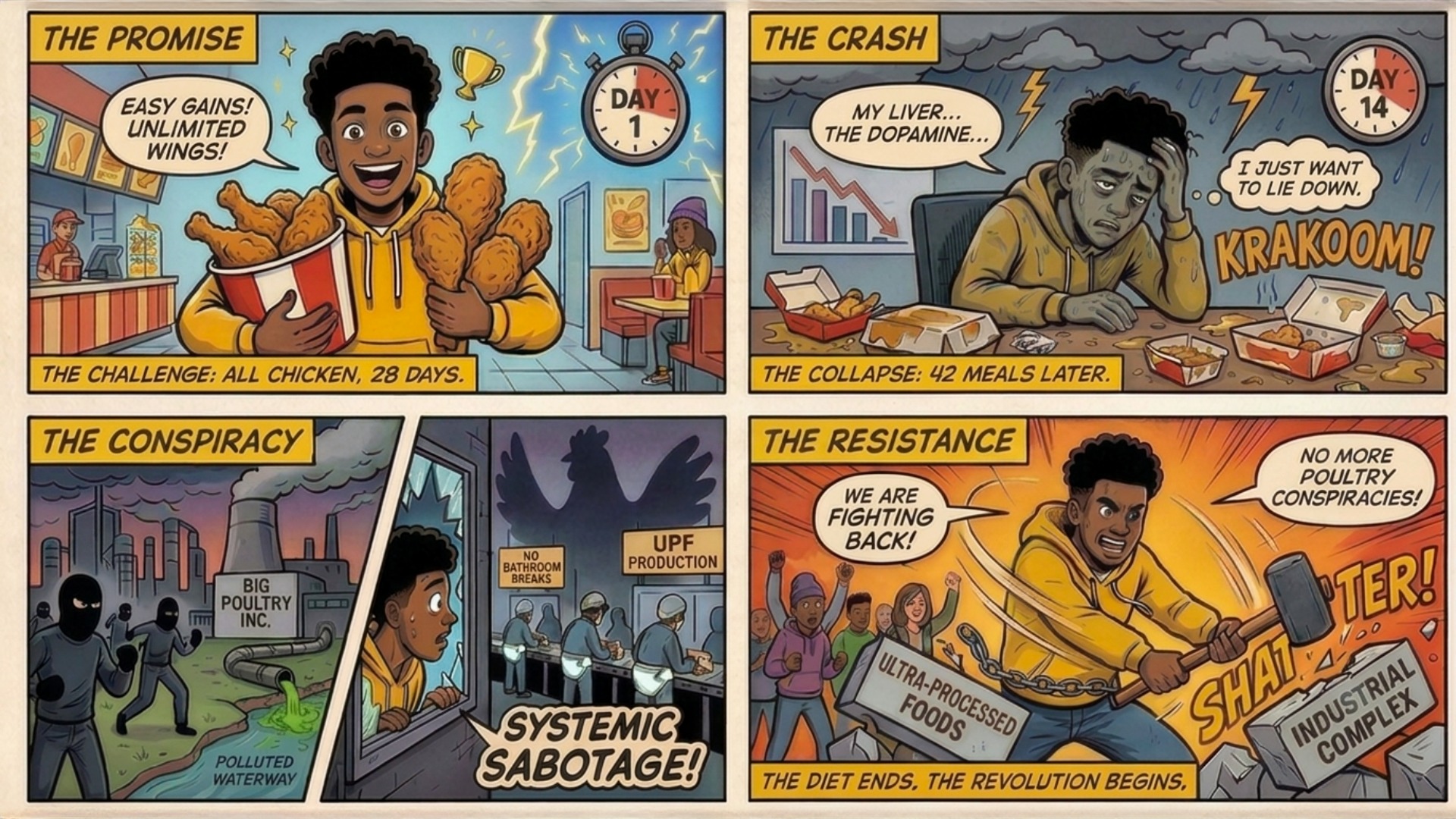
Remember the golden days of Super Size Me, when we collectively gasped at a man destroying his liver with McDonald's? Well, Netflix just dropped the Gen Z update, and this time, it’s all about the poultry. In the new doc Big Chicken: A Fast Food Conspiracy, UK comedian Mo Gilligan volunteers as tribute, embarking on a 28-day, 84-meal bender consisting entirely of chicken shop cuisine. He starts out like a gleeful MS3 on free pizza day ("Bring on the wings!"), but it doesn't take long for the metabolic realities of ultra-processed foods (UPFs) to completely wreck his baseline. We’re talking rapid weight gain, profound lethargy, and a dopamine crash so severe he's literally crying in his hotel room. It’s a perfect, real-time case study in how hyper-palatable, heavily engineered foods hijack the brain's reward pathways, spike your insulin, and leave your mood in the absolute trenches.
But because nothing in medicine exists in a vacuum, the documentary pivots from a personal metabolic crisis to a systemic nightmare faster than you can say "social determinants of health." Gilligan pulls back the curtain on the billion-dollar "Big Chicken" industrial complex, uncovering environmental degradation, deeply entrenched racist tropes, and U.S. factory workers forced to wear diapers on the assembly line because they’re denied bathroom breaks. It’s a grimly hilarious, highly watchable reminder of what we're actually up against in the clinic. While we’re meticulously titrating GLP-1 agonists and lecturing patients about lifestyle mods, the global food supply chain is running a masterclass in population-level physiological sabotage. The takeaway: half the calories we consume are explicitly designed to keep us sick, sad, and constantly coming back for a combo meal.

ResusX Goes Tropical!
Puerto Rico, Late Jan/Early Feb 2027
Trade the conference-room fluorescents for ocean views. We're planning a 3-day destination CME event on a beachfront resort in Puerto Rico: small group, big learning, and lots of future memories!
✅ Full CME included
✅ Beachfront resort setting
✅ Limited spots — this won't be a big-arena crowd
We're gauging interest before we lock in the dates and venue. If you want in, tell us in 30 seconds by clicking below:
I'm interested - SAVE MY SPOT!
No commitment yet; just helping us plan the right size event. However, those who complete the form will get first dibs when registration goes live!

Rethinking Maintenance Fluids
Maintenance fluids are one of the most misused tools in critical care, and I'll be the first to admit I've fallen into this trap myself. We're taught to reach for them any time a patient looks dry or stays hypotensive after a bolus, but that's not what they're designed for. They're meant to replace insensible losses in NPO patients, not to fix intravascular volume depletion. And the physiology backs this up: in a healthy individual, only 25-30% of crystalloid stays intravascular. In a critically ill patient, that number drops to just 5-10%. Give 100cc/hour and you're only getting 5-10cc where you actually need it.
The other 90cc isn't harmless. It's going somewhere, and that somewhere is your patient's tissues. This isn't just cosmetic edema. Organs like the kidneys, liver, and brain sit inside tight, non-expandable fascias, so instead of swelling outward like an extremity, they swell inward, causing ischemia and necrosis. That's a real driver of the end-organ dysfunction we see in over-resuscitated patients. My rule: if you're going to give fluid, give small aliquots as rapid boluses, not continuous drips running for hours or days. Slow infusions don't resuscitate your patients, they drown them.
Watch the full video here and leave a comment.
Don't forget to like and follow my IG, TikTok, YT, Facebook or LinkedIn accounts.

A Video Gift From Haney
Four talks from the ResusX:2025 stage are now free. Steven Haywood takes apart pre-oxygenation, which feels routine right up until the patient crashes on induction. Amal Mattu walks through STEMI mimics, the ones that don't announce themselves and that the machine happily reads as normal. Shaila Quazi makes pacemaker rhythms readable in real time, so you're not calling cardiology at 3am to ask what you're looking at. And George Willis covers modern DKA management, including the parts that quietly moved on after your residency.
No charge, no credit card. Go to the link below and get access to your videos; they arrive instantly! That's it, nothing else gets sent to you. Watch them in any order, at your own pace, whenever or wherever you like! These are yours for life!

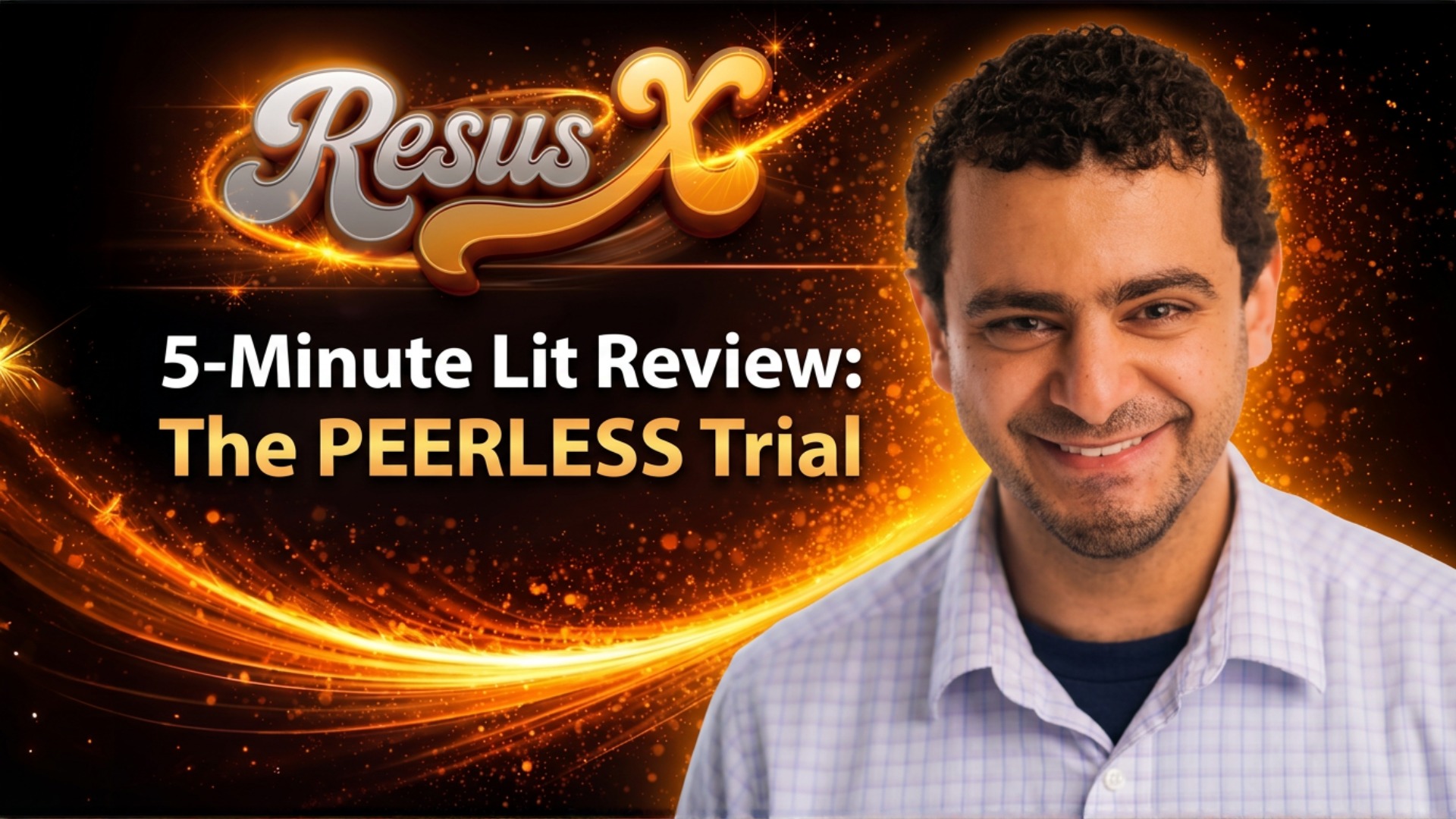
Mark Ramzy, DO breaks down the PEERLESS trial, an open-label, multicenter study comparing large bore thrombectomy to catheter-directed fibrinolysis in intermediate-risk pulmonary embolism patients. The primary outcome used a five-component win ratio including major bleeding (like intracranial hemorrhage), and ICU admission rates, which initially showed large bore catheters performing better than catheter-directed fibrinolysis. However, when ICU admission rates were removed from the win ratio, there was no statistical difference between the two interventions, and other important factors like major bleeding and all-cause mortality also showed no statistical significance.
Important limitations of the study include its open-label design, meaning participants and interventionalists knew which treatment was being administered, and the use of composite outcomes where one factor (ICU admissions and escalation of care) drove the overall results. Additionally, the study did not compare either intervention to anticoagulation alone, which remains the standard of care for intermediate-risk PE. This highlights the importance of critically examining composite outcomes by excluding dominant factors to understand the true treatment effects.
Check out this video of Dr. Mark Ramzy from ResusX:2026 now!
The Toxic Beat: Lithium and the Heart
What percentage of lithium intoxication patients exhibited QT prolongation on the electrocardiogram?
A. 24%
B. 54%
C. 74%
D. 14%
Scroll to the end of the newsletter for the answer.


The Case for CEUS in Critical Illness
Macrohemodynamic normalization, or a good blood pressure and reasonable cardiac output, doesn't guarantee organs are actually being perfused, and this narrative review makes that gap concrete. Contrast-enhanced ultrasound (CEUS) uses microbubble contrast agents to visualize microvascular and macrovascular flow in real time at the bedside, without radiation or nephrotoxic contrast, and the authors walk through its emerging role across three ICU-relevant organ systems: kidney, gut, and skeletal muscle. The throughline is that time-intensity curve (TIC) analysis of contrast wash-in and washout can pick up perfusion abnormalities well before conventional markers move. The renal data are most mature: cortical hypoperfusion in septic shock wasn't tied to changes in macrovascular renal blood flow or cardiac output, and a pooled meta-analysis found perfusion delays on CEUS preceded detectable changes in creatinine and urine output in AKI. CEUS also performed strongly against CT for intestinal ischemia and improved detection of active GI bleeding. In skeletal muscle, CEUS-derived perfusion parameters correlated with histologic capillary density and could differentiate ischemic or diabetic microvascular impairment from healthy tissue, with potential relevance to ICU-acquired weakness and sarcopenia.
Beyond diagnostics, the review previews a theranostic frontier: ultrasound-stimulated microbubbles show cavitation and shear-stress effects that may accelerate thrombolysis and boost local nitric oxide bioavailability. Bottom line: CEUS isn't yet standardized (no validated cutoffs, operator-dependent, mostly single-center data), but it's already usable as an adjunct for early AKI risk-stratification, indeterminate bowel ischemia, occult GI bleeding localization, and complex abscess drainage, with therapeutic applications still preclinical.
My Takeaway Points:
- Finding - CEUS detects renal cortical hypoperfusion and reduced perfusion time before creatinine or urine output change, and achieves up to 100% sensitivity for small bowel ischemia in select series.
- Practice Impact - CEUS can serve as an early-warning adjunct for AKI risk, a problem-solver for equivocal bowel ischemia or occult GI bleeding, and a guidance tool for draining complex/deep fluid collections that are hard to see on conventional ultrasound.
- Population - Critically ill ICU patients with septic shock, suspected AKI, suspected mesenteric/intestinal ischemia, active GI bleeding, ICU-acquired weakness/sarcopenia risk, or complex abscesses/fluid collections requiring drainage.
- Limitation - Findings are largely from small, single-center, exploratory studies without validated perfusion thresholds; CEUS is highly operator-dependent, and therapeutic (thrombolytic) microbubble applications remain preclinical/early translational, not ready for routine bedside adoption.
Want to learn more? Read the full review Contrast-Enhanced Ultrasound in Critical Care: A Problem-Solving Approach by L. Yang, et al. in Frontiers in Medicine.
Answer: A. 24%
Explanation: QT prolongation occurred in 24% of the lithium intoxication episodes in a recent study. Due to its similarity to sodium, lithium can be expected to affect cardiac conduction. Particularly at supratherapeutic concentrations, lithium may affect cardiac conduction, leading to prolongation of the QT interval, bradycardia, and T-wave changes. Chronic lithium toxicity is more likely to cause QT prolongation because of increased intracellular accumulation of lithium.
PMID: 36233807
Review this week's minute on EMBLLM.
----------
Greg Weingart MD, FACEP, is the founder of Embllm, a microlearning medical education app that converts new literature into a multiple-choice question bank to earn CME from your phone. He is also an Assistant Professor in the Department of Emergency Medicine at EVMS/ODU, a Partner at Emergency Physicians of Tidewater, and the Assistant Medical Director at Sentara Norfolk General Hospital.
Connect with Dr. Weingart: @Embllm_MedED (Twitter) / LinkedIn / Facebook
Watch the August Videos Now!
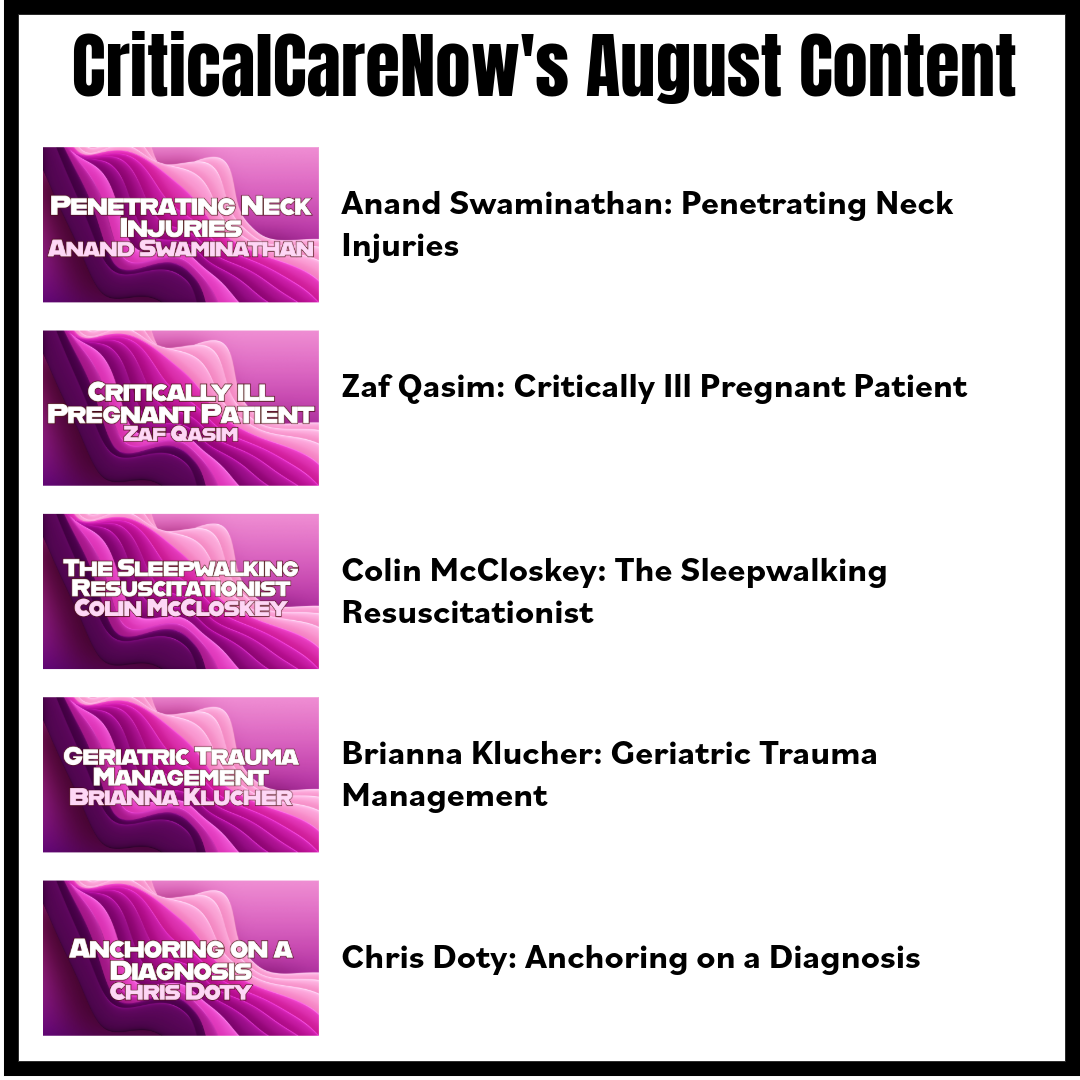
If you're an All-Access member, you're in for some great content this month. We have FIVE videos hand-picked by our staff that are high-yield and our most highly watched. We're featuring:
- Swaminathan on "Penetrating Neck Injuries"
- Qasim on "Critically Ill Pregnant Patient"
- McCloskey on "The Sleepwalking Resuscitationist"
- Klucher on "Geriatric Trauma Management"
- Doty on "Anchoring on a Diagnosis"
Each month we bring you fresh new content from the best of the best in resuscitation. If you're an All-Access member, go watch these videos NOW!


Responses