
Get Ready For a New EM
Conference in Fall 2026
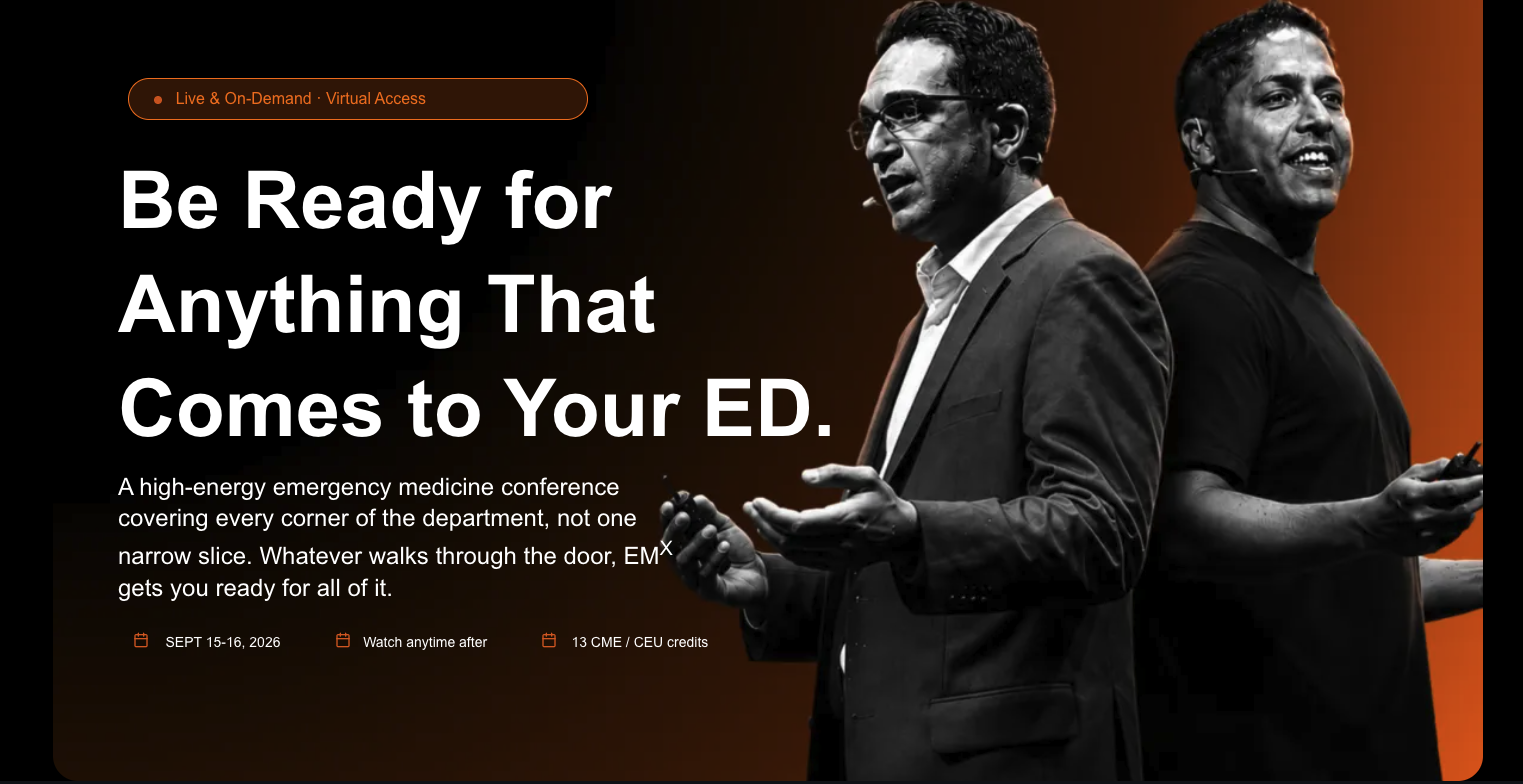
EMX is a brand-new emergency medicine conference I'm co-hosting with Dr. Anand Swaminathan — built for clinicians who want the whole emergency department sharpened, not just one narrow slice. Cardiology, stroke, peds, tox, endocrine, OB, MSK, airway — whatever walks through your door, EMX gets you ready for all of it.
For our inaugural meeting, EMX will be held virtually — so no matter where you practice, you can be there. Everything else you'd expect from a world-class conference? Still here.
And this isn't your standard lecture marathon. We're talking talk-show interviews, live media reads, real expert debates, audience polling — and our signature 🔥 Hot Ones segment. You'll be locked in from the first slot to the last.
The faculty lineup includes Amal Mattu, Reuben Strayer, Evie Marcolini, Tarlan Hedayati, Jenny Beck-Esmay, and more of the clinicians who actually shape how emergency medicine is practiced.
📅 September 15–16, 2026 | Virtual / Online
📍 ✅ 9.5 CME/CEU Credits
Want to add a full afternoon with Amal Mattu + 3.5 CME/CEU credits? Grab a virtual seat at the ECG Pre-Conference Workshop on September 14 — limited to 50 people.
Move Over Ozempic, We’re Swallowing Genetically Modified Hookworms Now
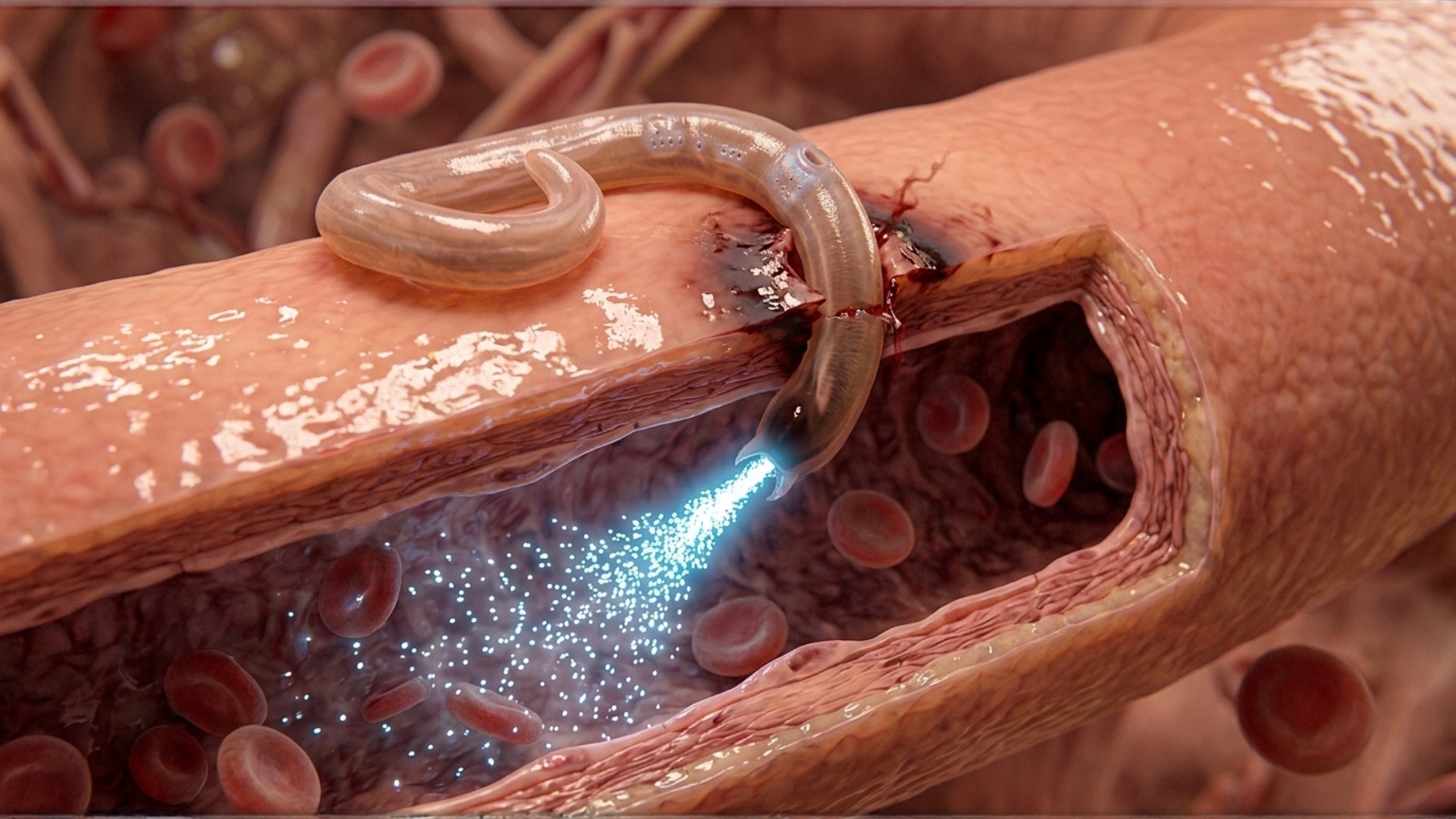
Imagine spending billions on state-of-the-art biologic manufacturing facilities, only to find out the better drug delivery system is a bloodsucking intestinal parasite. Researchers at WashU looked at the human hookworm, an organism that has spent millions of years perfecting how to hijack our GI tracts and dodge macrophages by secreting a soup of immune-cloaking molecules, and asked what would happen if they gave it a side hustle. Using CRISPR, they engineered Ancylostoma ceylanicum to produce and secrete a human antibody. The freeloader now comes with a payload, permanently stationed in the duodenum.
The antibody they picked neutralizes tetrodotoxin, the lethal neurotoxin from pufferfish. They infected rodents, and the worms set up shop, tapped into the mucosal vasculature, and pumped the antidote straight into systemic circulation. What makes it work as a platform is that hookworms don't multiply inside the host. Your “dose” is fixed by how many you swallow up front. They can live in the gut for years putting out steady-state biologics for chronic disease, and if you ever want to revoke the lease, a standard course of albendazole evicts them. Unhinged, and also kind of great, assuming patients are willing to swallow a vial of infective larvae.

ResusX Goes Tropical!
Puerto Rico, Late Jan/Early Feb 2027
Trade the conference-room fluorescents for ocean views. We're planning a 3-day destination CME event on a beachfront resort in Puerto Rico: small group, big learning, and lots of future memories!
✅ Full CME included
✅ Beachfront resort setting
✅ Limited spots — this won't be a big-arena crowd
We're gauging interest before we lock in the dates and venue. If you want in, tell us in 30 seconds by clicking below:
I'm interested - SAVE MY SPOT!
No commitment yet; just helping us plan the right size event. However, those who complete the form will get first dibs when registration goes live!

A Quick ABG Hack
There's a quick mental math hack I use constantly to check a patient's oxygenation status, and most people have never heard of it. Take the FiO2 percentage and multiply it by five, that's your expected PaO2 on a blood gas, assuming reasonably normal lungs. Breathing room air at 21%, that's roughly 100. Freshly intubated at 100% FiO2, you should expect a PaO2 around 500. On 60%, you're looking for 300. The catch: this only holds if the patient has no significant V/Q mismatch, shunt, or diffusion defect; which, let's be honest, in the ICU is more the exception than the rule.
That's exactly why this number matters. You're not using it to diagnose perfect lungs. You're using it as your baseline expectation, so when the actual PaO2 comes back lower than predicted, you immediately know how big the gap is and how sick that lung really is. But none of this works if you don't know the FiO2 the patient was on when you drew the gas. Document it every time. Without that number, your blood gas is just a number floating in space with nothing to compare it to.
Watch the full video here and leave a comment.
Don't forget to like and follow my IG, TikTok, YT, Facebook or LinkedIn accounts.

A Video Gift From Haney
Four talks from the ResusX:2025 stage are now free. Steven Haywood takes apart pre-oxygenation, which feels routine right up until the patient crashes on induction. Amal Mattu walks through STEMI mimics, the ones that don't announce themselves and that the machine happily reads as normal. Shaila Quazi makes pacemaker rhythms readable in real time, so you're not calling cardiology at 3am to ask what you're looking at. And George Willis covers modern DKA management, including the parts that quietly moved on after your residency.
No charge, no credit card. Go to the link below and get access to your videos; they arrive instantly! That's it, nothing else gets sent to you. Watch them in any order, at your own pace, whenever or wherever you like! These are yours for life!

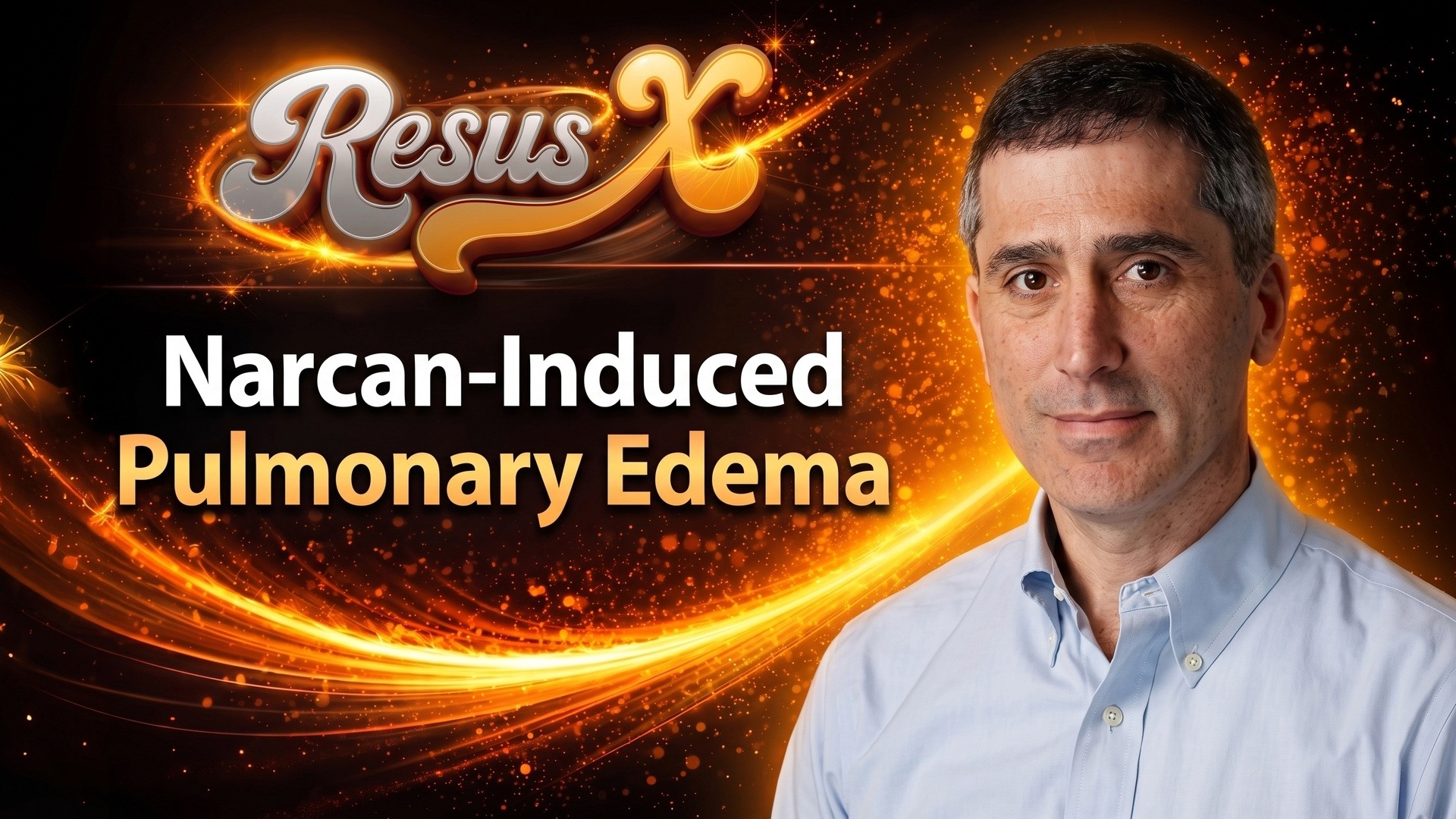
In an interview with Steve Haywood, MD, Matt Salzman, MD addresses the central question: does naloxone actually cause pulmonary edema? His position is that the evidence remains inconclusive, but naloxone is likely not the causative agent. Pulmonary edema in the setting of opioid overdose was documented as far back as the 1800s, well before naloxone existed, and many patients already show radiographic or clinical signs of it prior to receiving the drug. The more likely culprits are intrinsic to the overdose itself, with proposed mechanisms including a catecholaminergic surge, cardiogenic effects, and negative-pressure pulmonary edema from forceful inspiratory effort against an obstructed or closed glottis.
Dr. Salzman closes with several practical clinical takeaways. Airway management takes priority: bag-valve-mask ventilation should be established before naloxone is given, not after. When the drug is used, starting at 0.4 mg rather than the standard 2 mg push allows for titration to adequate respiratory drive without precipitating full reversal. If pulmonary edema is present, positive pressure ventilation is the cornerstone of management. Clinicians should also remain alert to co-intoxicants, as the street drug supply frequently contains adulterants that can produce overlapping toxidromes and complicate the presentation. Above all, he reinforces that naloxone saves lives and that broad public access to the drug remains a priority regardless of the ongoing mechanistic debate.
Check out this video of Dr. Matt Salzman from ResusX:2026 now!


Higher vs Lower PEEP in Sepsis
For decades, PEEP titration in critically ill patients has borrowed almost entirely from ARDS trials, leaving clinicians to extrapolate when managing the far more common population of mechanically ventilated septic patients. This multi-cohort observational study pooled 844 septic patients across three German databases, SepDataNet, RetroSep, and Hyspec-ICU, and asked a simple question: does using PEEP above the ARDSnet low-PEEP/FiO2 table help or harm these patients? Patients were split into high-PEEP (HP) and low-PEEP (LP) groups based on their first-day PEEP/FiO2 combination, then followed for mortality, vasopressor needs, lactate clearance, and fluid balance.
The results ran counter to the conventional worry that higher PEEP would compromise venous return and worsen shock. In the RetroSep cohort (n=600), ICU mortality was 39.4% in the HP group versus 50.4% in the LP group (p=0.008), a difference that held up after propensity score matching (38.4% vs 49.4%, p=0.046). The Hyspec-ICU cohort showed an even larger gap in 30-day mortality (22% vs 41.7%, p=0.029). Rather than deteriorating, hemodynamics in the HP group trended favorably: lower norepinephrine doses and vasoactive-inotropic scores on day 1, lower lactate on days 1 and 3, and lower cumulative fluid balance, with no adverse effect on microcirculatory tissue oxygenation as measured by hyperspectral imaging. The mortality benefit was most pronounced in patients with mild oxygenation impairment (P/F 200–300), consistent with a physiologic model where moderate PEEP improves ventilation homogeneity without causing overdistension. Given the observational design and residual confounding by indication, this should not yet change practice unilaterally, but it strengthens the case for individualizing PEEP in septic shock rather than reflexively minimizing it, and it establishes the rationale for a prospective randomized trial specifically in septic (not just ARDS) populations.
My Takeaway Points:
- Finding - Higher PEEP (above the ARDSnet low-PEEP table) was associated with significantly lower ICU mortality in 2 of 3 cohorts (RetroSep: 39.4% vs 50.4%, p=0.008; Hyspec-ICU: 22% vs 41.7%, p=0.029), with the RetroSep signal persisting after propensity score matching (OR 0.62, 95% CI 0.40–0.97).
- Practice Impact - Clinicians may be able to titrate PEEP above the conventional ARDSnet low-PEEP table in septic patients without fear of hemodynamic deterioration. Vasopressor requirements, lactate, and fluid balance trended better, not worse, in the high-PEEP groups.
- Population - 844 mechanically ventilated adults with sepsis or septic shock (Sepsis-3 criteria) across 8 tertiary German ICUs; most patients had mild-to-moderate oxygenation impairment (P/F 100–300), not severe ARDS. The mortality benefit was strongest in the P/F 200–300 subgroup.
- Limitation - This is observational, hypothesis-generating data with confounding by indication (sicker patients may have been kept on lower PEEP), no severe-ARDS patients in the high-PEEP arm, and inconsistent effect sizes across the three cohorts. A randomized trial is needed before this changes bedside practice.
Want to learn more? Read the full article Impact of Higher Versus Lower PEEP on Mortality in Mechanically Ventilated Patients with Sepsis - A Multicenter, Multi-Cohort Observational Analysis by P. Rehn, et al. in Journal of Critical Care.
Heat-Related Illnesses
Dr. Jain frames heat-related illness as a rising daily problem in emergency medicine rather than an occasional seasonal one, spanning a continuum from heat rash, edema, cramps, syncope, and exhaustion through to heat stroke. Physiologically, as ambient heat and humidity climb, evaporation, radiation, convection, and conduction all fail; peripheral vasodilation worsens hypotension, splanchnic perfusion drops, proteins denature, and cytokine-driven inflammation escalates into something closer to severe sepsis than to fever. The critical clinical line is between heat exhaustion (core temp usually under 40°C/104°F, thermoregulation intact, mental status preserved) and heat stroke (core temp ≥40°C plus CNS dysfunction: confusion, ataxia, seizures, coma). He further separates exertional heat stroke (seen in athletes, military recruits, and outdoor laborers), from classic heat stroke in elderly, isolated, chronically ill, or medicated patients. Patients with exertional heat stroke often keep sweating and develop marked rhabdomyolysis and AKI but do well with fast cooling. Whereas, classic heat stroke presents later, is frequently mistaken for sepsis, stroke, or delirium, and carries mortality approaching 60% in some cases.
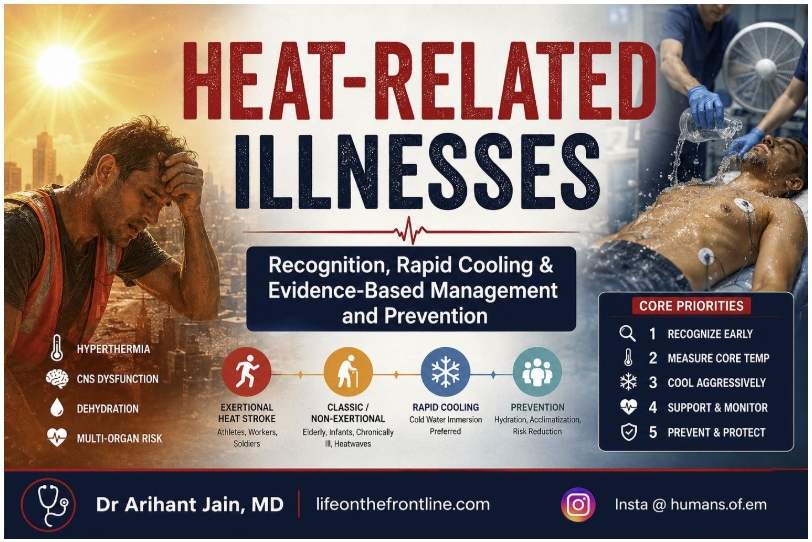
Management centers on one message: cooling is resuscitation and should start before the workup is finished, and even before a measured temperature crosses 40°C, since readings continue to rise and prehospital cooling can mask them. Cold-water immersion at roughly 1–17°C (33.8–62.6°F) is the gold standard. Ice-water body bags and portable setups adapt it to the ED, with evaporative cooling (undress, tepid spray, high-flow fans) plus ice sheets, towels, and cooling blankets as the fallback. Cold IV fluids alone don't suffice, and concern about shivering shouldn't delay immersion. Antipyretics and dantrolene have no role and may aggravate hepatic and renal injury. Alongside cooling, patients need volume resuscitation (1–2 L crystalloid, with the caveat that shock here is also vasodilatory and myocardial; cardiac injury occurs in up to 21%), and surveillance for rhabdomyolysis, hyperkalemia, AKI, liver injury, DIC, ARDS, and dysrhythmias, with CK and AST thresholds flagged as prognostic markers. Because coagulopathy and organ injury can evolve over 24–72 hours, every heat stroke patient warrants admission, usually to the ICU. The takeaway: time to cooling determines outcome, however prevention remains the most effective intervention.
Read the full post here and review this week's Frontline clinical pearls on IG.
----------
Dr. Arihant Jain is an Emergency Medicine physician at All India Institute of Medical Sciences (AIIMS) in New Delhi, and the creator of Life on the Frontline, a blog sharing concise, evidence-based insights from the ED. He currently serves as a Decision Editor for CPC-EM, is among the youngest ATLS faculty in India, and an AHA-certified BLS/ALCS instructor.
Connect with Dr. Jain: @humans.of.em (IG)
Watch the August Videos Now!
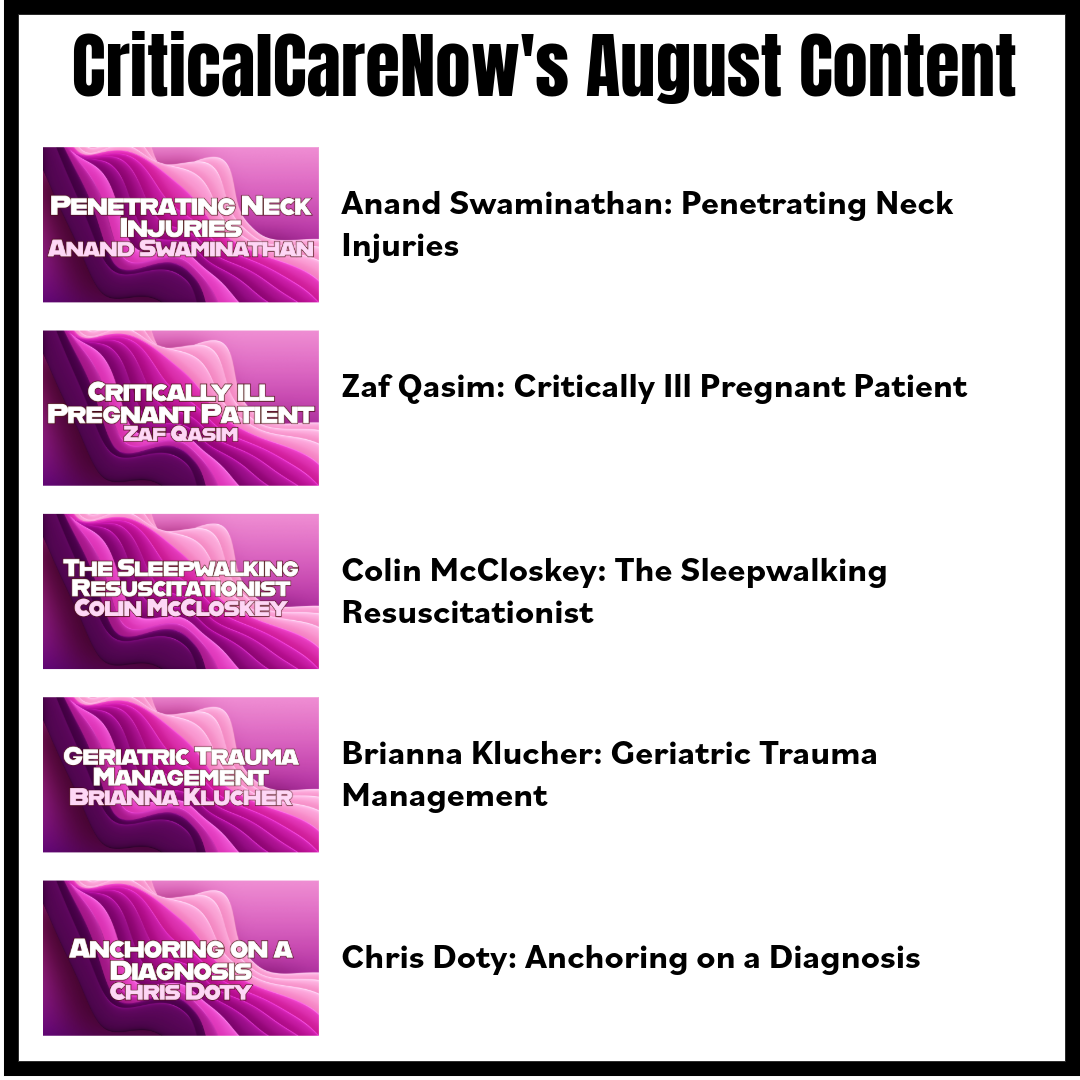
If you're an All-Access member, you're in for some great content this month. We have FIVE videos hand-picked by our staff that are high-yield and our most highly watched. We're featuring:
- Swaminathan on "Penetrating Neck Injuries"
- Qasim on "Critically Ill Pregnant Patient"
- McCloskey on "The Sleepwalking Resuscitationist"
- Klucher on "Geriatric Trauma Management"
- Doty on "Anchoring on a Diagnosis"
Each month we bring you fresh new content from the best of the best in resuscitation. If you're an All-Access member, go watch these videos NOW!


Responses