

ResusX Goes To Puerto Rico!
Condado Beach, Puerto Rico ~ Feb 1-3, 2027
A BIG thanks to those of you who already expressed interest in the conference and secured your spot at the early bird price with a deposit. X on the Beach is now fully greenlit and ticket sales will go live any day now. Keep an eye on your inbox for an email from us with the link to register and book your room at the San Juan Marriott Resort & Stellaris Casino. For those who secured their spot with a deposit, you'll receive a separate email from us with a promo code to use at registration.
We can't wait to see everyone there!!

EMx Replay is Here
Did you miss EMx live? Don't sweat it....you can watch every single session on replay! Watch the complete conference fully edited, with audio remastering, indexed, and ready for you.
You have two options to choose from, 3-day access or unlimited, lifetime replay....just pick one and then press play.
CLICK HERE TO CHOOSE YOUR REPLAY
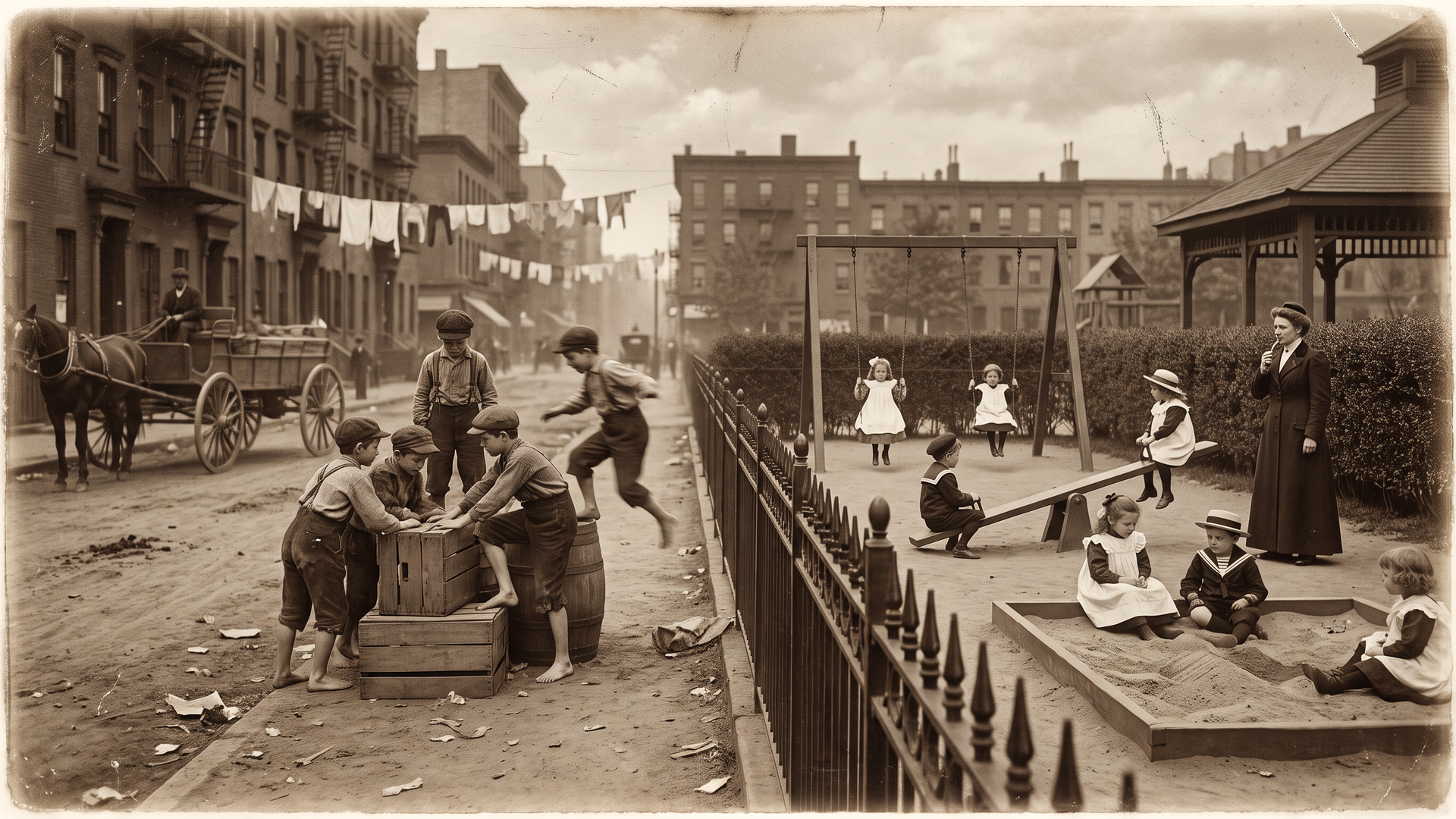
Jungle Gyms Were Built Because Kids Kept Getting Flattened by Wagons
Before the reform era, nobody really treated childhood as its own stage of life. Your options as a kid were something like working a mill shift or playing tag in the middle of active wagon traffic. The baseline health risk of just existing at that age was terrible. Then came the playground, which turned out to be one of the more effective public health interventions nobody planned for. Reformers noticed that letting kids run loose in fast-industrializing city streets was killing them at an alarming rate, so they carved out space just for play. It was less about swing sets and more about getting children off streets that doubled as open sewers and traffic hazards. That civic project is a big part of why "childhood," in the modern sense, exists at all. Once kids had a place built for them, pediatric health stopped being only about dodging cholera and started including things like structured play, motor development, and not getting run over by a horse carriage.
Since this was still an early 20th century invention, though, these "safe" spaces were brutal by today's standards. We traded the risk of getting hit by a streetcar for scalding metal slides, splintering wooden seesaws, and monkey bars bolted straight into concrete. Still, that shift toward managed, contained risk changed how parents supervised kids and how kids were allowed to develop. Playgrounds normalized the idea that children need a dedicated place to fall down, catch whatever virus is circulating the sandbox that week, and put their nervous systems through some low-grade stress in a semi-controlled setting. In trying to fix an urban mortality problem, we built a containment zone for kid energy, and it ended up shaping how children actually grow up.

You Better Be Using POCUS in Shock!
If you're managing a patient in shock and you're not putting the probe on them, you're guessing. Shock is hard to sort out at the bedside, so I anchor everything on the three pillars of circulation: the pump, the pipes, and the tank. Almost every shock state is a failure of one or two of those. In hypovolemia, the tank is empty, so the pump becomes tachycardic and the pipes clamp down to protect perfusion. Ultrasound lets you look inside the body and see which pillar has failed instead of guessing from vitals alone.
Be systematic about it; same exam, every time. I use HIMAP. H is the heart: assess the pump and look for obstructive causes. I is intravascular volume status, which is more nuanced and deserves its own discussion. M is Morrison's pouch, your reminder to do the FAST and look for free fluid. A is the aorta, looking for a ruptured vessel. P is pulmonary: tension pneumothorax, pulmonary edema, pneumonia.
Here's the catch: ultrasound tells you about the pump and the tank, not the pipes. For the pipes, use your hands. Warm extremities in a shocked patient point you toward distributive shock. Cold extremities with delayed cap refill point you toward hypovolemic, obstructive, or cardiogenic causes.
Watch the full video here and leave a comment.
Don't forget to like and follow my IG, TikTok, YT, Facebook or LinkedIn accounts.

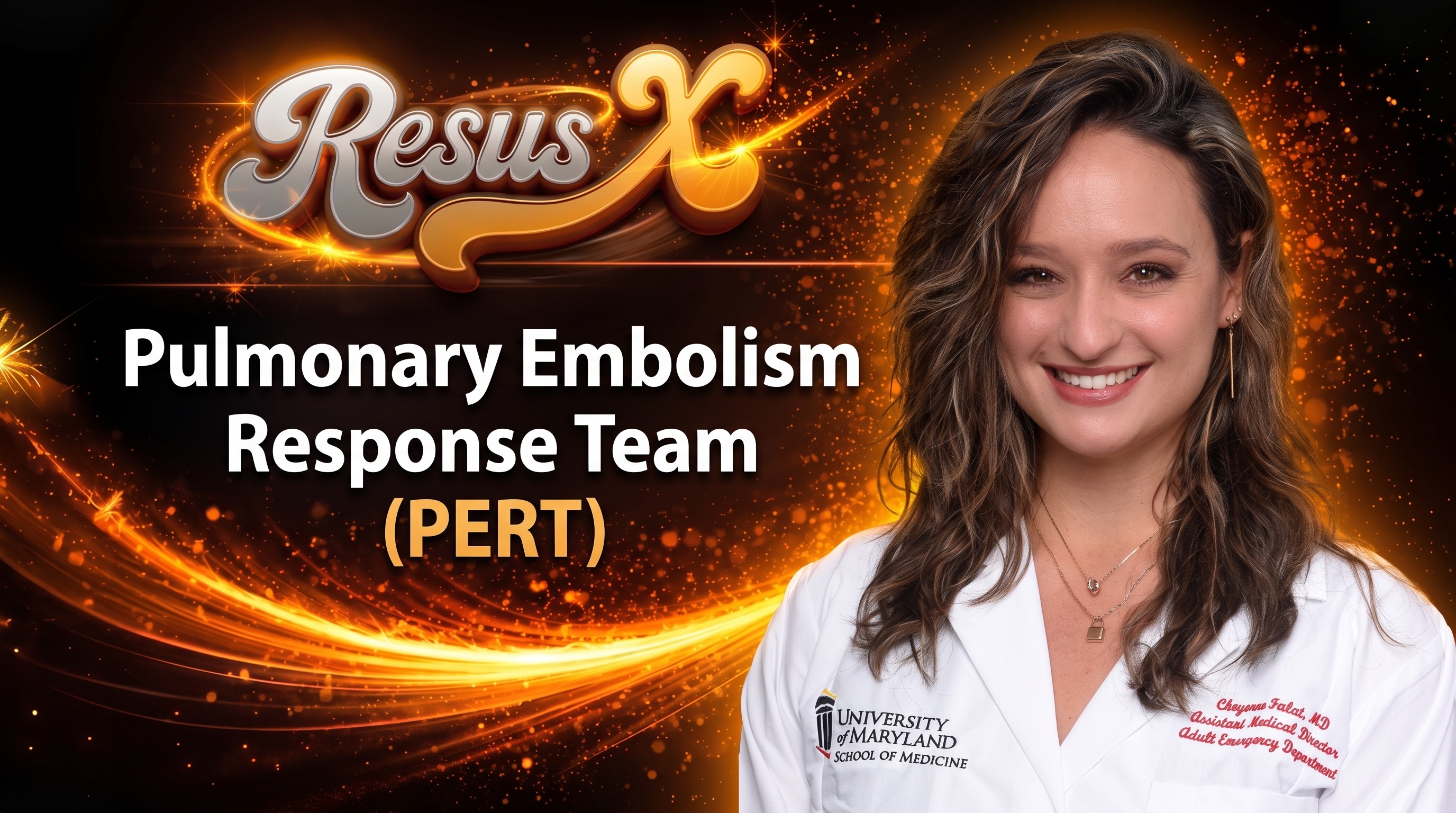
Cheyenne Falat, MD describes Pulmonary Embolism Response Teams (PERTs) as 24/7 multidisciplinary teams that can be activated with a single call, similar to code stroke or code STEMI activations. Originally created at Massachusetts General Hospital in 2012, these teams have proliferated due to the significant burden PEs place on healthcare systems, as they are the third leading cause of cardiovascular mortality. PERT teams typically include emergency physicians, intensivists, cardiologists, radiologists, vascular medicine specialists, hematologists, interventional specialists, pharmacists, and transfer center coordinators. They provide rapid decisions on risk stratification, therapeutic options, and patient disposition, which is especially valuable given that PE management guidelines often exist in gray zones without strong evidence-based consensus.
Research published in 2024 shows that PERT consultations significantly improve outcomes for high-risk PE patients, including reduced all-cause mortality, lower rates of major bleeding, decreased hospital length of stay, faster time to therapeutic anticoagulation, and reduced use of IVC filters. These teams help guide the selection of advanced therapies such as catheter-directed lysis, mechanical thrombectomy, surgical embolectomy, and ECMO for patients with impending or established cardiopulmonary collapse. However, the decision to administer systemic thrombolysis remains with the treating emergency physician or intensivist. PERT teams support this decision but do not require their approval. They also provide 48-hour reassessments and coordinate appropriate outpatient follow-up care for anticoagulation management.
Check out this video of Dr. Cheyenne Falat from ResusX:2026 now!


Is Aggressive Fluid Resuscitation Harming Your AP Patients?
For decades the reflex in acute pancreatitis has been volume, and lots of it. The reasoning felt sound: inflammatory third-spacing drops intravascular volume, pancreatic microcirculation suffers, and necrosis follows, so pour in crystalloid early and prevent the cascade. This systematic review and meta-analysis pooled seven randomized trials comparing intensive fluid resuscitation (roughly >10 mL/kg/h, or a 20 mL/kg bolus followed by 3 mL/kg/h, or >4000 mL in 24 hours) against moderate regimens (<10 mL/kg/h, or a 10 mL/kg bolus followed by 1.5 mL/kg/h). The trials spanned the United States, China, Mexico, South Korea, and Thailand, ran from 2009 to 2022, included mild, severe, and post-ERCP populations, and carried generally low risk of bias. The headline number is mortality: in-hospital death was more than twice as likely with intensive resuscitation (RR 2.60; 95% CI 1.48–4.57) with zero heterogeneity across the three trials reporting deaths (34/214 vs. 14/226). Fluid-overload complications (pulmonary edema, acute heart failure, AKI, abdominal compartment syndrome) were more than three times as frequent; RR 3.34, 95% CI 1.60–6.98, again with I² = 0%. And the theoretical upside never materialized. SIRS persistence was no different (RR 0.87; 95% CI 0.50–1.52), early clinical improvement at 36 hours was no different (RR 1.20; 95% CI 0.63–2.29, I² = 72%), and length of stay was longer in the intensive arm, not shorter (MD 1.21 days; 95% CI 0.72–1.69, I² = 65%). Sensitivity analyses excluding the mild-only trial did not change the direction or significance of the fluid-overload signal.
The bottom line for the bedside: this is confirmatory rather than novel, and it should close the loop on WATERFALL for anyone still hedging. Moderate, goal-directed hydration titrated to weight, urine output, hematocrit, and hemodynamics is the default, with reassessment inside the first 48 hours rather than a set-and-forget infusion order. Two caveats deserve honesty. The mortality signal is carried largely by two older Chinese hemodilution trials in severe AP, and the pooled event numbers are small, so the point estimate is fragile even though the direction is consistent. Also worth flagging, the paper describes the length-of-stay difference as non-significant in the text while reporting a confidence interval that excludes zero; read the forest plot, not the prose.
My Takeaway Points:
- Finding - Intensive fluid resuscitation more than doubled in-hospital mortality versus moderate resuscitation (RR 2.60; 95% CI 1.48–4.57; I² = 0%) and more than tripled fluid-overload complications (RR 3.34; 95% CI 1.60–6.98; I² = 0%), with no benefit in SIRS persistence, early improvement, or length of stay.
- Practice Impact - Abandon empiric 20 mL/kg bolus plus 3 mL/kg/h regimens as a default. Start moderate (roughly 1.5 mL/kg/h with a 10 mL/kg bolus only for documented hypovolemia) and titrate to urine output, hematocrit, BUN, and hemodynamics with mandatory reassessment within the first 24–48 hours.
- Population - 7 RCTs, adults with acute pancreatitis by revised Atlanta criteria across mild, severe, and post-ERCP settings; United States, China, Mexico, South Korea, Thailand, and one multinational trial (de-Madaria 2022, n = 249). Most trials excluded patients with baseline organ failure, heart failure, renal failure, or significant comorbidity.
- Limitation - Definitions of "intensive" and "moderate" varied across trials by rate, total volume, and bolus use, raising misclassification risk. The mortality analysis rests on only three trials with 48 total deaths, driven largely by two older severe-AP hemodilution studies. The excluded high-risk comorbid populations are precisely the patients where fluid strategy matters most.
Want to learn more? Read the full analysis Intensive vs. Moderate Fluid Resuscitation in Acute Pancreatitis: A Systematic Review and Meta-Analysis by N. Salcedo-Campos, et al. in Gastroenterología y Hepatología.
Troponin is Not an MI Test: Part II
In Part II of his series, Dr. Jain argues that an elevated troponin tells you the myocardium is injured. It does not tell you why. He builds on the Fourth Universal Definition of MI, which requires both acute myocardial injury and clinical evidence of ischemia (symptoms, new ECG changes, Q waves, new wall-motion abnormalities, or thrombus on angiography) before the diagnosis of infarction can be made. Without ischemia, the finding is myocardial injury, not MI. He separates Type 1 MI (plaque rupture or erosion with thrombosis, the target of classic ACS therapy) from Type 2 MI (a supply-demand mismatch from anemia, tachyarrhythmia, hypotension, hypoxemia, or vasospasm). Dr. Jain stresses that Type 2 MI still requires ischemia, so a septic patient with a rising troponin but no ischemic features should be labeled as having acute non-ischemic myocardial injury. That distinction affects referrals, antiplatelet prescribing, coding, and long-term diagnoses.
For bedside use, he draws on the "troponin zones" framework from Rokos, Mattu, and Jaffe (2025). Very low values carry a high negative predictive value. Values near the 99th percentile demand clinical reasoning. Markedly elevated values raise the probability of MI but can also come from myocarditis, Takotsubo, massive PE, or septic shock. Dr. Jain emphasizes the delta: a single value is a snapshot, while the trend shows whether the injury is acute or chronic. He proposes five questions for every troponin: Is it above the 99th percentile? Is there a rise or fall? Is there evidence of ischemia? If so, which MI type? If not, what disease explains the injury? Lastly, Dr. Jain illustrates his concepts with three cases:
-
A septic patient with non-ischemic injury
-
An AF-with-RVR patient with a Type 2 MI
-
A dialysis patient with a flat troponin, meaning chronic injury,
and concludes that high-sensitivity assays have moved the question from "positive versus negative" to "injury versus infarction."
Read the full post here and review this week's Frontline clinical pearls on IG.
----------
Dr. Arihant Jain is an Emergency Medicine physician at All India Institute of Medical Sciences (AIIMS) in New Delhi, and the creator of Life on the Frontline, a blog sharing concise, evidence-based insights from the ED. He currently serves as a Decision Editor for CPC-EM, is among the youngest ATLS faculty in India, and an AHA-certified BLS/ALCS instructor.
Connect with Dr. Jain: @humans.of.em (IG)
Watch the September Videos Now!
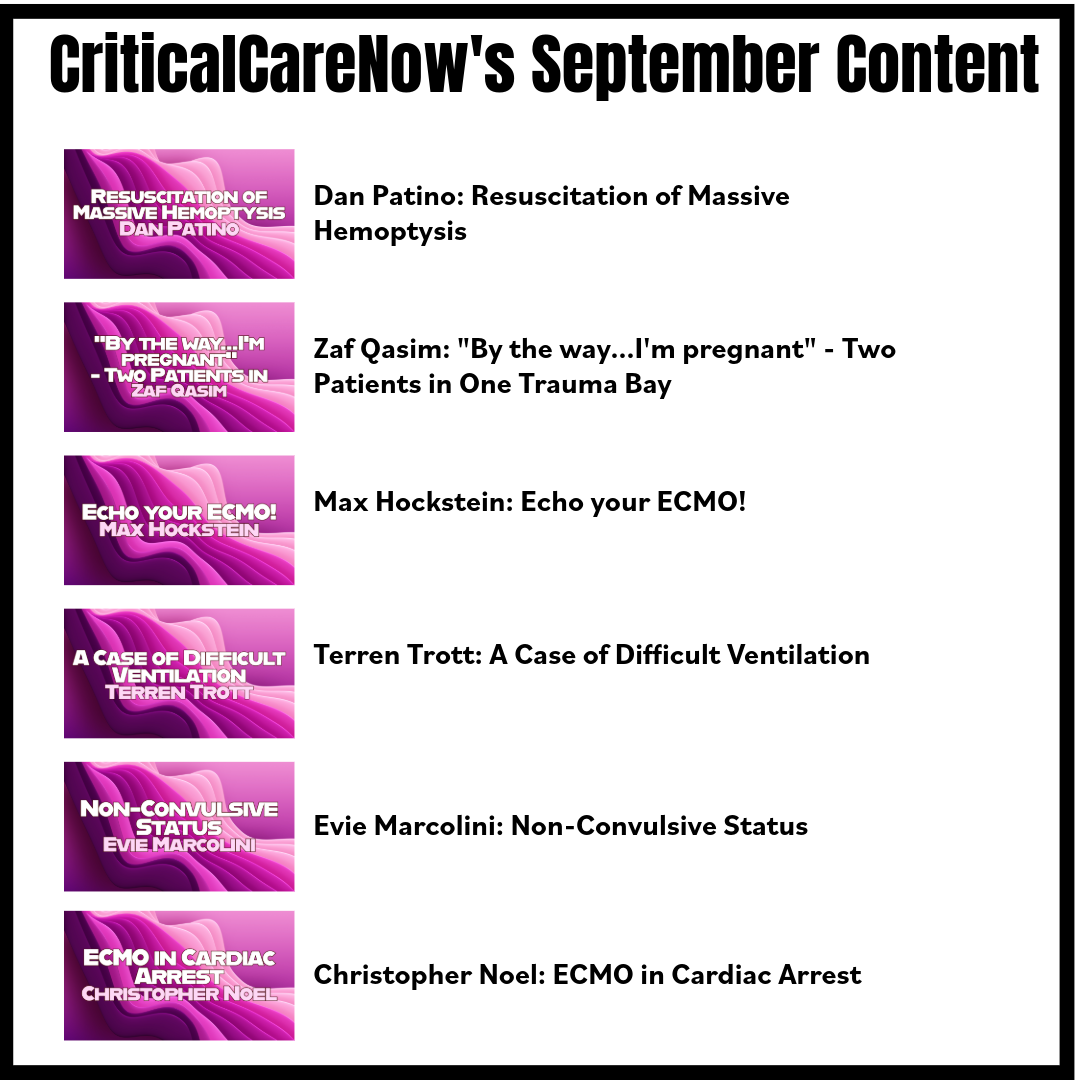
If you're a ResusNation paid member, you're in for some great content this month. We have SIX videos hand-picked by our staff that are high-yield and our most highly watched. We're featuring:
- Patino on "Resuscitation of Massive Hemoptysis"
- Qasim on "By the way...I'm pregnant" - Two Patients in One Trauma Bay"
- Hockstein on "Echo your ECMO!"
- Trott on "A Case of Difficult Ventilation"
- Marcolini on "Non-Convulsive Status"
- Noel on "ECMO in Cardiac Arrest"
Each month we bring you fresh new content from the best of the best in resuscitation. If you're a ResusNation paid member, go watch these videos NOW!


Responses