

Registration is Live!
Condado Beach, Puerto Rico ~ Feb 1-3, 2027
It's official. Registration for X on the Beach is open, and so is our conference room-block at the San Juan Marriott Resort & Stellaris Casino.
Three mornings of high-yield resuscitation, afternoons of CME by the beach, happy hours with faculty, a welcome reception January 31, and an after-party February 3. Up to 17.25 hours of CME, taught by Haney Mallemat, Jailyn Avila, Tarlan Hedayati, Sara Crager and George Willis!
Two things to know:
- Seats are capped at 50. It's first come, first served.
- You have 2 options to attend. Book your room through our room-block link and pay $797 for registration, or pay $1497 for registration if you choose to stay elsewhere.
Every registrant gets the same free bonuses: X on the Beach swag, limited-edition t-shirts, and lifetime access to ResusX:2025 with CME.
We can't wait to see everyone there!!

Macaques Have Better Conflict Resolution Than You
Did you know that when two macaques fight, the whole troop watches...and when they make up, the whole troop watches that too. The reconciliation happens out in the open, usually within minutes, with actual touching involved. That visibility isn't an accident. It's the point. Every other monkey in the group gets to clock how the fight started, how it ended, and what it took to get there, which means the troop as a whole gets better at handling the next one. Humans do the opposite. We take the fight into a side channel, a quiet DM, a closed-door meeting, a vague email that says "per my last message," and we resolve it (maybe) somewhere nobody else can learn from it. We get the outcome without the data.
The deeper issue is what happens to the ego once a disagreement starts feeling personal. For a monkey, the stakes are pretty uncomplicated: don't lose your alliances, don't lose your access to food, don't get kicked out of the group. For a human, the second someone pushes back on an idea, it can start reading as a verdict on your worth, and the conversation quietly stops being about the problem and starts being about not losing. You stop asking whether you found the right answer and start making sure you weren't wrong. The solution is almost annoyingly simple: before you double down in the group chat, ask yourself whether what's happening is a conversation or a judgment. Monkeys figured this out without a single wellness module. We have the entire cortex and we're still out here holding six-month grudges over a schedule swap.

The Real Reason High Flow Works
High flow nasal cannula has become one of my go-to tools for hypoxemic respiratory failure, especially in the years since the pandemic pushed it into the spotlight. The device delivers massive flows (40 to 60 liters per minute) through large-bore nasal prongs, and you can titrate both the FiO2 and the flow rate independently. Everyone wants to talk about the PEEP effect from that high flow pushing pressure down into the alveoli, or the CO2 washout that makes it easier for a struggling patient to ventilate. Those effects are real, but they're not the main event.
The mechanism that actually matters, and the one I think gets criminally underdiscussed, is inspiratory flow matching. Think about it: your resting inspiratory flow scrolling your phone is around 25 liters per minute. A patient in respiratory distress is demanding 40 to 60. Crank a non-rebreather to the wall and you're maxing out around 30 liters; nowhere close to what that patient is pulling. Even at "100% FiO2," that mask is entraining ambient air and diluting the oxygen they actually receive. High flow nasal cannula closes that gap. When the device output matches the patient's demand, they get the FiO2 you dialed in, not a diluted version of it.
Watch the full video here and leave a comment.
Don't forget to like and follow my IG, TikTok, YT, Facebook or LinkedIn accounts.
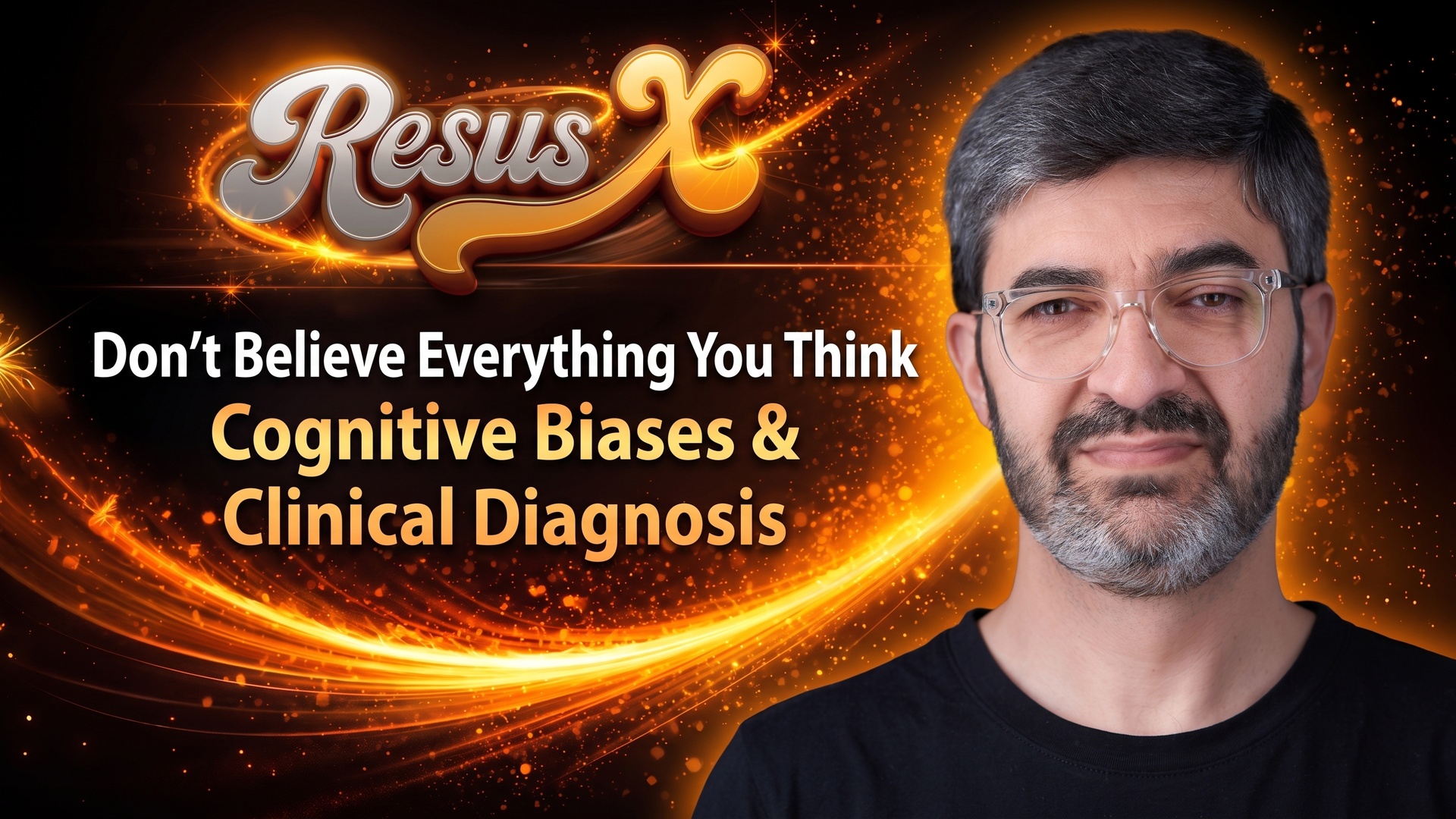
Sergio Zanotti, MD explores the significant impact of cognitive biases on diagnostic accuracy, highlighting that diagnostic errors occur in 10% to 15% of patient encounters, largely due to flawed initial clinical framing. Drawing on Daniel Kahneman’s dual-process theory, Dr. Zanotti explains how clinicians navigate decisions using System 1: a fast, automatic, intuitive process relied on 95% of the time, and System 2: a slower, effortful, and rational thinking process. While System 1 pattern recognition is essential for efficiency in high-pressure medical environments, failing to engage System 2 leaves clinicians vulnerable to systematic cognitive traps, random error (noise), and diagnostic missteps.
To combat these errors, Dr. Zanotti outlines the four most prevalent biases in emergency and critical care: 1) anchoring bias, 2) availability bias, 3) confirmation bias, and 4) overconfidence bias. Rather than attempting to eliminate bias entirely, clinicians are encouraged to focus on debiasing techniques and choice architecture. Practical, actionable strategies include taking a "cognitive pause," expanding differential diagnosis lists, actively seeking disconfirming evidence, utilizing checklists, and inviting outside perspectives. By building structured spaces to re-evaluate initial assumptions and question first impressions, clinicians can pivot early and improve patient safety at the bedside.
Check out this video of Dr. Sergio Zanotti from ResusX:2026 now!
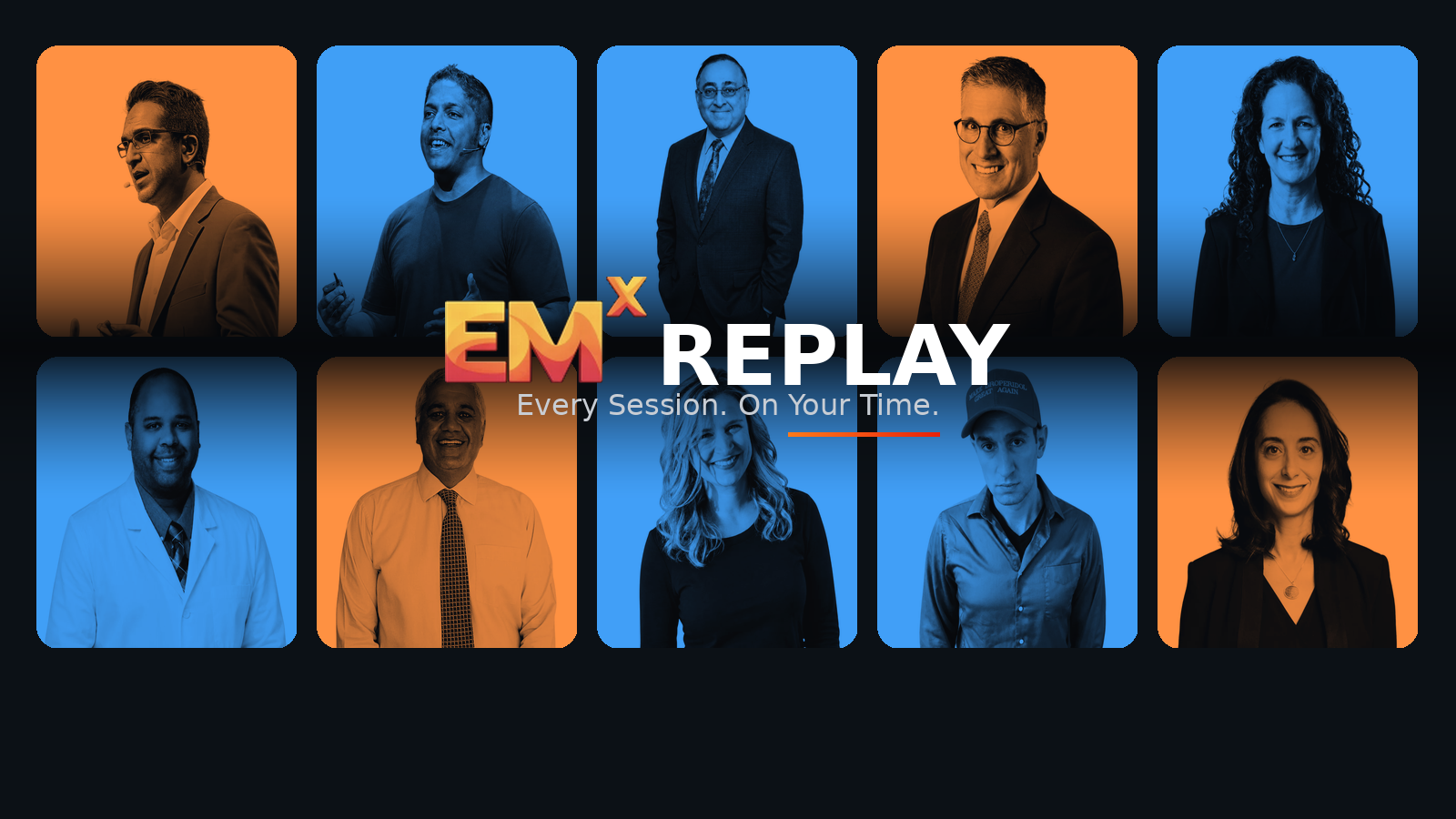
EMx Replay is Here
Did you miss EMx live? Don't sweat it....you can watch every single session on replay! Watch the complete conference fully edited, with audio remastering, indexed, and ready for you.
You have two options to choose from, 3-day access or unlimited, lifetime replay....just pick one and then press play.
CLICK HERE TO CHOOSE YOUR REPLAY


Here's Why Every Minute Counts in MTP
Traumatic hemorrhage remains a leading cause of potentially preventable death, accounting for 30–40% of early trauma fatalities, and nearly half of in-hospital trauma deaths occur in patients with survivable injuries. Despite widespread adoption of massive transfusion protocols (MTP), there is still no standardized definition or activation strategy across trauma centers. On prediction, no single tool is perfect; shock index correlates only weakly with transfusion need, and scores like TASH require lab values that limit prehospital use. The ABC score (penetrating mechanism, SBP ≤90, HR ≥120, positive FAST) stands out for its simplicity, with 84–87% accuracy and a 95% negative predictive value, though its 53% positive predictive value means over-triage is common. Prehospital ABC implementation has been linked to a 44% increase in early plasma transfusion and a 23% mortality improvement, while machine-learning (ML) models using EMS data (AUC up to 0.837) remain retrospective and unvalidated.
Delivery speed matters enormously once MTP is activated. Each minute of delay from activation to first cooler arrival is associated with a 5% increase in mortality, and cooler delivery within 8 minutes has been linked to a 35% mortality reduction. Balanced 1:1:1 (RBC:plasma:platelet) remains the standard, with whole blood offering a practical way to guarantee balance, though it has not been shown superior to component therapy for massive transfusion. Bottom line: a modern MTP should prioritize early, reliable (ideally prehospital) activation using existing tools like the ABC score, balanced product delivery tracked by a "door-to-cooler" metric, and a direct-to-OR (DTOR) pathway for non-compressible hemorrhage. ML-based prediction remains a future development rather than current practice.
My Takeaway Points:
- Finding - Faster MTP delivery saves lives. Mortality drops 35% when the first cooler arrives within 8 minutes, and each additional minute of delay adds roughly 5% mortality risk.
- Practice Impact - Trauma centers should adopt "door-to-cooler time" as a formal QI metric (analogous to door-to-balloon time) and build a DTOR decision branch into MTP activation for patients with non-compressible, penetrating hemorrhage.
- Population - Adult trauma patients with suspected life-threatening hemorrhage, activated via prehospital or ED criteria (ABC score, FAST, shock index); benefit is clearest in penetrating trauma and hemodynamically unstable patients.
- Limitation - This is a narrative review, not a trial. No predictive tool is highly specific (ABC score PPV only 53%), ML models lack prospective validation, and whole blood's superiority over balanced component therapy for massive transfusion remains unproven, since existing RCTs studied only low-volume (1–2 unit) exposures.
Want to learn more? Read the full review Modern Massive Transfusion Protocols in Trauma: Prediction, Delivery, and Hemorrhage Control by C. Purvis, et al. in Current Trauma Reports.
Winter is Coming!
Frostbite season is upon us (at least here in Montana) and we need to be prepared! The biggest concern with severe frostbite is tissue damage and potential amputation. Much of the tissue loss associated with severe frostbite occurs during the rewarming phase due to endothelial injury, vasospasm and microvascular thrombosis.
IIloprost (brand name Aurlumyn) became the first FDA-approved medication in 2024 to reduce the risk of digit amputation in adults with severe frostbite. This drug doesn't necessarily replace alteplase. It can be used in addition to alteplase. Alteplase works to break down existing clots, while iloprost promotes vasodilation and decreases platelet aggregation. All of this occurs alongside appropriate rewarming, of course! Iloprost is administered as a 6-hour infusion daily for up to 8 consecutive days, with the dose titrated as tolerated.
So, does it work?
FDA approval was based on a single RCT involving just 47 young, healthy individuals with severe frostbite, primarily ice climbers, who received aspirin and standard care. A day-7 bone scan predicted amputation in: 60% of patients in the control group, 19% of patients receiving iloprost plus tPA, and 0% of patients receiving iloprost alone. Actual digit amputation rates were 11.5%, 3.1%, and 0%, respectively. The evidence is clearly limited, but a 2023 meta-analysis of 17 studies provides additional support. The estimated risk of at least one amputation was 52–62% with standard care compared with 15–18% with iloprost.
Unfortunately, iloprost is limited by adverse effects, primarily headache, flushing, palpitations or tachycardia, nausea, dizziness and hypotension. Many of these effects are dose-limiting and can be managed with incremental dose reductions.
Timing is key!
Early recognition and appropriate rewarming are essential. When indicated, alteplase should generally be initiated within 24 hours of injury and iloprost within 72 hours.
Review this week's Dose on IG or TikTok.
----------
Dr. Abbi Briscoe is an emergency department clinical pharmacist, pharmacy residency program coordinator, and affiliate professor in Montana. She is passionate about Emergency Medicine and Critical Care education, and is an avid mountain biker and skier in her free time.
Connect with Dr. Briscoe: @lilpharma2026 (IG) and @lil_pharma (TikTok)
Watch the October Videos Now!
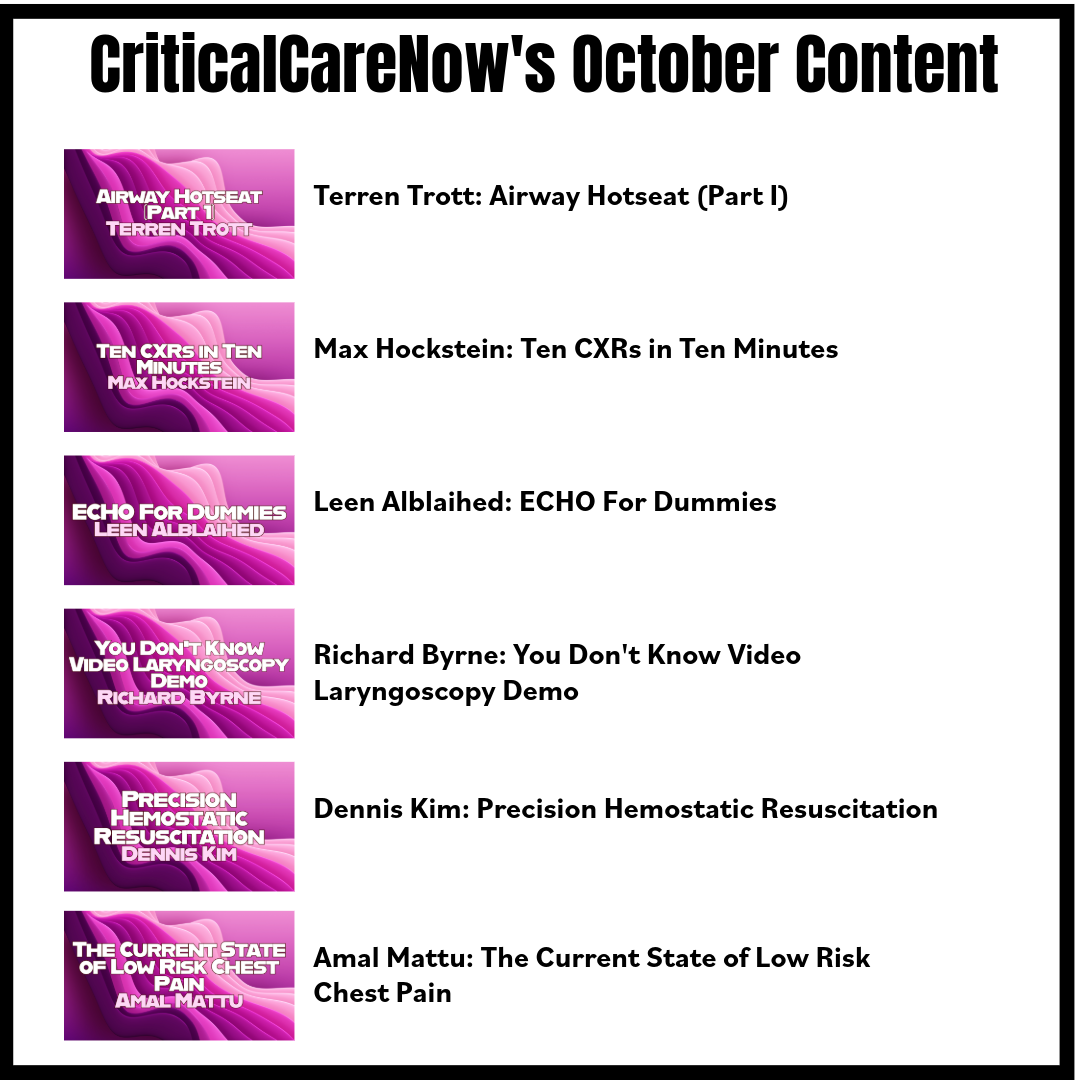
If you're a ResusNation paid Member (RN Video Pass or RN CME Pass), you're in for some great content this month. We have SIX videos hand-picked by our staff that are high-yield and our most highly watched. We're featuring:
- Trott on "Airway Hotseat (Part I)"
- Hockstein on "Ten CXRs in Ten Minutes"
- Alblaihed on "ECHO For Dummies"
- Byrne on "You Don't Know Video Laryngoscopy Demo"
- Kim on "Precision Hemostatic Resuscitation"
- Mattu on "The Current State of Low Risk Chest Pain"
Each month we bring you fresh new content from the best of the best in resuscitation. If you're a ResusNation paid Member, go watch these videos NOW!


Responses